SAEDNEWS: Opal, a captivating gemstone known for its extraordinary display of colors, has long been regarded as one of the world’s most beloved and fascinating precious stones.
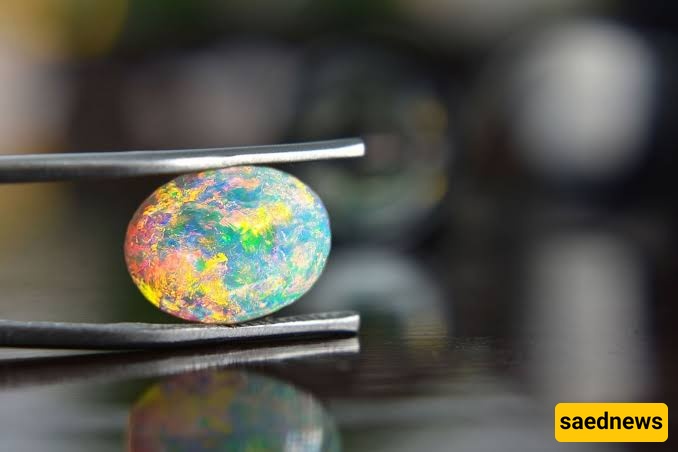
According to Saednews, Among the countless precious and semi-precious stones hidden within the Earth, only a few possess the magical beauty and extraordinary play of colors that can captivate every observer.
Opal is one such gemstone. For centuries, it has been admired worldwide for its remarkable ability to display the full spectrum of rainbow colors within its structure, making it one of the most fascinating and beloved gemstones.
Known as the “Queen of Gemstones” and the “Stone of Passion,” opal is a unique combination of silica and water that forms over millions of years inside cracks and cavities of rocks.
In this comprehensive guide, we will explore the fascinating world of opal — from its ancient history and legends to its different varieties, geological formation, major sources, authenticity tests, care methods, metaphysical beliefs, and factors affecting its value.
Whether you are a gemstone collector, a jewelry enthusiast, or simply someone interested in the beauty of natural minerals, this article will take you deep into the mysteries of this colorful gemstone.
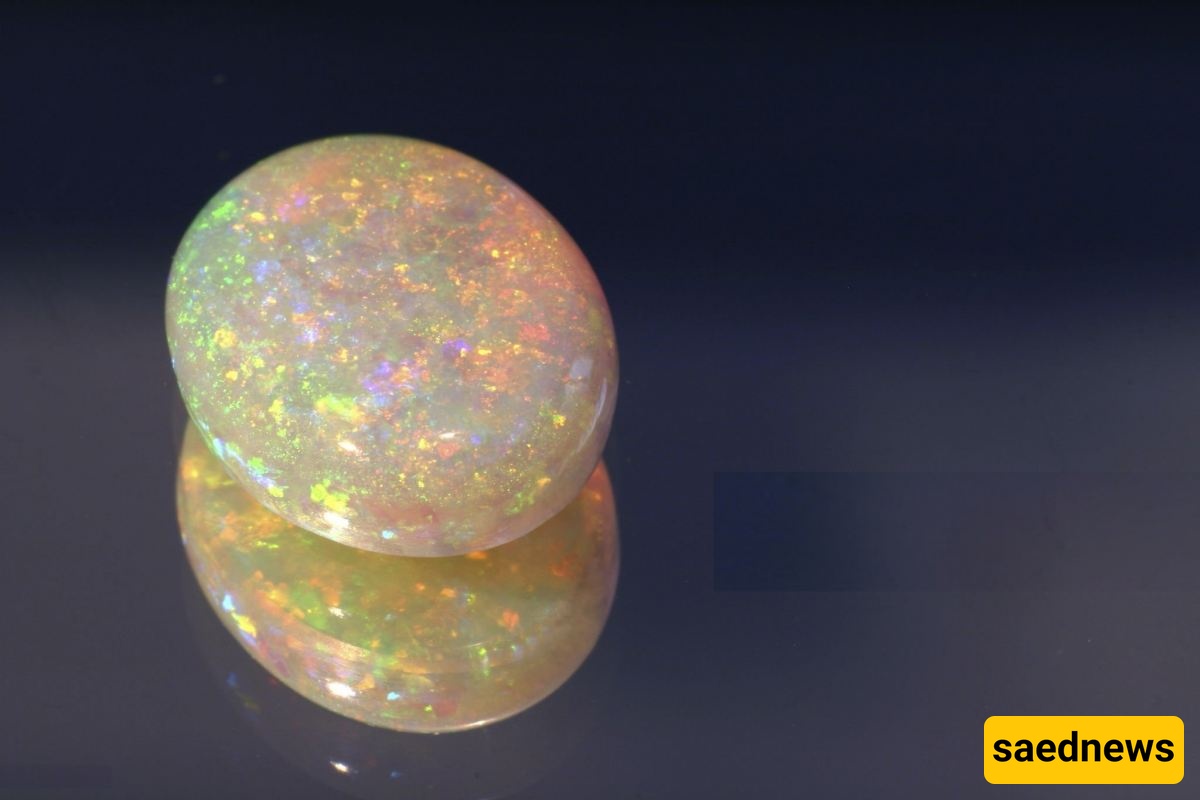
Opal is a hydrated silica gemstone formed from microscopic silica spheres and water. Unlike most gemstones that have a crystalline structure, opal has a unique amorphous structure.
The most remarkable feature of precious opal is its play-of-color, a phenomenon where flashes of different colors appear as the stone moves under light. This effect is caused by the diffraction of light through the organized arrangement of tiny silica spheres inside the gemstone.
The story of opal dates back thousands of years. The name opal is believed to come from the Sanskrit word “Upala,” meaning “precious stone.” Later, it evolved into the Greek word “Opallios” and eventually the Latin term “Opalus.”
Ancient Romans greatly valued opal and considered it a symbol of love, hope, and purity. They believed that opal contained the beauty of all other gemstones combined and used it as a protective charm representing loyalty and good fortune.
Opal also holds a special place in many other cultures. Australian Aboriginal traditions include beautiful legends about the origin of opal. One famous story describes how the Creator sent a rainbow to Earth to bring peace among humans. When the rainbow touched the rocks, the stones absorbed its colors and transformed into opals.
During medieval Europe, opal was considered a lucky gemstone associated with success and protection. However, later superstitions incorrectly linked it with bad luck. Today, opal is recognized as one of the world’s most valuable and visually stunning gemstones and is the birthstone for October.
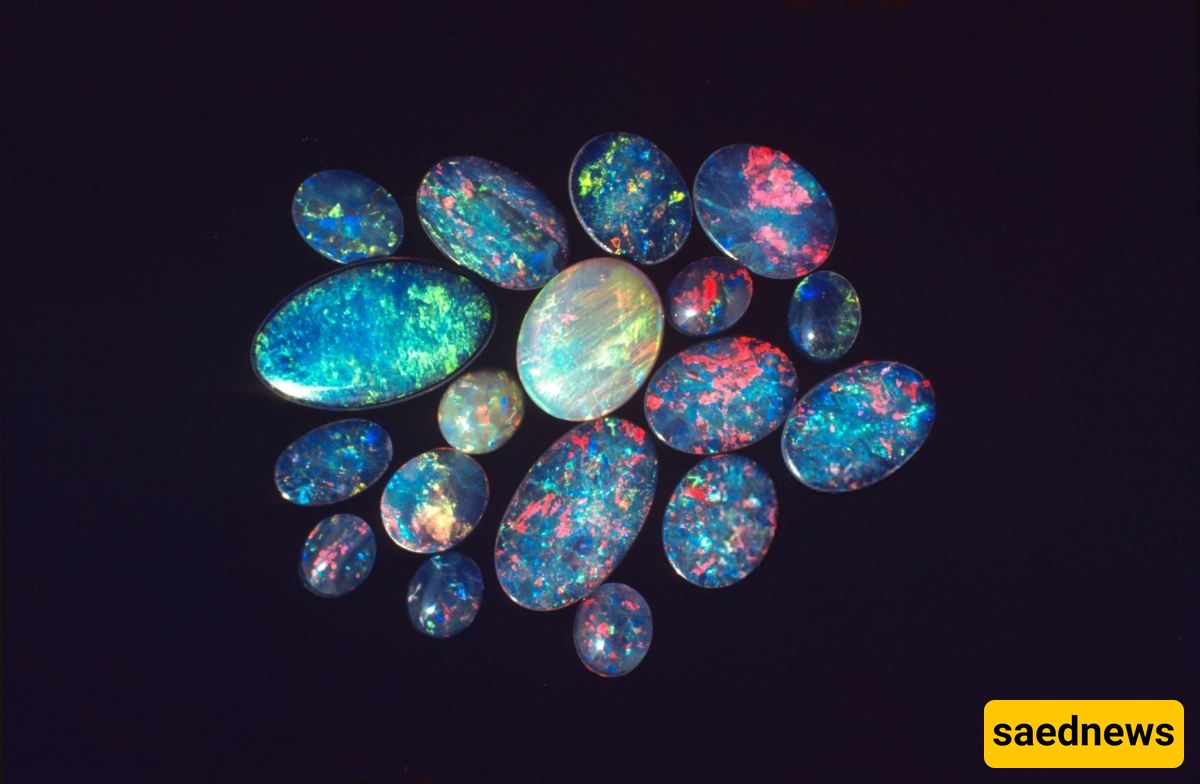
One of the most attractive features of opal is its incredible variety. Opals are generally divided into two main categories:
Precious Opal: Displays a visible play-of-color.
Common Opal: Does not show play-of-color.
The major types of precious and decorative opals include:
White opal is the most common type of precious opal. It has a milky white or light background with colorful flashes appearing across its surface.
It is generally more affordable compared to rare varieties.
Black opal is the rarest and most valuable type of opal. Its dark body color, usually black or deep gray, creates a strong contrast that enhances the brightness of the rainbow-like colors.
The famous Lightning Ridge region in Australia is known for producing some of the finest black opals in the world.
Crystal opal ranges from transparent to semi-transparent. Its play-of-color appears within the stone rather than only on the surface.
When light passes through it, the gemstone creates a spectacular visual effect.
Fire opal is known for its bright orange, red, or yellow body color. Some specimens may display a weak play-of-color, while others do not.
Mexico is the primary source of high-quality fire opals.
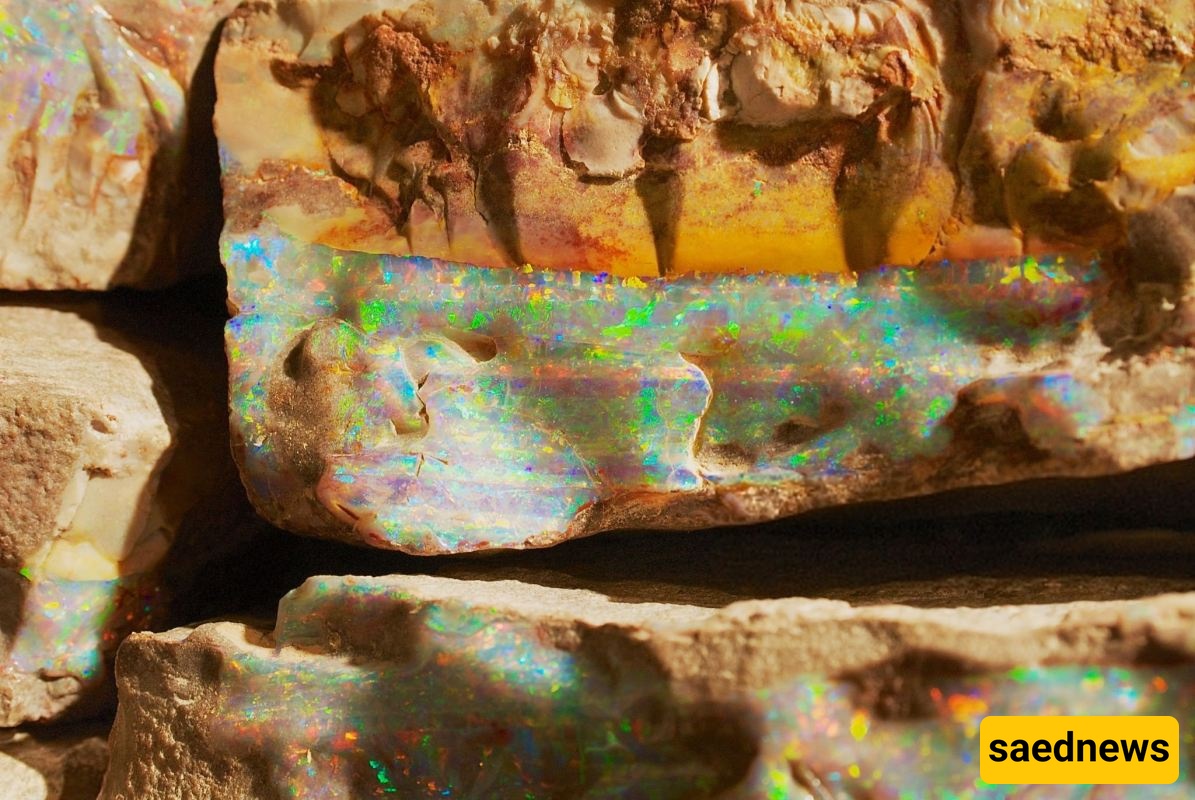
Matrix opal forms when small veins and particles of opal are naturally distributed within the host rock.
Boulder opal, mainly found in Australia, contains colorful opal sections embedded in brown ironstone, creating unique natural patterns.
Ethiopian opal is often transparent or semi-transparent and is famous for its vibrant colors.
Many Ethiopian opals are hydrophane, meaning they can absorb water and temporarily change appearance before returning to their original state after drying.
Opal forms when silica-rich groundwater deposits silica into cracks, cavities, and spaces within sedimentary or volcanic rocks over millions of years.
The extraordinary color display of precious opal comes from the microscopic arrangement of silica spheres. These tiny spheres act like a diffraction grating, separating white light into different colors.
The size and organization of these silica spheres determine the intensity and quality of the play-of-color. The more precise the arrangement, the more brilliant the gemstone appears.
Australia is the world’s largest producer of precious opal, supplying more than 90% of global production.
Important mining areas include:
Coober Pedy — famous for white opal
Lightning Ridge — famous for black opal
Queensland — known for boulder opal
Ethiopia is one of the most important modern sources of opal, especially hydrophane opal from the Wollo region.
These stones are admired for their transparency and vivid colors.
Mexico is the main source of fire opal and also produces crystal and matrix opals.
Opal deposits are also found in:
Brazil
United States (Nevada)
Peru
Czech Republic
Indonesia
However, production from these locations is much smaller compared with Australia, Ethiopia, and Mexico.
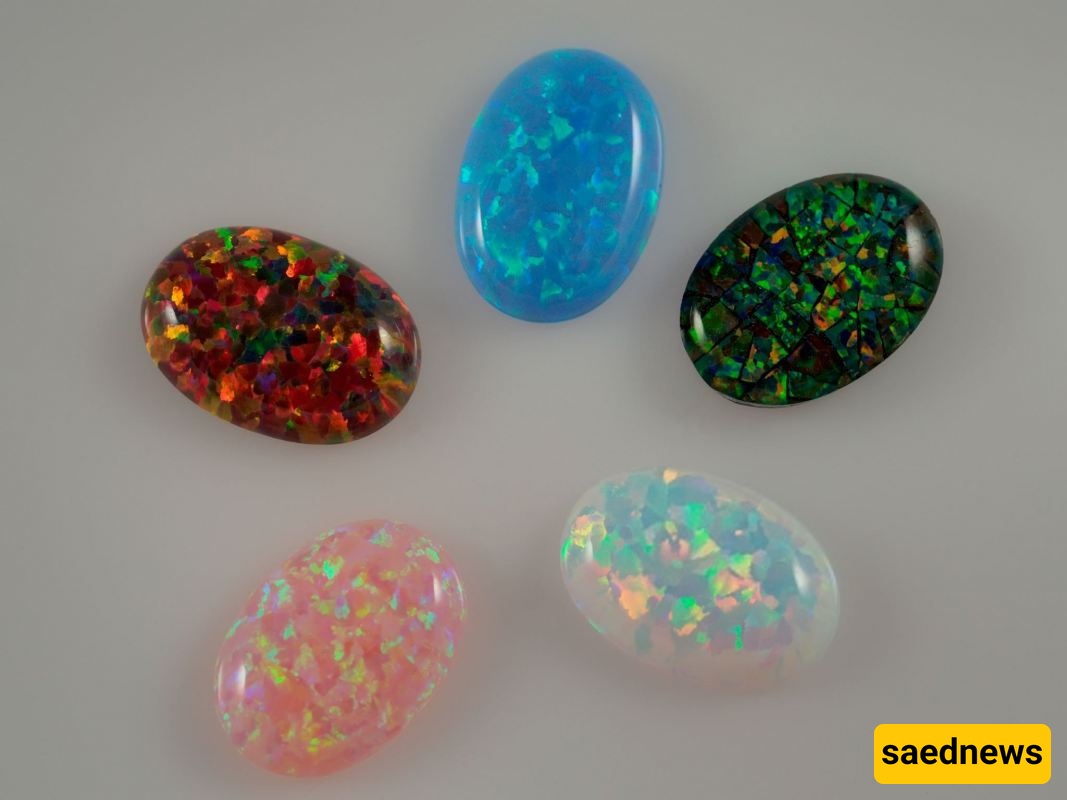
Because of its high value, opal is frequently imitated with synthetic, treated, or composite materials. Several methods can help identify natural opal:
In genuine opal, color appears to come from within the stone and changes naturally when viewed from different angles.
Artificial imitations often show flat, repetitive, or surface-level color effects.
Hydrophane Ethiopian opals can absorb water. When placed in water, they may temporarily become clearer or more transparent and return to their original appearance after drying.
Australian opals usually do not show this behavior.
Synthetic opals, such as Gilson-created opals, may contain tiny internal patterns or structures that differ from natural stones.
Natural opal patterns are unique and irregular. Extremely repetitive designs, such as uniform honeycomb or mosaic-like patterns, may indicate synthetic origin.
The safest way to confirm authenticity is to purchase from reputable dealers and request certification from recognized gemological laboratories.
Opal contains water within its structure, usually between 3% and 10%, making it a relatively delicate gemstone.
Proper care is essential.
Opal has a hardness of approximately 5.5–6.5 on the Mohs scale and can scratch or break more easily than harder gemstones.
Store opal jewelry separately from other pieces.
Extreme heat or sudden temperature changes may cause cracking or surface damage.
Avoid placing opals near direct heat sources.
Perfumes, hairsprays, lotions, and cleaning products may damage opal over time.
Remove opal jewelry before applying cosmetics or bathing.
Clean opal gently with a soft damp cloth.
Avoid ultrasonic cleaners, steam cleaners, and harsh detergents.
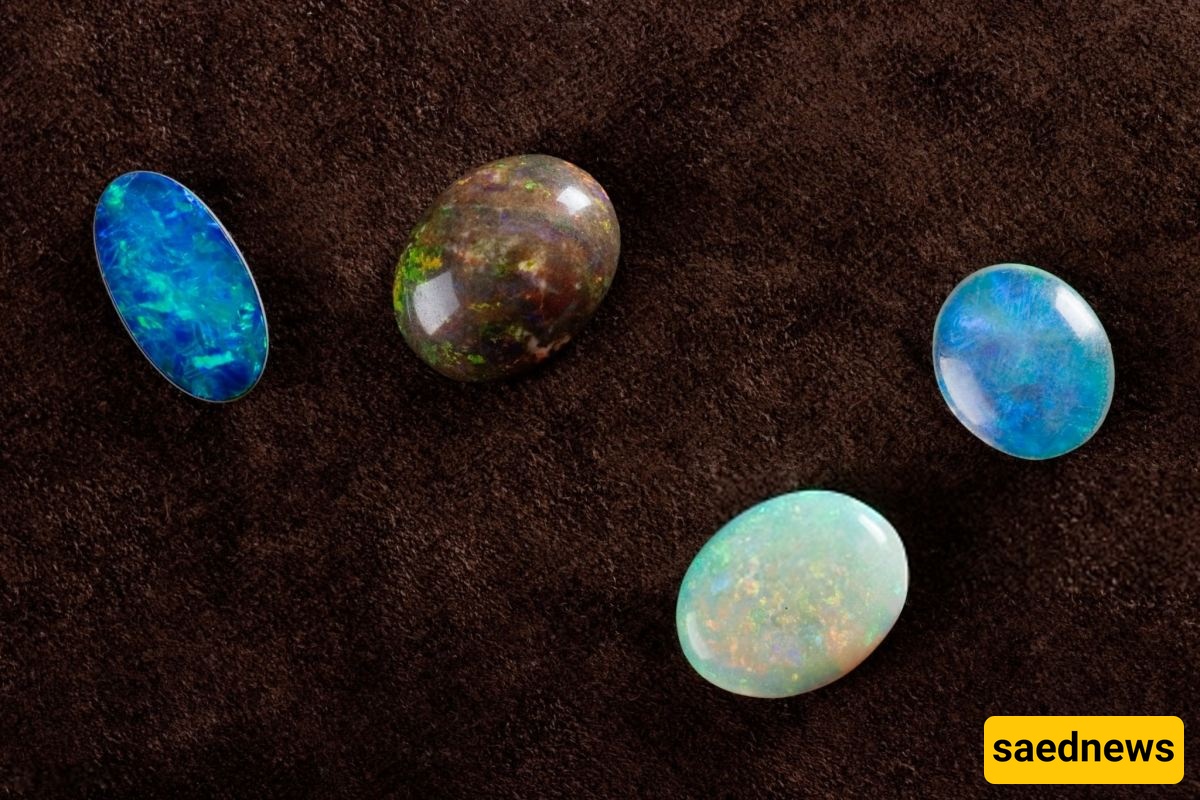
The price of opal can range from a few dollars to tens of thousands of dollars per carat depending on quality.
Important value factors include:
Black opal is generally the most expensive, followed by:
Boulder opal
Crystal opal
White opal
Opals with bright, vivid, and diverse colors — especially red, purple, and blue flashes — are highly valuable.
Rare patterns such as:
Harlequin
Peacock Feather
Grass
can significantly increase the gemstone’s value.
High transparency and fewer internal imperfections are desirable, especially in crystal opals.
Larger opals usually command higher prices, although a small black opal with exceptional colors may be worth more than a larger lower-quality stone.
Cracks, fractures, or signs of drying damage can greatly reduce value.
Many cultures associate opal with spiritual and emotional qualities. These beliefs are traditional and are not scientifically proven.
Common beliefs include:
Enhancing creativity: Opal is often called the artist’s stone and is believed to inspire imagination.
Emotional balance: Some believe it helps release emotions and encourages inner harmony.
Love and loyalty: Historically, opal has been associated with faithful love and protection against jealousy.
Third eye and crown chakras: In spiritual traditions, opal is linked with intuition and inner wisdom.
Opal is a gemstone unlike any other, combining geological wonder, ancient mythology, and extraordinary visual beauty.
From the rare black opals of Australia to the vibrant fire opals of Mexico and the colorful hydrophane varieties of Ethiopia, each opal carries a unique story created by nature over millions of years.
Its mesmerizing play of colors, fascinating history, and remarkable diversity make opal one of the most captivating gemstones in the world.