Saed News: While major American and European media report that Tehran and Washington are moving closer to a temporary framework, disagreements over Iran’s nuclear program, sanctions, and Donald Trump’s final approval are still preventing the announcement of a definitive agreement.
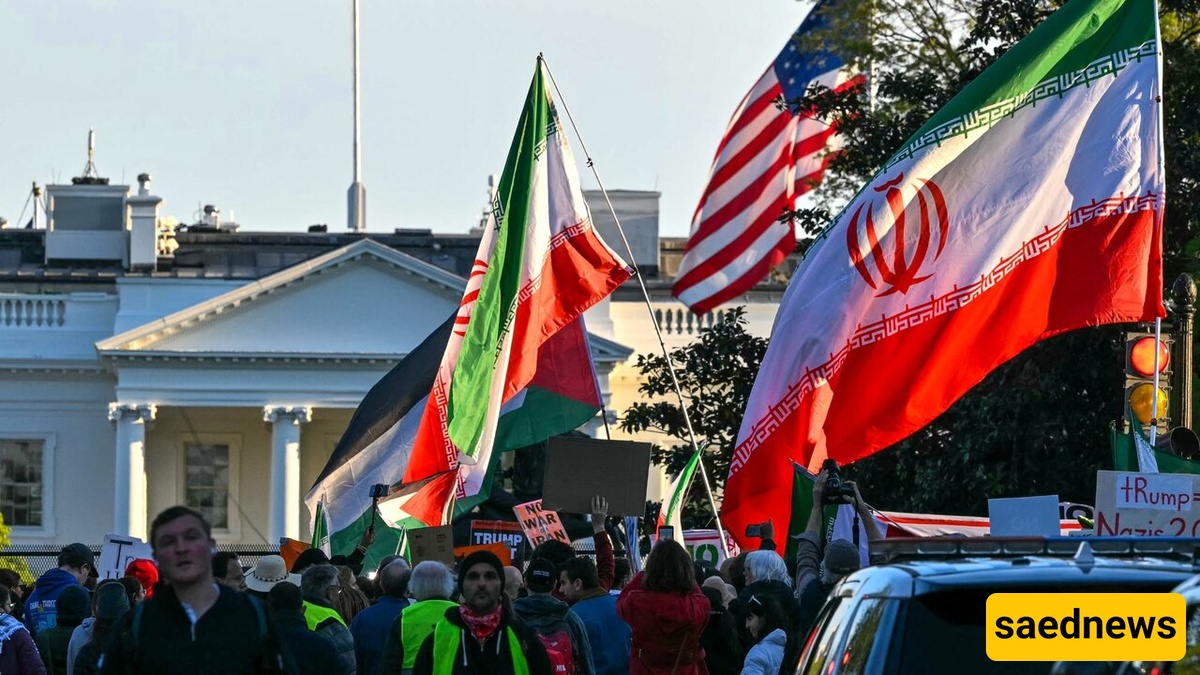
According to SAEDNEWS, over the past two days, the most important summary from major American and European media regarding the state of “neither war nor peace” between Iran and the United States has been that Washington and Tehran have come closer to a temporary framework, but still remain far from a final agreement. In the narratives of Associated Press, Reuters, Financial Times, Guardian, Axios, CBS, and Euronews, the focus of discussion is not the signing of a comprehensive agreement, but rather a 60-day extension of the ceasefire, the start of a new round of talks, and the persistence of several major sticking points, including the fate of Iran’s enriched uranium stockpile and the extent of real concessions by both sides.
According to Associated Press, American and Iranian negotiators have reached a temporary agreement under which the ceasefire is extended for another 60 days and new talks on Iran’s nuclear program will begin, but this package still depends on Donald Trump’s final approval. Reuters has confirmed the same picture, writing that the agreement has taken shape at the level of a memorandum of understanding, not a formal treaty. Euronews has also described an experimental framework designed to create more space for negotiations rather than close the file.
In the same line, Axios has written that JD Vance described the process as “very close,” but he also emphasized that nothing is final until Trump’s approval. According to CBS, the draft text includes extending the ceasefire, reopening shipping routes in the Strait of Hormuz, and entering limited negotiations on the nuclear program. Financial Times also presents the same theme: Washington is close to an agreement but has not yet made a final political decision.
Most media outlets emphasize one common point: the main issue is not merely ending the conflict, but the fate of Iran’s highly enriched uranium stockpile and the precise definition of future restrictions. Associated Press wrote that this stockpile will be one of the main priorities in the next round of negotiations. Reuters also reported that this issue remains at the center of disagreements, and Iran has so far responded to the American narrative of approaching an agreement with caution or even indifference. Euronews also wrote that any agreement at this stage is tied to how Tehran handles its uranium stockpile and the level of international monitoring.
The Guardian presents a more political picture, writing that Trump has shared the draft agreement with Israel and several other allies; a move that suggests he wants to manage the political cost of the agreement among his partners before any formal signing. In the same report, disagreements are seen over sensitive issues such as the level of Iran’s nuclear rollback, the status of the Strait of Hormuz, and the possibility of economic openings for Tehran. This is where negotiation turns into unfinished bargaining.
Diplomacy and pressure have proceeded simultaneously. AP and Reuters both reported that the United States, while speaking of a temporary agreement, has imposed new sanctions on Iran’s oil sales network, and military operations or limited strikes have not been ruled out. CBS has also reported new US attacks during the talks and stated that Tehran considers these attacks a violation of the ceasefire. This simultaneity reflects a classic pattern of negotiating under pressure, not a stable reduction in tension.
From the perspective of US domestic politics, Financial Times and Axios note that Trump is under dual pressure: from hardline factions in the Republican Party demanding tougher action against Iran, and from concerns about economic costs and rising oil and gasoline prices. AP also quoted US officials as saying that the debate over the agreement is not only about Tehran, but also part of managing domestic pressure in Washington. Therefore, even if the temporary framework advances, its final path remains political and risky.
No mainstream media outlet has spoken of a “final agreement.” The consensus is that a fragile preliminary deal, dependent on Trump’s approval and accompanied by several strict conditions, is taking shape; but disagreements over uranium, sanctions, the Strait of Hormuz, and the scope of mutual concessions remain unresolved. In simpler terms, the main news is not that “Iran and the United States have reached an agreement,” but that “they are still negotiating what an agreement even means.”