SAEDNEWS: Archaeologists discovered a nose ornament made from human bone in a 1,200-year-old palace, offering new clues about ancient traditions and craftsmanship.
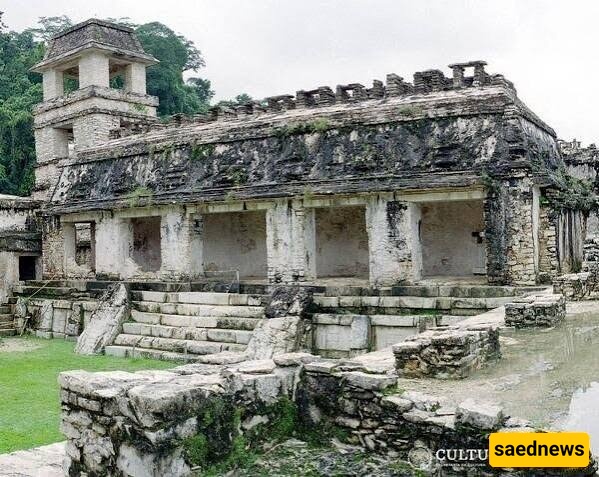
According to Saednews, Archaeologists have uncovered a rare Maya nose ornament intricately carved from a human bone at the ancient city of Palenque in southern Mexico. The remarkable artifact sheds new light on the ceremonial traditions and religious symbolism of the Classic Maya civilization.
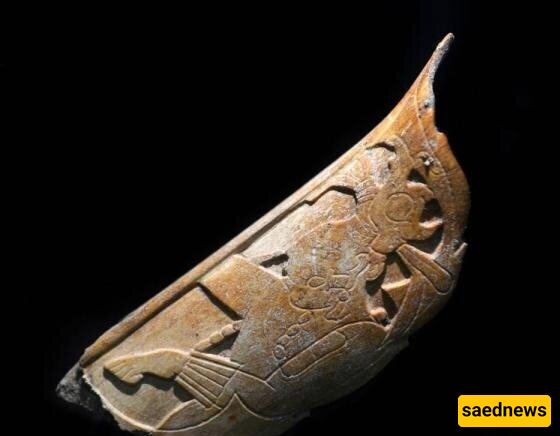
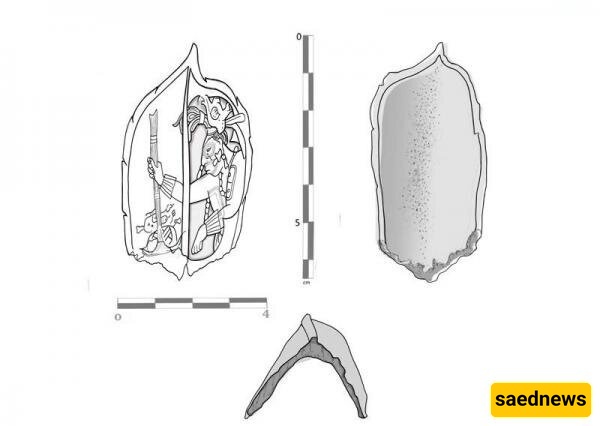
The ornament, measuring 6.4 centimeters long and 5.2 centimeters wide, was carefully crafted from a human leg bone that connects the ankle to the lower leg. The bone's natural ridge closely resembles the bridge of a human nose, making it an ideal material for the ceremonial object.
Researchers believe the nose ornament was worn by priests or rulers during important religious ceremonies. It is thought to represent K'awiil, the Maya deity associated with maize, fertility, and royal authority.
The design also reflects a distinctive Maya cultural practice. In some Maya communities, the skulls of infants were intentionally shaped while still soft, creating a sloping forehead that resembled depictions of the maize god. The bone ornament appears to have been carved to complement this modified facial profile.
One of the artifact's most striking features is its detailed engraving. On the left side is the image of a man wearing an elaborate headdress, wristbands, earrings, and a necklace decorated with spherical beads. An inscription on his left arm corresponds to the Maya glyph for "darkness" or "night."
His right hand, extending across the center of the ornament, holds a long staff decorated with a human skull and pieces of cloth near its lower end.
According to archaeologists, the central ridge of the nose ornament symbolized a gateway that individuals had to pass through to enter the realm of the gods. This concept frequently appears in Classic Maya art and religious iconography.
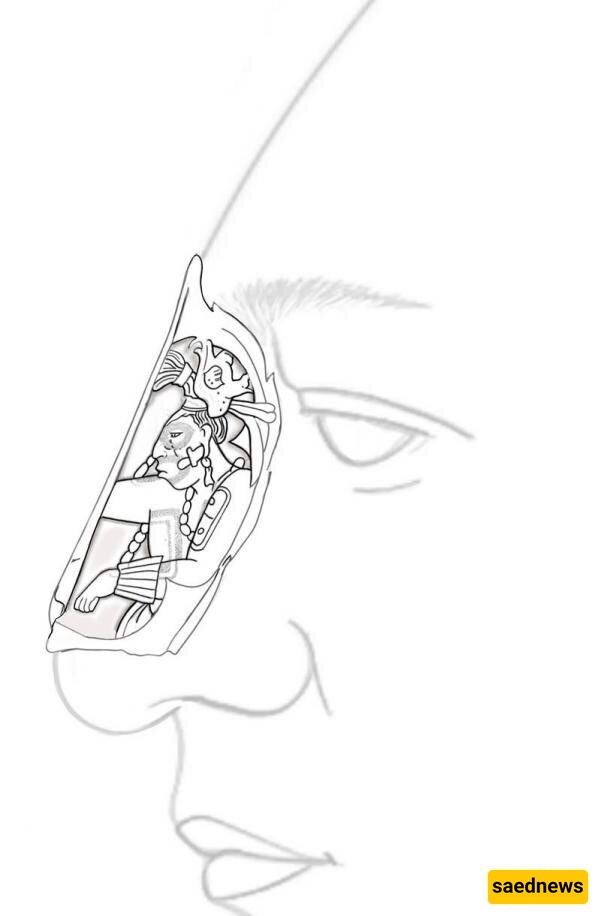
Similar nose ornaments have previously been depicted in Maya sculptures, suggesting they formed part of ceremonial attire reserved for members of the elite.
The artifact was discovered during excavations inside a Maya palace built between A.D. 600 and 850. It was found in a ritual deposit beneath a plaster floor, likely created for religious offerings.
Buried alongside the ornament were seeds, fragments of fish, turtle, and mammal bones, as well as pieces of stone blades and charcoal, indicating the deposit was part of a ceremonial offering rather than an ordinary burial.
The discovery provides valuable insight into the ritual practices, artistic craftsmanship, and religious beliefs of the ancient Maya, highlighting the sophistication of one of Mesoamerica's most influential civilizations.