Saed News: The United States and Israel were able to bomb Iran with almost no restrictions, yet Iran showed no signs of collapse. On the contrary, during 39 days of conflict, the country continued launching drones and missiles, managed to maintain its nuclear program, closed the Strait of Hormuz, and created global economic disruption.
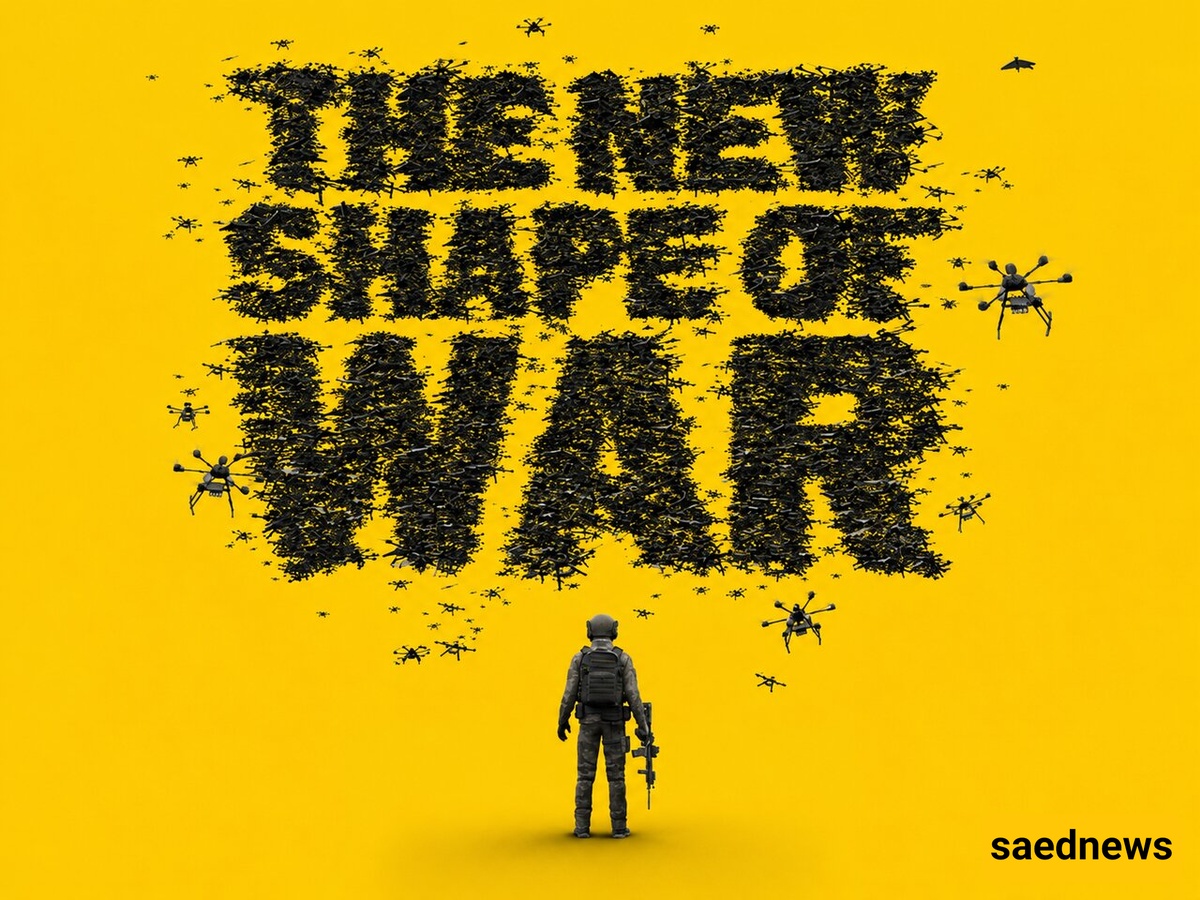
According to SAEDNEWS, In its new editorial titled “The New Shape of War”, The Economist writes:
Between 2021 and 2024, bullets and bombs killed nearly 750,000 people in wars. Even more died indirectly due to consequences such as famine and disease. Combat deaths over the past four years have reached their highest level since the end of the Cold War. But to what end? Even leaders who initiated recent wars cannot be satisfied with their outcomes. Russia’s invasion of Ukraine has turned into an embarrassing quagmire for Vladimir Putin. Donald Trump’s war against Iran has also gone seriously off track. These two chosen wars reveal two new battlefield realities: technology has made territorial advances harder for all armies, while also enabling weaker powers to create greater disruption when attacked by stronger states.
The Economist’s defense editor explains in his farewell article how war has changed over the past decade and how it may evolve in the future. The first major shift is that soldiers are now more visible than ever. Sensors and satellites can detect them, and cheap small drones can kill them. Armies must now work much harder to hide, move, and survive. The expanding “kill zone” in Ukraine, where troops move in small groups and robots evacuate the wounded and deliver supplies, symbolizes this transformation.
Technology is spreading rapidly. Israeli troops in Lebanon now face the same types of drones first used in Ukraine. Iranian missiles are far more accurate than the Scud missiles Iraq fired during the first Gulf War. If China were to invade Taiwan, its amphibious forces would face a storm of drones. Air superiority is now harder to achieve and offers less protection to ground forces due to a saturated new layer of drones in the sky.
Some analysts conclude that maneuver warfare is no longer possible. However, war is a Darwinian environment that constantly forces adaptation. The lesson from Ukraine is not that future wars will always consist of stagnant infantry lines, but that armies must learn to blind, disrupt, and evade surveillance systems and precision weapons.
Western militaries are lagging behind in this regard and need far more electronic warfare and counter-drone systems, as well as more realistic training. They must also integrate unmanned systems more aggressively into reconnaissance and logistics.
However, the West should not simply imitate Ukraine, which still suffers from serious weaknesses despite its innovation. Command structures remain overly centralized, and drone forces are not yet fully integrated with ground operations. Moreover, current drone warfare is smaller and shorter-ranged than what would be required in a large-scale Pacific conflict.
The second transformation is in targeting itself. AI-powered software now enables armies to identify and destroy targets at unprecedented speed and scale. The U.S. strike on Iran offers an early glimpse of this. In theory, an army that destroys command centers and weapons faster than its opponent can force rapid surrender—but in practice, this is extremely difficult.
The United States and Israel were able to bomb Iran almost without limitation, yet Iran did not collapse. Instead, it continued drone and missile attacks for 39 days, preserved its nuclear program, closed the Strait of Hormuz, and created global economic shockwaves. While Trump celebrates the number of Iranian targets destroyed, targeting must serve strategy—not replace it. The war, which was expected to be short and decisive, quickly depleted America’s stockpiles of expensive munitions and revealed limited tolerance for costs and casualties.
In previous conflicts such as Vietnam and Afghanistan, weaker sides often prevailed by fighting on home ground. Now, weaker actors also have access to precision-guided weapons.
The third transformation is the erosion of the rules of war. Russia has engaged in systematic attacks on civilians in Ukraine. Hamas has glorified mass killings of civilians. At the same time, Western democracies have also been accused of violating norms, including Israel’s actions in Gaza and rhetoric from some U.S. officials. Such violations are not only unethical but also strategically dangerous, as future wars will bring long-range weapons closer to civilian populations everywhere.
Future wars are likely to increase. Trump’s weakening of U.S. alliances has reduced deterrence. Leaders worldwide may still believe wars will be quick and cheap, but evidence suggests otherwise: wars are becoming harder to win, weaker states can more easily resist stronger ones, and starting wars is far easier than ending them.