SAEDNEWS: Ayatollah Mohsen Qomi, a member of the presiding board of Iran’s Assembly of Experts, has issued a detailed statement explaining the process that led to the selection of Ayatollah Seyyed Mojtaba Hosseini Khamenei as the third Supreme Leader of the Islamic Revolution.
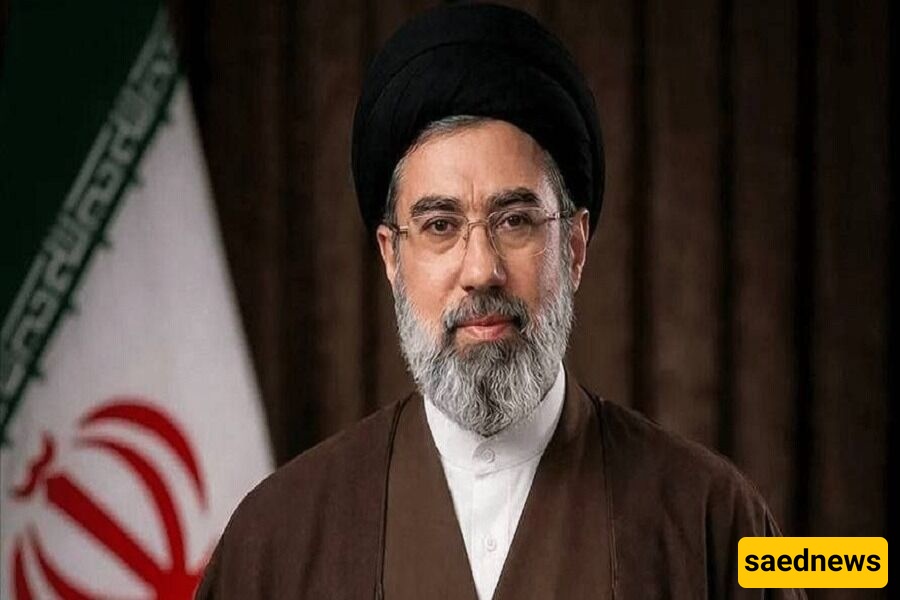
According to SAEDNEWS, According to the statement, the Assembly of Experts should not be judged by the number of laws it passes. Unlike many other parliaments around the world, the Assembly rarely issues legislation. However, its limited decisions are highly strategic and can influence not only the present but also future generations and various dimensions of social and individual life.
Qomi emphasized that in moments when the country faces the absence of a leader, the Assembly has the ability to restore stability quickly. He described the institution as a body that acts during critical historical moments. He pointed out that this role had previously been demonstrated in 1989, when the Assembly selected Ayatollah Ali Khamenei as Supreme Leader, and again in 2025, when the third leader of the Islamic Revolution was chosen.
Under Articles 107, 109, and 111 of Iran’s Constitution, the Assembly of Experts holds several key responsibilities:
Evaluating and consulting on candidates for leadership
Accelerating the process of selecting a new Supreme Leader when necessary
Monitoring whether the leader continues to meet the required qualifications
Following the announcement of the Supreme Leader’s death early Sunday morning, the Assembly’s presiding board convened immediately the same day and continued discussions on Monday.
Due to the security and wartime conditions in the country, and threats directed at the Assembly’s gathering, it was decided that the secretariat would first ask members to propose potential candidates for leadership. This stage was not considered a vote but merely an effort to compile a list of suggested nominees.
In a second phase, members of the Assembly’s leadership planned to meet representatives individually to collect official votes after presenting the compiled list of candidates.
While this first stage of collecting nominations was underway, an attack reportedly targeted the Assembly of Experts’ building in Qom on Tuesday afternoon, which the statement attributed to U.S. and Israeli forces. Several individuals were killed in the strike, including Martyr Samei, who had been holding part of the submitted nomination statements. As a result, access to those proposals was lost.
The process continued over the following days, but debates emerged about whether it would be possible to convene an official session of the Assembly under the security threats. There were also concerns about the legal legitimacy of conducting voting outside a formal session, since such procedures are not explicitly provided for in the relevant regulations.
Three main viewpoints were discussed:
Treating the compiled nominations as the final vote.
This proposal was rejected because the nominations were not formal votes, and some members had listed more than one candidate.
Applying the “theory of discovery,” which argues that the Assembly’s vote merely reveals an already established leadership choice.
This interpretation was also rejected because no formal vote had yet taken place.
Conducting individual votes outside a formal session.
Although this approach gained some support, it still faced legal concerns unless justified under emergency conditions.
Ultimately, with significant security measures organized by the Islamic Revolutionary Guard Corps (IRGC) and cooperation from other institutions, a formal session of the Assembly of Experts was successfully convened on Sunday.
Out of 84 members, 59 representatives attended, exceeding the required quorum of two‑thirds (56 members).
After reviewing evaluations prepared by a three‑member committee and consulting with experts, the Assembly held its vote. With approximately three‑quarters of the votes, Ayatollah Seyyed Mojtaba Hosseini Khamenei was elected as the third Supreme Leader of the Islamic Revolution, and the result was announced immediately.
Ayatollah Qomi concluded his statement by highlighting several key points:
The strong public demand for the swift selection of a new leader demonstrated national awareness and unity.
The selection of a qualified scholar familiar with regional and international affairs received widespread support from both the Assembly and many people in Iran and abroad.
Successfully holding the Assembly’s session despite threats was described as a major achievement and a sign that foreign threats had failed.
He also stressed that the process showed the Assembly of Experts remains a decisive institution capable of resolving critical moments in the Islamic Republic’s political system.
The statement ended with a Quranic phrase:
“Victory comes only from God, the Almighty, the Wise.”