SAEDNEWS: Godayar Khan Palace in Kokand is a stunning 19th-century landmark showcasing the rich fusion of Persian and Central Asian art.
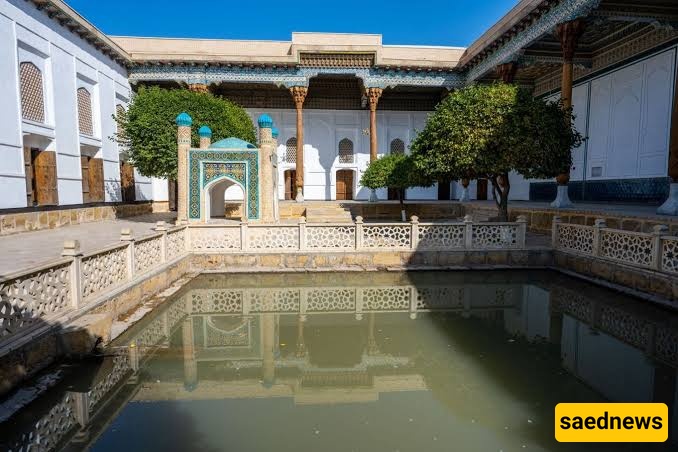
According to Saednews, Uzbekistan, this ancient land in the heart of Central Asia, is home to a remarkable collection of historical and cultural treasures that attract travelers from around the world every year. Among the country’s many historic attractions, the Khudayar Khan Palace in the city of Kokand holds a special place as one of the most magnificent surviving monuments associated with the local dynasties of Central Asia. Built in the 19th century, the palace is not only a symbol of the grandeur and authority of the final period of the Kokand Khanate, but also a remarkable reflection of the region’s rich architectural traditions, decorative arts, and cultural heritage.
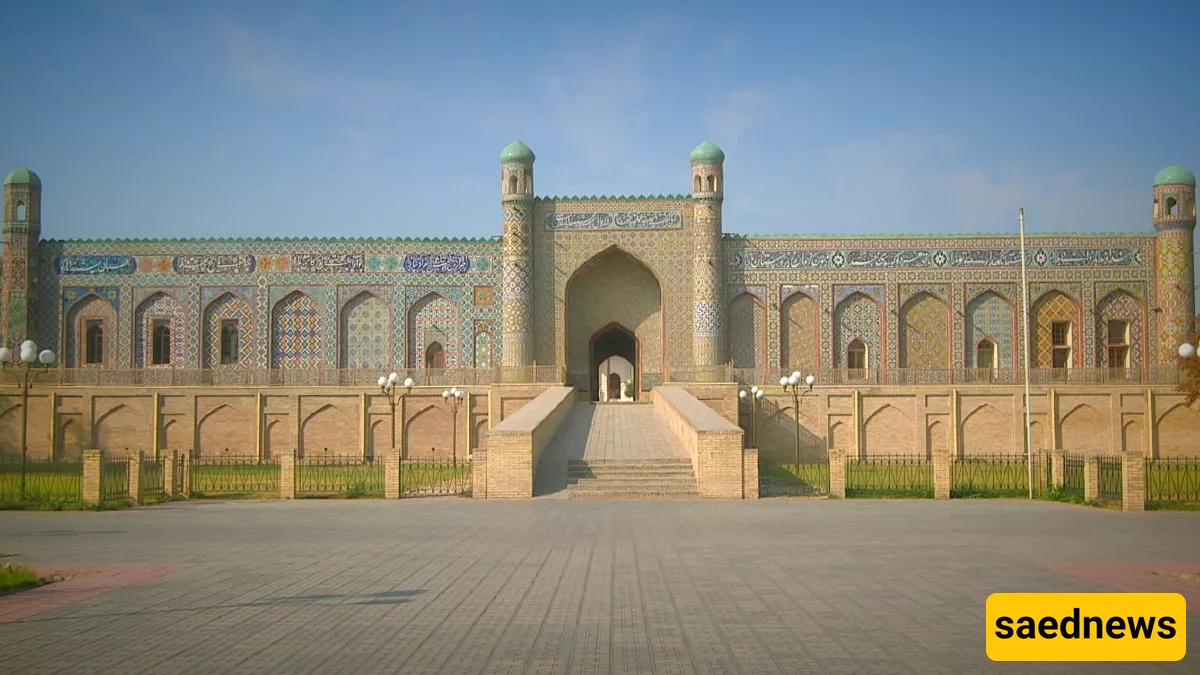
Khudayar Khan Palace stands in Kokand, located in the fertile Fergana Valley of eastern Uzbekistan. During the 18th and 19th centuries, Kokand was the center of the Kokand Khanate, one of the three major khanates of Central Asia that existed during the same era as Iran’s Qajar dynasty. At the height of its power, the Kokand Khanate controlled a vast territory that included parts of present-day Tajikistan, Kyrgyzstan, and Kazakhstan.
Khudayar Khan, who ruled intermittently from 1845 to 1875, was the last powerful ruler of the khanate. During his reign, he decided to construct a palace whose grandeur and magnificence would be unparalleled, reinforcing his authority and legitimacy. Construction of the enormous palace began in 1871 and took approximately two years to complete.
Khudayar Khan Palace covered an area of nearly four hectares. Historical sources indicate that thousands of workers and artisans from across the khanate participated in its construction. Architects and master craftsmen combined traditional Fergana architectural techniques with influences from Persian, Turkic, and Russian architectural styles to create a monument that continues to attract the attention of experts more than 150 years later.
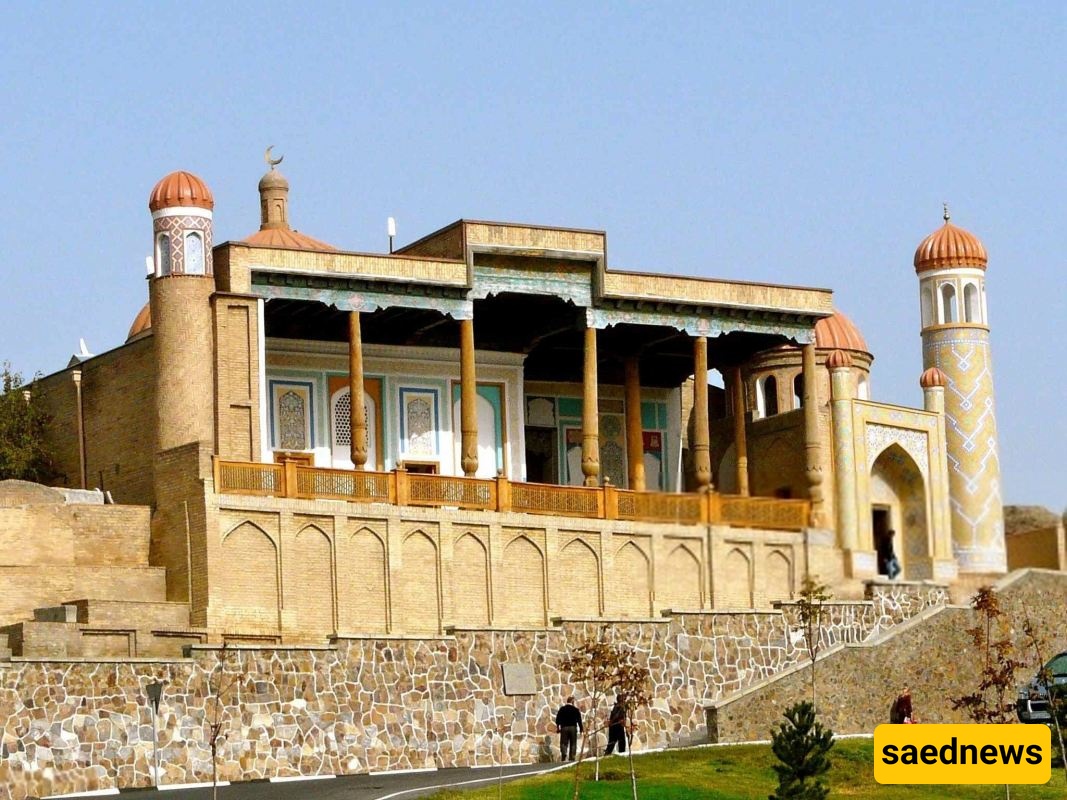
More than 100 rooms were originally built within the palace complex, although only a small portion of the original structure survives today. In the years following the collapse of the khanate, significant sections of the palace were destroyed. Nevertheless, the remaining structures still convey a powerful sense of the grandeur and splendor of the past.
What distinguishes Khudayar Khan Palace from many other historic monuments in Uzbekistan is its remarkable combination of traditional Persian architectural elements and local Central Asian characteristics. Columned iwans, pointed arches, and central courtyards are reminiscent of Persian architecture. At the same time, the use of glazed bricks in turquoise, deep blue, and white, colorful wall decorations, intricate mosaic tiles, and distinctive domes reflects the unique visual identity of Central Asia.
One of the palace’s more unusual features is the presence of stone turtle sculptures beside the entrance gateways. This symbolic element, which can be found in a number of ancient structures in the Fergana region, represents endurance and longevity.
The tall, arched gateways are decorated with Quranic inscriptions and Persian poetry, reflecting the deep influence of the Persian language and culture at the Kokand court.
The palace’s interior decorations feature plaster muqarnas and intricate wooden geometric work. The artists of the period decorated wooden ceilings with elaborate arabesque and floral motifs, while the walls were embellished with vivid murals.
These paintings depict hunting scenes, royal ceremonies, and traditional Persian floral compositions known as gol-o-morgh. On the exterior, delicate brickwork combined with seven-color tiles creates striking façades in which every section reflects a different aspect of the palace’s artistic heritage.
Following the annexation of the Kokand Khanate by the Russian Empire in 1876, Khudayar Khan Palace was given a military function, and large parts of the complex were destroyed.
Today, however, the surviving portion of the palace has become one of Uzbekistan’s important cultural museums. The Kokand Regional Museum is housed within the palace and displays a rich collection of historical, cultural, and ethnographic artifacts from the Fergana region.
Visitors can see collections of old coins, finely decorated manuscripts, handwoven carpets, traditional embroidery, musical instruments, and ceramic objects.
These collections not only demonstrate the cultural richness of the Fergana Valley, but also provide insight into the social and economic life of the Kokand Khanate during the 19th century.
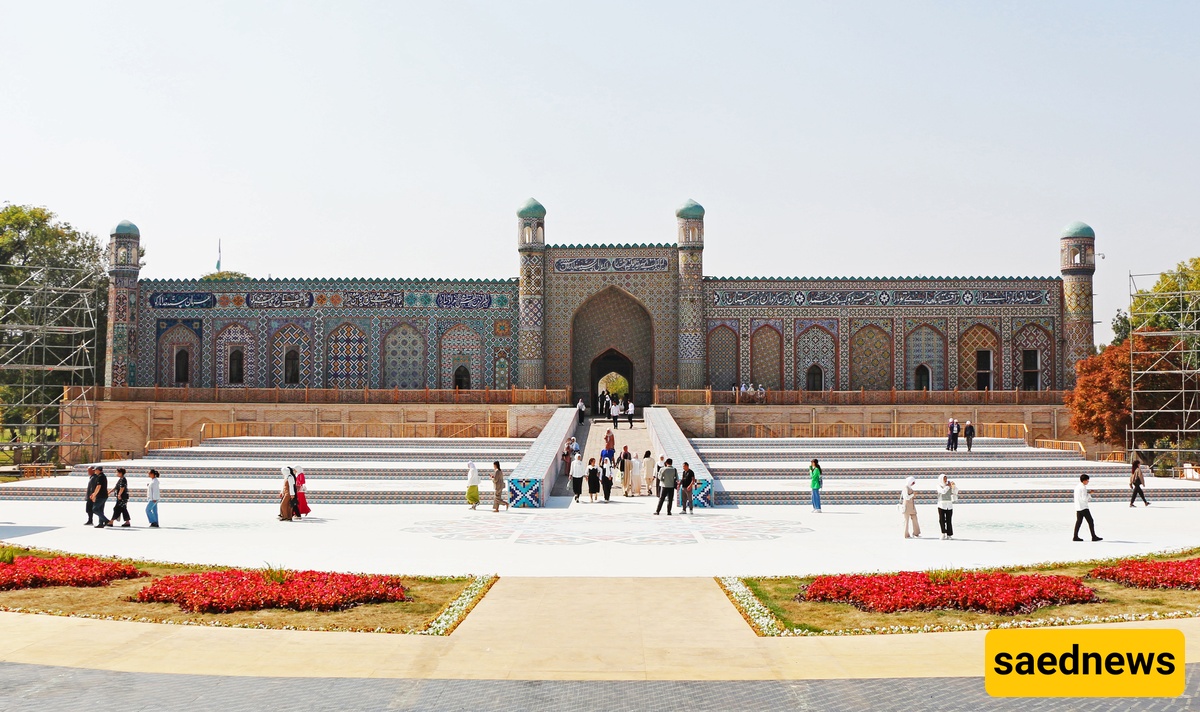
In the palace grounds, courtyards featuring cypress and pomegranate gardens, reflecting pools, and large iwans evoke the appearance of affluent Qajar-era residences in Iran.
This resemblance is not entirely coincidental. Throughout its history, the Kokand Khanate maintained close cultural and commercial connections with Qajar Iran. Many principles of architecture, courtly art, and even ceremonial customs were influenced by the royal court in Tehran.
For Iranian travelers, walking through the palace can therefore create a strong sense of familiarity and historical nostalgia.
Uzbekistan, often regarded as a heartland of Silk Road civilization, offers far more than Khudayar Khan Palace. Combining a visit to Kokand with the country’s other historic destinations provides a broader understanding of Uzbekistan’s remarkable past.
The city of Samarkand, once the capital of Timur’s empire, is home to the Registan complex, the Bibi-Khanym Mosque, and the Gur-e-Amir Mausoleum. Together, these monuments represent the extraordinary achievements of Timurid architecture.
The city’s turquoise and gold tilework is renowned throughout the world.
With more than 140 historic monuments, Bukhara seems to have emerged from the pages of an ancient legend. The Po-i-Kalyan complex, the Ark of Bukhara, and the Mausoleum of Ismail Samani are among its most important landmarks.
The history of the city stretches back centuries before the Common Era, and during the Samanid period, Bukhara became an important intellectual and cultural center of the Islamic world.
The ancient city of Khiva, with its walled inner city of Ichan-Kala, a UNESCO World Heritage Site, is another major destination in Uzbekistan.
The city remained enclosed by defensive walls until the 20th century and has preserved much of its historic character. Exploring Ichan-Kala offers visitors the feeling of stepping into a distant era.
Tashkent, the capital of Uzbekistan, has undergone extensive modernization but still preserves important landmarks such as the Hazrati Imam Complex and the famous Chorsu Bazaar.
The city also serves as one of the main starting points for exploring Uzbekistan and the historic Silk Road.
Today, Khudayar Khan Palace is regarded as a symbol of the historical identity of the people of the Fergana Valley. While many historic monuments in the region suffered damage during wars and periods of political upheaval, the preservation of the palace represents Uzbekistan’s continuing efforts to protect and honor its ancestral heritage.
The museum’s collections introduce younger generations to the lifestyles, clothing, music, traditions, and customs of their ancestors.
The palace also serves as a venue for cultural events and traditional festivals. Throughout the year, performances of traditional maqom music and exhibitions of local handicrafts take place in its courtyards, bringing the historic setting to life.
The best times to visit Kokand and Khudayar Khan Palace are spring, particularly April and May, and autumn, especially September and October, when the weather is generally mild and pleasant.
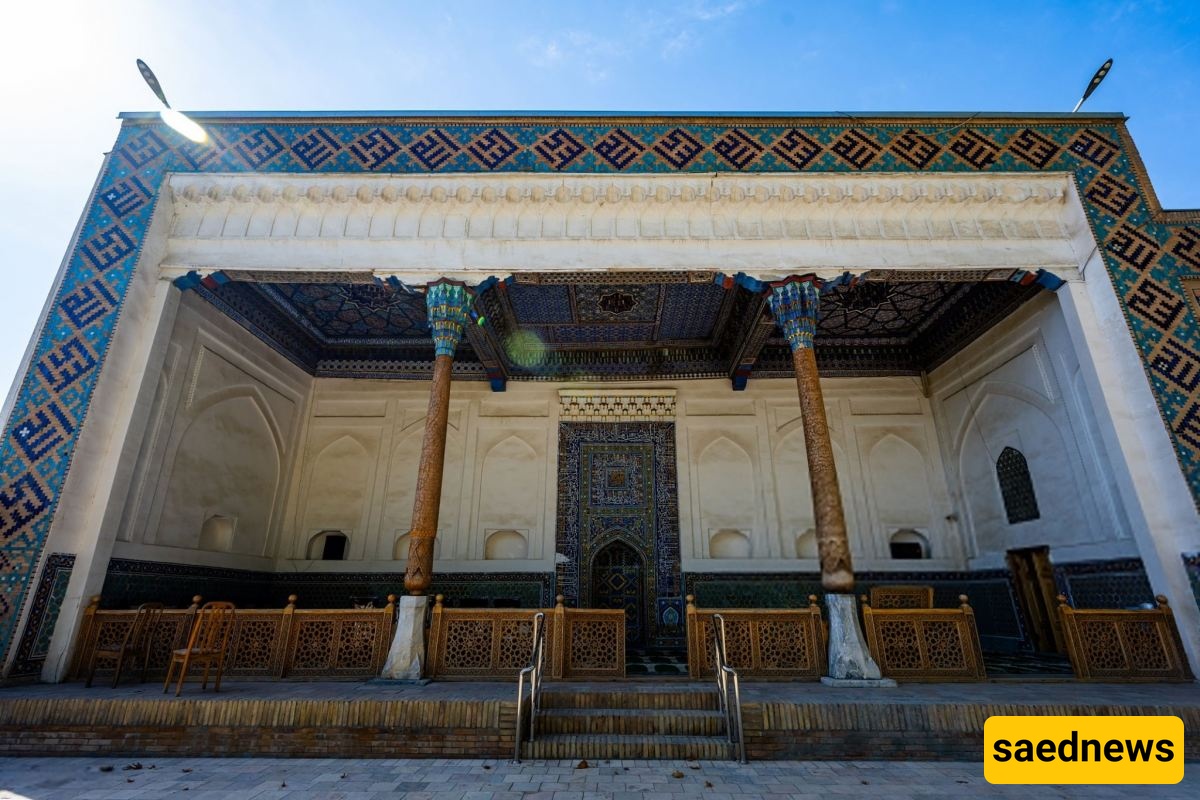
Kokand can be reached from Tashkent by railway and road, with the city located roughly 220 kilometers from the capital. Traveling by day or overnight train from Tashkent to Kokand can itself be an enjoyable part of the Uzbekistan travel experience.
When visiting the palace, it is worth allowing approximately two to three hours to explore the museum rooms and surviving sections of the complex. Photography is permitted in many areas, although certain sensitive historical artifacts may have photography restrictions. Visitors should follow the signs and instructions displayed inside the museum.
For a more comprehensive journey through Uzbekistan, consider the route:
Tashkent → Kokand → Fergana → Samarkand → Bukhara → Khiva
Beginning the journey in Kokand offers an opportunity to discover the local culture and deep history of the Fergana Valley before moving on to Uzbekistan’s major tourist cities. It adds another layer to the understanding of the Silk Road, revealing a side of Central Asian history that extends beyond the country’s most famous monuments.