SAEDNEWS: Located in northwestern China’s Qinghai Province, Devil’s Eye Lake is one of the country’s most mysterious and lesser-known natural wonders, attracting curious visitors from around the world each year.
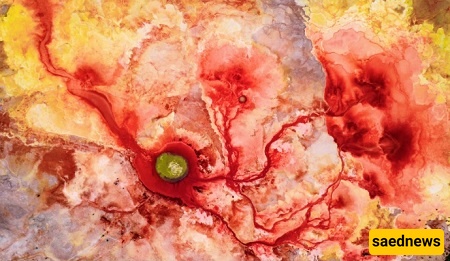
According to Saednews, There are many unsolved mysteries and strange places around the world. One of the most fascinating is Aiken Spring, also known as Aiken Lake or the “Eye of the Devil.” Located in China, this mysterious natural wonder is often described as being as intriguing and unexplained as the Bermuda Triangle.
The name Aiken means “terrifying” in Mongolian, a fitting name given the eerie appearance and unusual environment surrounding the spring.
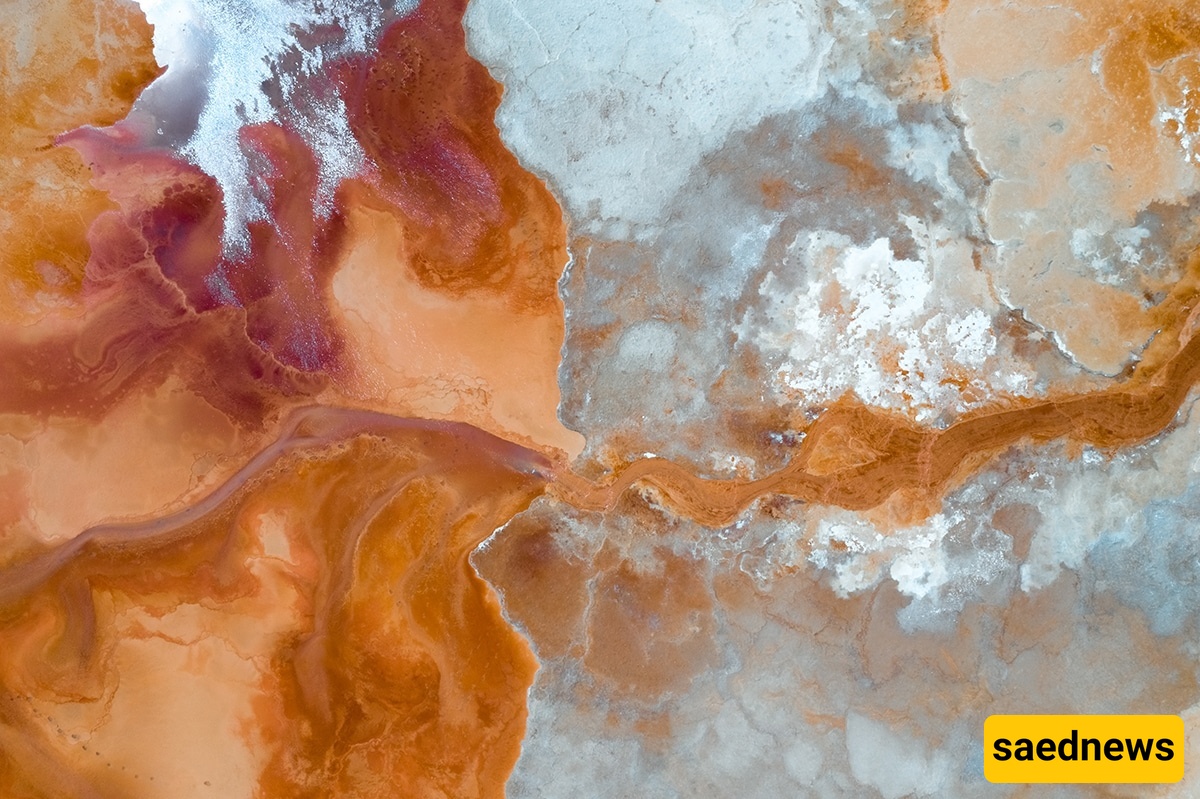
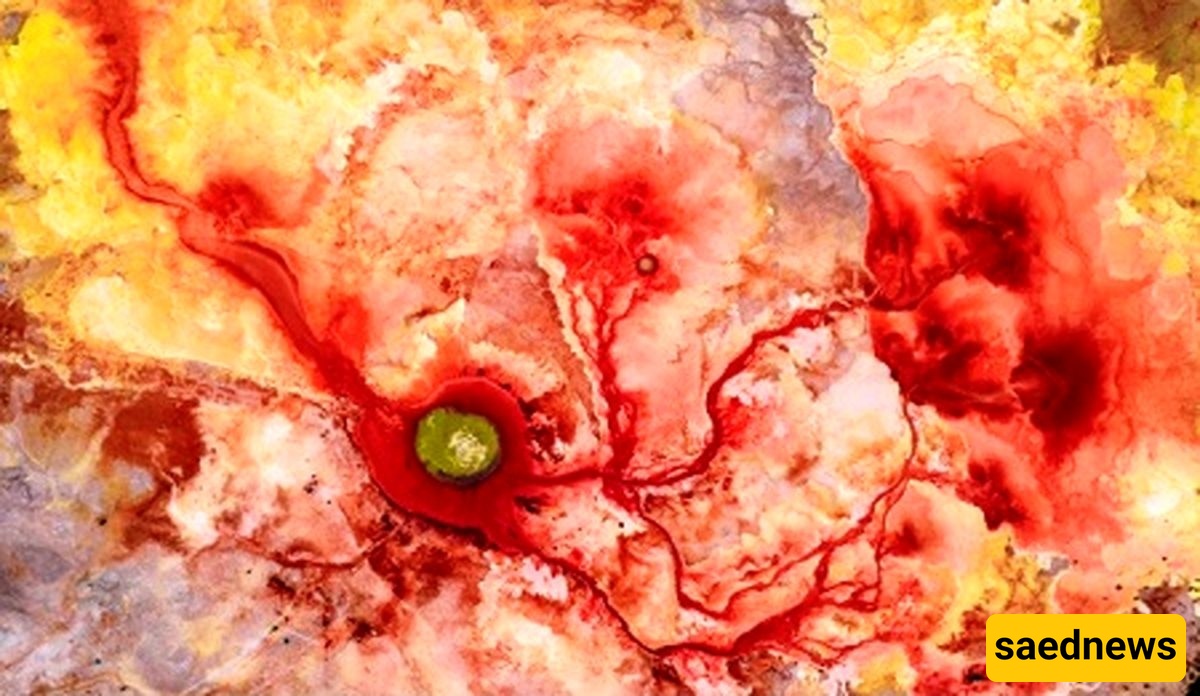
Aiken Spring is located near Mangya City in Qinghai Province, in an area close to the Qinghai-Tibet region. The spring contains extremely high levels of sulfur, which has dramatically altered the surrounding landscape. The ground has turned shades of deep red, orange, and yellow, creating an appearance that resembles a giant eye when viewed from above.
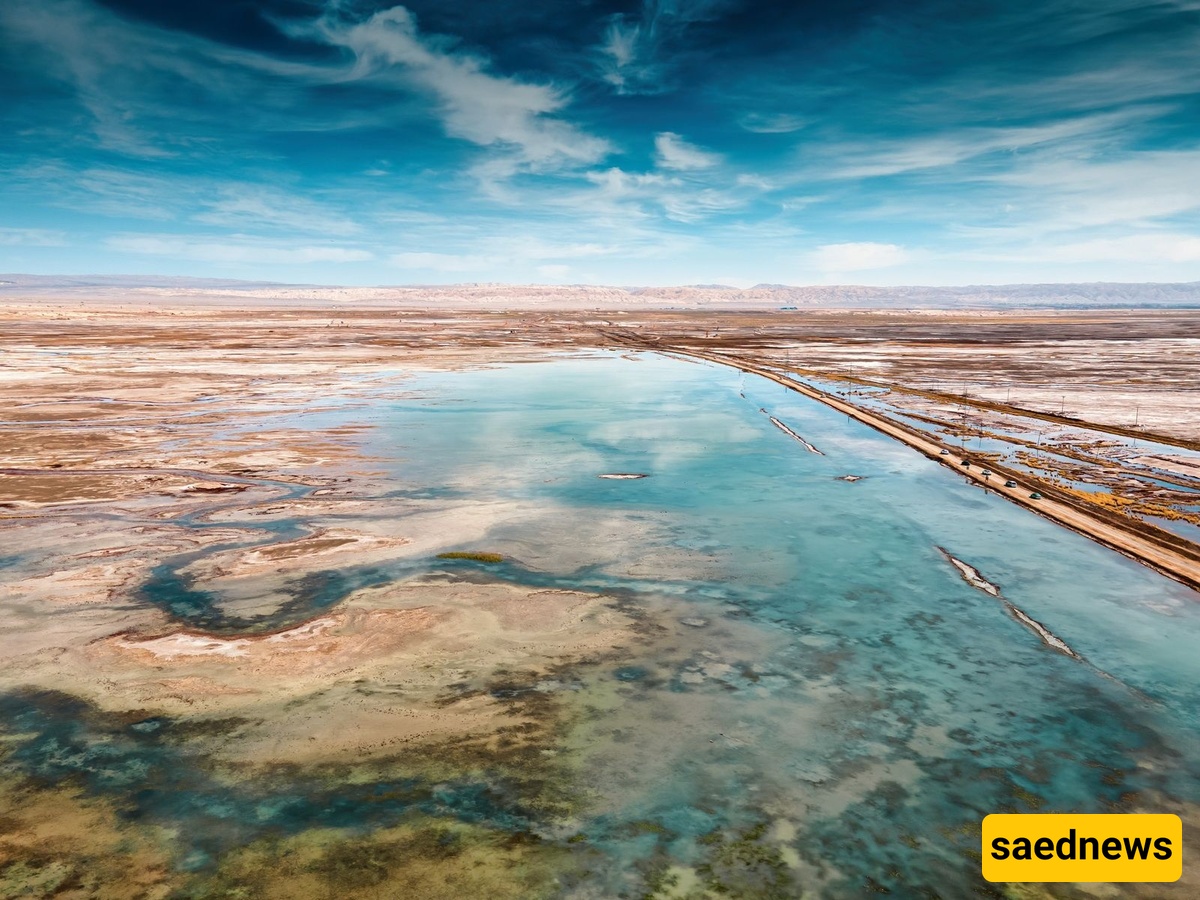
The water at Aiken Spring is constantly boiling, and water flowing from the spring spreads across the remarkably flat surrounding terrain. Over time, this has contributed to the formation of a barren landscape.
Almost no vegetation grows immediately around the spring, and animals generally avoid approaching it. The striking contrast between the vivid blue water and the reddish-orange mineral deposits makes the area look almost like a surreal painting.
Aiken Spring is also reported to be exceptionally deep, with its depth often stated as approximately 647 meters, making it one of the deepest known hot springs in Qinghai.
The combination of sulfur-rich water, alkaline soil, and acidic conditions has created an extraordinary natural landscape.
When viewed from above, Aiken Spring does not initially look very different from other hot springs. Its irregular, roughly circular pool contains blue-colored water.
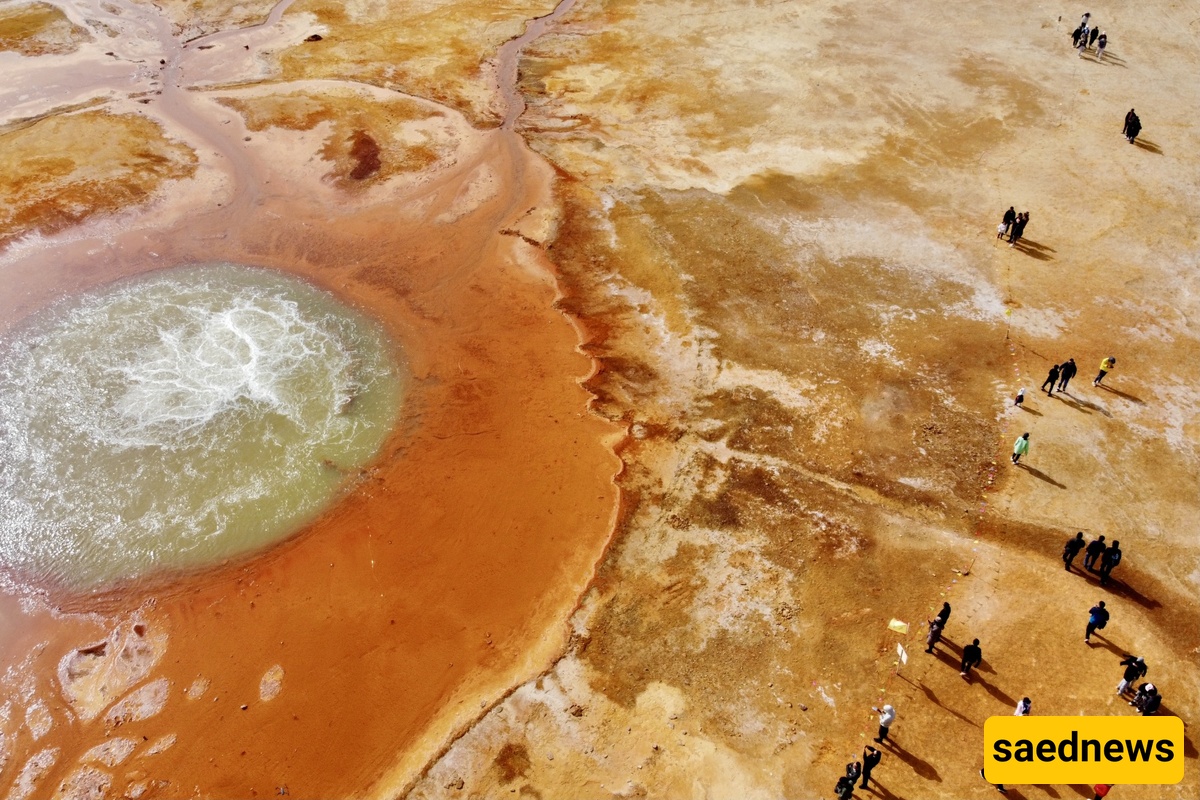
However, surrounding the blue pool is a broad ring of deep red mineral deposits. This reddish ring surrounding the blue center creates the striking appearance of a giant, sunken eye. Because of this unusual formation, locals and visitors commonly refer to it as the “Eye of the Devil.”
The spring has been known for decades, and researchers have studied its unusual geological and chemical characteristics since its discovery.
One of the earliest written accounts of Aiken Spring is associated with the Russian explorer Nikolai Przhevalsky, who documented his travels toward Lop Nur more than a century ago.
Following the publication of his writings, more explorers and researchers became interested in the region. They noticed that the area immediately surrounding Aiken Spring was remarkably barren. There was little or no grass, and animals were rarely seen close to the spring.
Interestingly, the landscape changes farther away from the spring. Green vegetation and herds of cattle and sheep can be found in the surrounding region.
The unusual environment around Aiken Spring has generated considerable curiosity and speculation.
Researchers have suggested that the spring may be surrounded by extensive marshland containing animal bones. One possible explanation is that animals attempting to approach the spring could become trapped in the surrounding wetlands and perish.
Over a long period of time, this may have contributed to animals naturally avoiding the area. The remains of some animals can reportedly still be found around the spring.
Rather than being the result of an unexplained supernatural phenomenon, however, the dangerous terrain and extreme chemical conditions provide more plausible natural explanations for the area's reputation.
As researchers approach the spring, the environment becomes increasingly harsh, yet the landscape becomes even more spectacular.
The boiling water shines an intense blue, surrounded by a vivid red-orange mineral ring. Water continuously rises from deep underground, creating a constantly active surface.
From certain viewpoints, the circular pool appears almost like a giant eye staring toward the sky.
Scientific analysis has shown that the water contains a high concentration of minerals, including significant amounts of sulfur. These chemical conditions help explain why the surrounding area is largely devoid of vegetation and why the environment is so hostile to animals.
The extremely sulfur-rich water can be harmful to living organisms and can also affect the surrounding geological environment.
Throughout the year, the water gradually erodes the rocks around the spring. These rocks contain sulfur and other minerals. Although their surfaces may appear hard and solid, some areas can actually be soft and unstable, making the terrain potentially dangerous to walk across.
Researchers have also suggested that Aiken Spring may once have been considerably larger. The extensive marshland surrounding the present-day spring could indicate that the spring and its associated water system covered a much wider area in the distant past.
For many years, one of the most common scientific explanations was that a large underground water system existed beneath Aiken Spring. According to this idea, substantial groundwater flowing beneath the region could be responsible for feeding the spring.
However, because of the extreme conditions and depth of the spring, directly investigating its deepest sections has been difficult.
More than a decade ago, scientists conducted large-scale investigations around Aiken Spring. Their calculations indicated that considerable underground water resources exist in the region, lending support to the groundwater hypothesis.
In more recent discussions, another possibility has attracted attention: the formation of Aiken Spring may be connected to movements in the Earth's crust.
Qinghai lies across several fault zones, and the river valleys surrounding these geological structures have developed over long periods of time. Such geological conditions can contribute to the formation of depressions and natural water systems.
Both the underground-water and geological-fault theories may explain parts of the spring's formation, but further research is still needed to determine exactly how this extraordinary natural feature developed.
Today, Aiken Spring remains one of the most unusual landscapes in Qinghai. Its brilliant blue boiling water, enormous red-orange mineral ring, sulfur-rich environment, and barren surroundings create an almost otherworldly scene.
Although its appearance has inspired countless legends and mysterious stories, scientific research continues to reveal natural explanations behind the “Eye of the Devil.” Yet many questions about its geological history and underground water system remain unanswered, ensuring that Aiken Spring continues to fascinate explorers, researchers, and travelers.