SAEDNEWS: Discover Atatürk’s Mausoleum, a historic landmark in Turkey, along with its address and essential visitor information for travelers planning a visit.
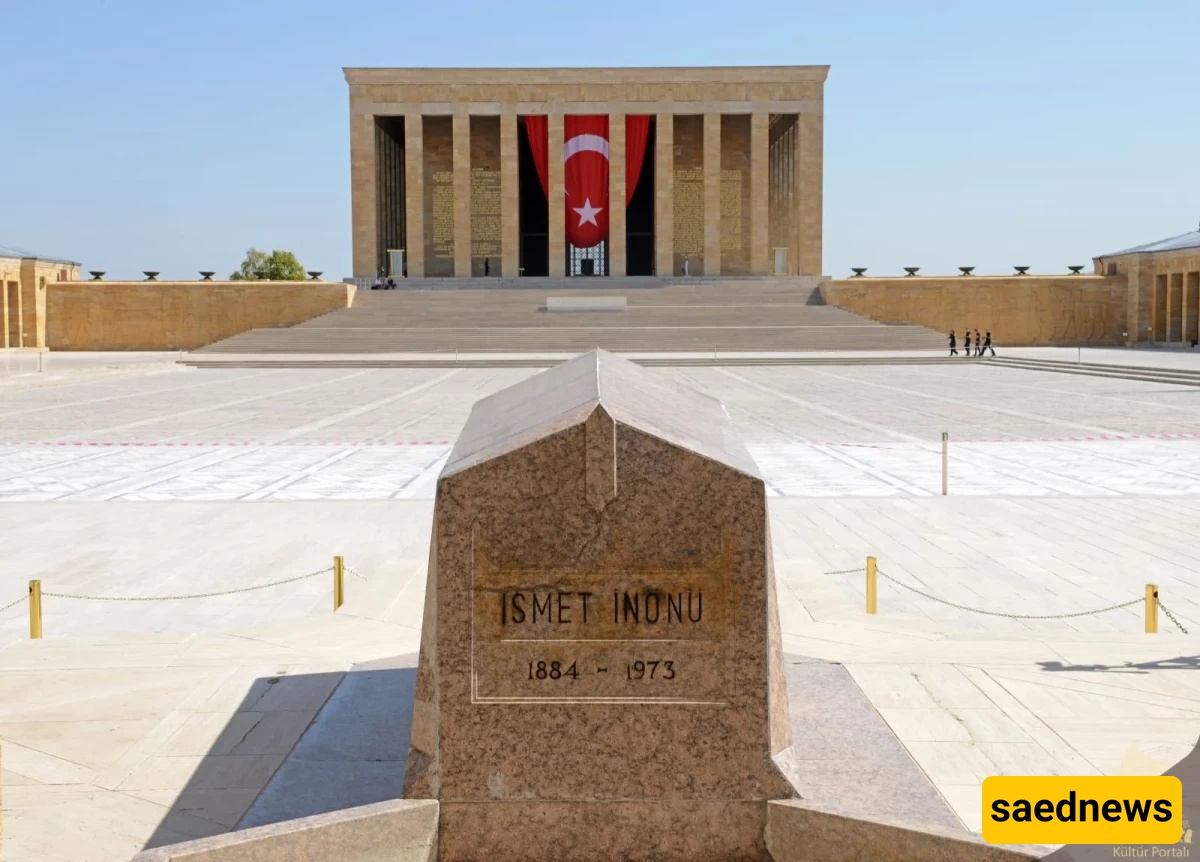
According to Saednews, Anıtkabir is one of the most famous and significant landmarks in Turkey. Many visitors travel to Ankara specifically to pay their respects at the mausoleum of Mustafa Kemal Atatürk, the founder of modern Turkey.
Mustafa Kemal Atatürk was one of the most influential political leaders in modern Turkish history. He introduced major reforms in Turkey’s political and social systems and gained a special place in the hearts of the Turkish people.
Atatürk passed away on 10 November 1938. Six years later, construction of his mausoleum began. The construction process took approximately nine years and was completed in 1953, after which it was opened to the public.
Anıtkabir is located in Çankaya district of Ankara, and reaching the mausoleum is quite easy. Visitors exploring Ankara can conveniently include this important historical site in their itinerary.
The Anıtkabir complex consists of several important sections, each representing different aspects of Turkish history, independence, and respect for Atatürk.
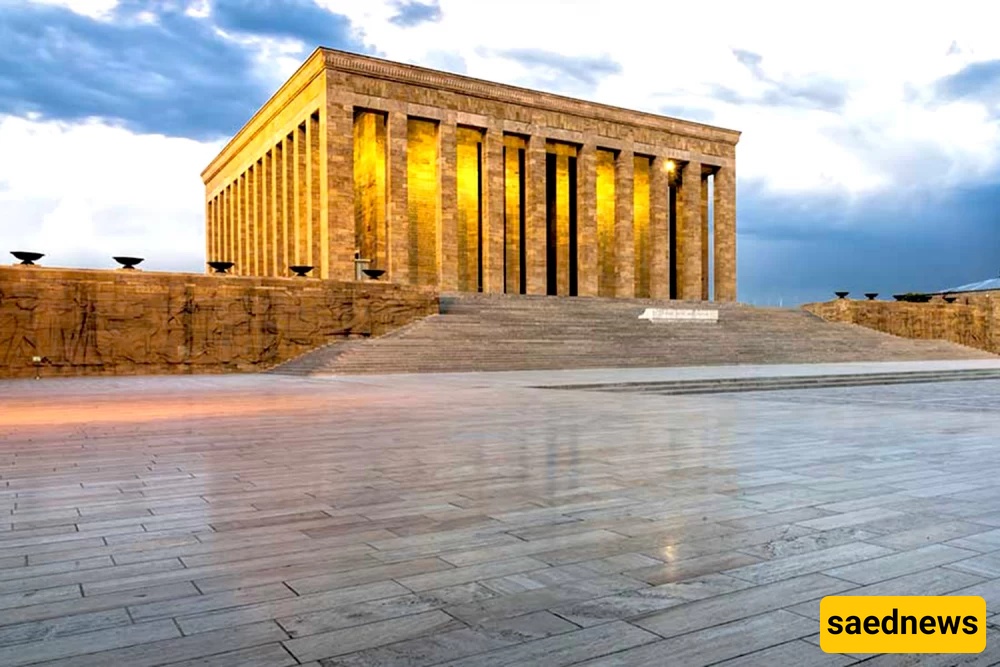
Surrounding the mausoleum is a large green area known as Peace Park, covering approximately 630,000 square meters. The park contains around 50,000 trees and more than 100 varieties of flowers from different parts of the world.
Visitors who enjoy nature, gardens, and peaceful surroundings should not miss a walk through Peace Park.
The Independence Tower features a beautiful stone carving depicting a symbolic figure holding a sword. Inside the tower, visitors can also see a collection of Atatürk’s famous statements about independence.
The Freedom Tower displays a stone relief representing an angel of freedom, symbolizing sacred values. The tower also contains inscriptions featuring Atatürk’s words about liberty.
Opposite the Freedom Tower stands a statue group of three Turkish women. Each figure represents an important characteristic associated with Turkish women.
The first woman is shown praying for God’s mercy for Atatürk.
The second woman represents the sadness and mourning felt after Atatürk’s death.
The third woman carries a sheaf of wheat, symbolizing prosperity and abundance in Turkey.
Next to the women’s statues is a group sculpture of three Turkish men. Each figure represents a different segment of Turkish society:
A Turkish soldier
An educated young citizen
A Turkish villager
The expressions on their faces reflect the sorrow caused by Atatürk’s passing.
One of the most famous sections of Anıtkabir is the 262-meter-long Road of Lions, which leads to the Ceremonial Plaza.
Along this pathway are 24 seated lion statues, representing the 24 tribes of the Oghuz Turks. The lions symbolize strength, peace, and stability.
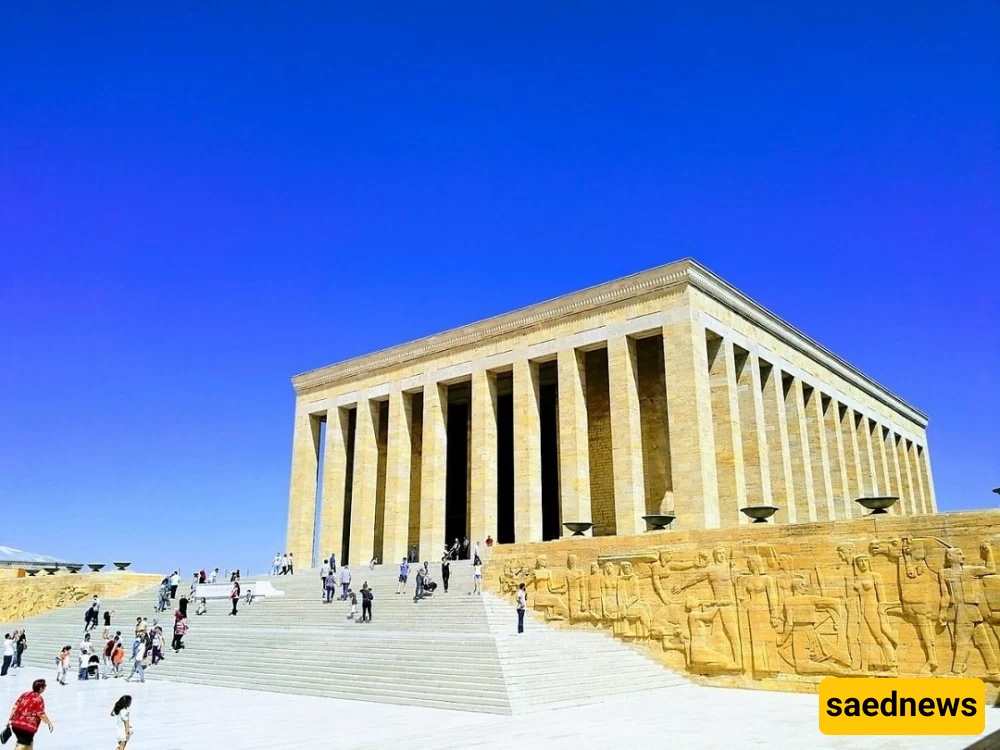
The Road of Lions ends at the Ceremonial Plaza, a large rectangular area capable of holding approximately 15,000 people at the same time.
This area hosts major national ceremonies in Turkey, including celebrations such as Republic Day.
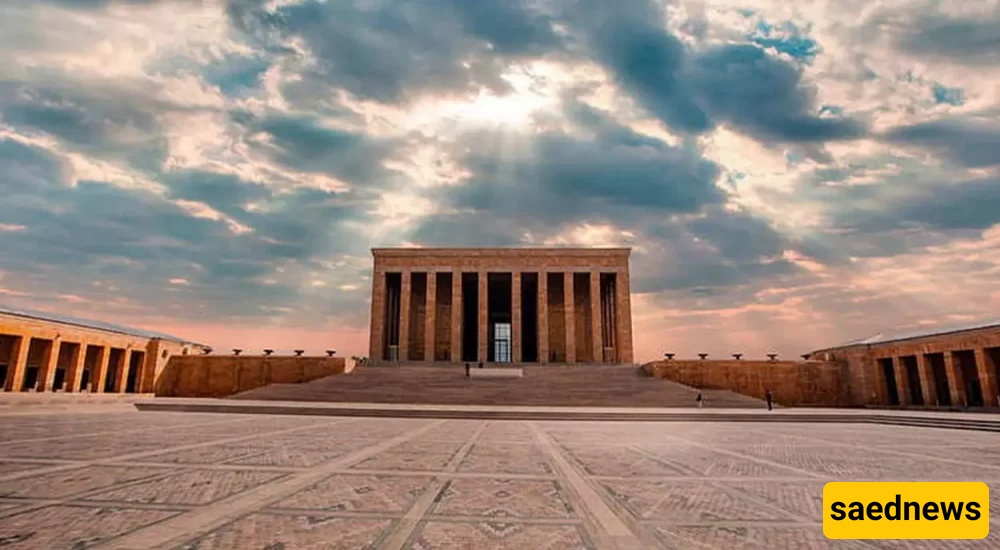
The floor of the plaza is decorated with traditional carpet-inspired stone patterns, creating a unique and impressive appearance.
The Atatürk Museum is one of the most important sections of Anıtkabir. It was opened on 21 June 1960 and houses many of Mustafa Kemal Atatürk’s personal belongings.
A visit to the museum provides valuable information about Atatürk’s life, personality, and lifestyle.
The main mausoleum building is divided into three primary sections:
Atatürk’s Mausoleum
Hall of Honor
Burial Chamber
The main mausoleum area is located in the central square of the complex. Visitors reach it by climbing the entrance stairs.
After passing the stairs, visitors see a square-shaped structure surrounded by columns. Golden inscriptions featuring Atatürk’s words are displayed on the walls on both sides of the building.
The Hall of Honor contains a symbolic tomb for Atatürk. The red-colored stone tomb is located at the end of the hall and creates a magnificent view.
The walls feature inscriptions of Atatürk’s speeches, along with several bronze torches that add to the solemn atmosphere.
The actual burial chamber is located beneath the symbolic tomb on the ground floor. The chamber has an octagonal design with a pyramid-shaped ceiling.
At the center of the room is a red coffin filled with soil collected from different regions of Turkey.
Visitors coming to Anıtkabir can benefit from various facilities designed for comfort and convenience, including:
Audio guides
Walking paths
Restrooms
Galleries
Gift shops
Other visitor services
Visitors traveling to Ankara can use several forms of public transportation to reach the mausoleum.
Taking a bus is one of the easiest ways to reach Anıtkabir. The nearest bus stop is Anadolu Meydanı, located approximately 200 meters from the main entrance.
Visitors can also use Ankara’s metro system. The closest metro station is Maltepe Station, which is around 700 meters from Anıtkabir.
Before visiting Anıtkabir, travelers should check the opening hours:
1 February to 13 May: 9:00 AM – 4:30 PM
14 May to 31 October: 9:00 AM – 5:00 PM
1 November to 31 January: 9:00 AM – 4:00 PM
Entry to Anıtkabir is free of charge, allowing visitors to explore this important historical monument without purchasing an admission ticket.
Anıtkabir is not only the resting place of Mustafa Kemal Atatürk but also a symbol of Turkish independence, national identity, and modern history. A visit to this remarkable landmark offers travelers a deeper understanding of Turkey’s past and cultural heritage.