SAEDNEWS: Tughrul Tower, also known as Masoumzadeh Tower and Mehmandoust Tower, is one of the historical attractions and notable landmarks of Damghan, Iran. It is situated in the southern part of the village of Mehmandoust.
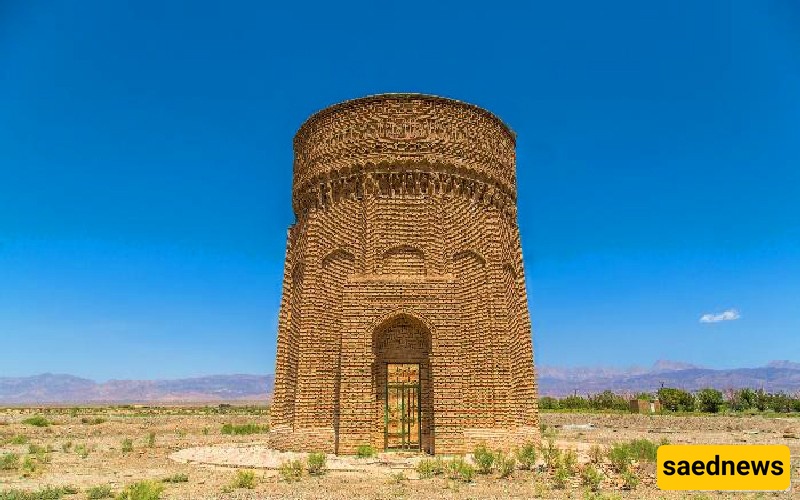
According to Saednews, Mehmandoost Tower, locally known as Masoumzadeh Tower, is one of the most remarkable Seljuk-era monuments in Iran. Located south of the village of Mehmandoost, about 16 kilometers from Damghan in Semnan Province, the tower stands near the ancient Mehmandoost archaeological mound and the village cemetery. Because of its architectural resemblance to the famous Toghrul Tower in Rey, it is also referred to as the Toghrul Tower of Mehmandoost.
Despite suffering damage over the centuries, the remaining structure continues to showcase the exceptional craftsmanship of its builders. The monument was officially registered as one of Iran's National Heritage Sites on March 3, 1937 (Iranian registration No. 277).
Discover a monument with nearly 1,000 years of history.
Admire its distinctive Seljuk-era brick architecture.
Learn about the fascinating local legends associated with the tower.
Explore nearby historical attractions, including an ancient archaeological hill and an old qanat (underground water channel).
Capture impressive photographs of one of Iran's lesser-known architectural treasures.
Mehmandoost Tower dates back to around 490 AH (1096–1097 CE) during the Seljuk period, traditionally associated with the reign of Sultan Sanjar. For almost a millennium, it has endured harsh weather, earthquakes, and historical conflicts, including wars during the time of Nader Shah Afshar and Ashraf Afghan.
Its remarkable survival reflects the precision and durability of Seljuk engineering. In addition to its historical importance, the tower has inspired numerous local stories and legends, making it an intriguing destination for visitors interested in both history and folklore.
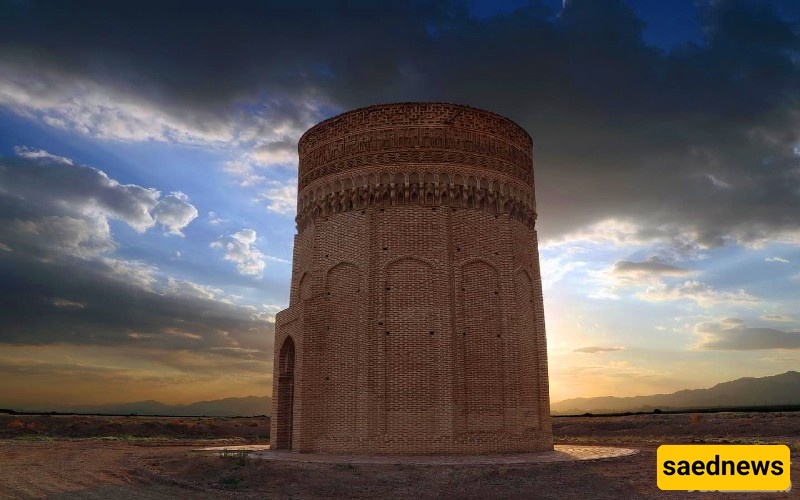
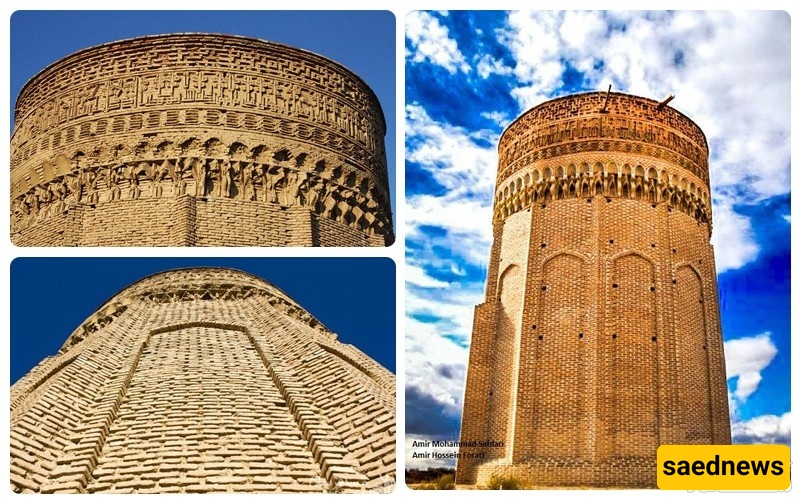
The tower is a 12-sided (dodecagonal) brick structure standing approximately 14.5 meters (48 feet) tall. Its architectural design is especially notable because it begins with a circular foundation, transitions into a twelve-sided exterior, and finally rises into a cylindrical upper section, creating a unique visual effect.
Among its most distinctive features are:
Three decorative rows of muqarnas (stalactite-style ornamentation) near the upper section.
A Kufic inscription encircling the building, recording the construction date of 490 AH.
An internal radius of approximately 8 meters.
Twelve vertical exterior buttresses, one of which serves as the entrance.
Originally, the tower was crowned with a conical dome, but this upper section has disappeared over time, reducing the structure's original height. Even without its roof, the remaining brickwork continues to demonstrate the extraordinary skill of Seljuk craftsmen, with decorative details still visible from several meters away.
Mehmandoost Tower bears a striking resemblance to the famous Toghrul Tower in Rey, near Tehran. Both monuments feature similar proportions, brick construction techniques, and decorative elements, making Mehmandoost Tower an important example of medieval Persian funerary architecture.
Historical descriptions, including those recorded in the book Matla' al-Shams, praise the tower's impressive dimensions, intricate brickwork, and elegant muqarnas decoration, emphasizing its significance among Iran's surviving Seljuk monuments.
Visitors to Mehmandoost Tower can also explore:
The ancient archaeological mound of Mehmandoost.
A historic qanat located nearby.
The surrounding rural landscape, offering insight into the region's long history and traditional culture.
These nearby sites enhance the experience and provide a deeper understanding of the area's historical importance.
Mehmandoost Tower is an outstanding example of Seljuk architecture and one of the oldest surviving brick monuments near Damghan. Its elegant design, centuries-old history, and connection to local traditions make it a rewarding destination for history enthusiasts, photographers, and travelers seeking to discover Iran's rich cultural heritage.