SAEDNEWS: In the wild, cockatiels have a natural gray coloration. However, through selective breeding, many different color mutations have been developed, including pied, lutino, and white-faced varieties. These bred variations have created a wide range of beautiful appearances while maintaining the unique characteristics of this popular pet bird.
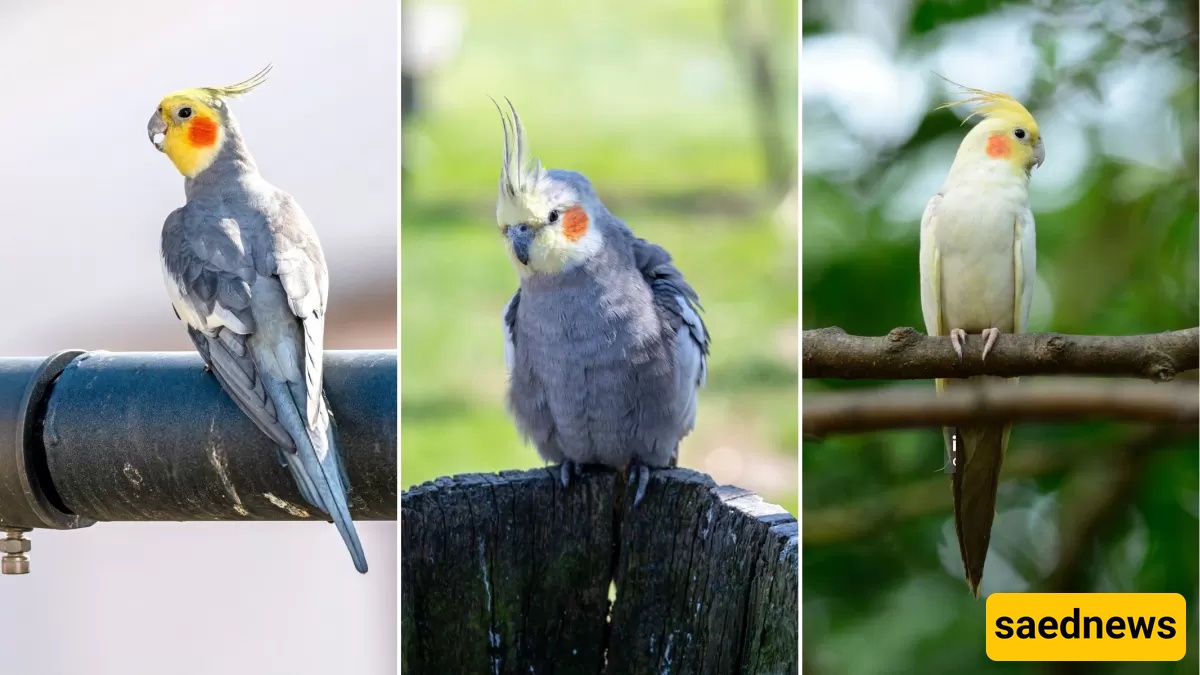
The cockatiel (Nymphicus hollandicus) is naturally found in the wild in its native habitat of Australia. Wild cockatiels are normally grey with white markings on their wings. However, through selective breeding, genetic mutations, and controlled reproduction by breeders, many different color variations and patterns have been developed in captivity. Today, a wide range of cockatiel colors and mutations are available worldwide.
The first recognized color mutation in cockatiels was the pied mutation, which appeared in the United States around 1920. Since then, breeders have developed many attractive varieties with unique appearances.
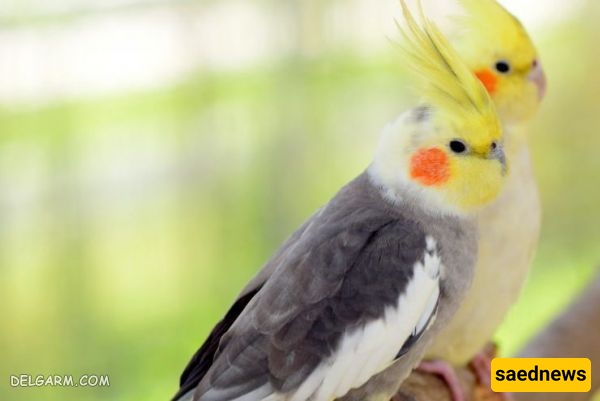
In the wild, cockatiels usually live in small groups ranging from 2 to 12 birds. Their natural habitat consists of open grasslands, plains, and areas with access to seasonal rainfall.
These birds depend on seasonal water sources and mainly feed on seeds, young plants, sprouts, and other vegetation. They are most active during the early morning and late afternoon when they search for food and visit water sources.
During the hottest part of the day, cockatiels usually rest in tree hollows or shaded areas. They must remain alert because they are vulnerable to predators, especially birds of prey.
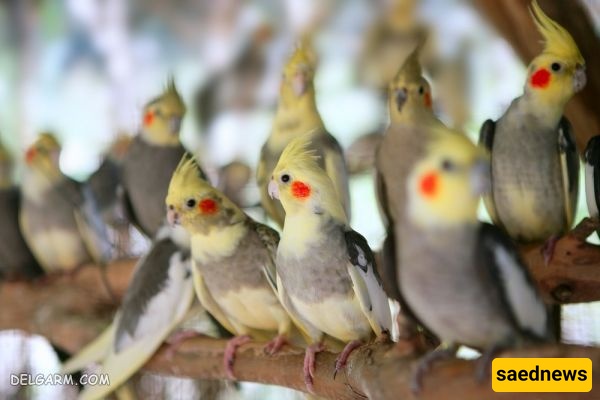
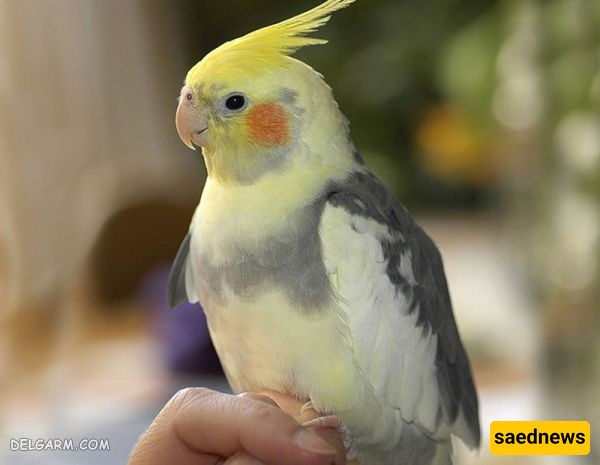
Wild cockatiels typically have a grey body with lighter feathers underneath. Their most recognizable features include:
Bright orange cheek patches
White wing markings
A distinctive head crest
Long pointed tail feathers
Female cockatiels usually have yellow markings under their wings and tail, while males generally lack these patterns. Some mutations produce bright yellow birds, and females of these varieties often have narrower tail feathers.
The average body length of a cockatiel, including the tail, is around 32 centimeters.
Their typical weight ranges from approximately 78 to 125 grams depending on the variety.
Examples:
Lutino cockatiels may weigh around 78–90 grams.
Larger selectively bred cockatiels may reach 110–125 grams.
Cockatiels are small parrots known for their attractive appearance, intelligence, and friendly personality.
Their main features include:
A tall, elegant crest on the head
Orange cheek patches
A long pointed tail
Various feather colors including grey, white, yellow, cream, and brown
A cockatiel’s feather color does not determine its health or personality. Color mutations are mainly cosmetic differences created through genetics.
The crest is also an important communication tool:
A fully raised crest usually indicates excitement, curiosity, fear, or surprise.
A relaxed, slightly lowered crest usually shows calmness and comfort.
Cockatiels are among the most popular pet birds because they are affectionate, social, and relatively easy to care for.
Their advantages include:
Suitable size for children and adults
Less noise compared with larger parrots
Generally gentle behavior
Lower tendency to bite compared with many larger parrots
Easy maintenance and breeding
Long lifespan of around 15–20 years
Although cockatiels are not famous for talking like some larger parrots, many individuals can learn simple words, whistles, melodies, and household sounds.
Cockatiels are widely kept as companion birds because of their playful personality and ability to whistle.
Many owners appreciate them for:
Their entertaining behaviors
Their ability to bond with humans
Their cheerful presence in homes
In some countries, cockatiels have also been used in educational programs and animal-assisted activities, especially for helping elderly people and improving emotional well-being.
Popular Cockatiel Varieties and Color Mutations
The normal grey cockatiel is the original and most common variety.
Characteristics:
Grey body feathers
White wing patches
Yellow or grey crest
Orange cheek patches
Male and female differences become clearer after the first complete molt:
Adult males usually develop a bright yellow face.
Females keep a more grey facial color and retain yellow markings under the tail.
This variety is one of the easiest cockatiels for determining gender visually after maturity.
The pied mutation was the first known color mutation, appearing around 1920.
Characteristics:
Approximately 70% yellow feathers
Around 30% grey feathers
Random patches of color across the body
Because pied cockatiels can have very different patterns, determining gender by appearance is often difficult.
Pearl cockatiels have a unique feather pattern resembling small pearls.
Characteristics:
Light grey feathers with white patterns
Yellow face
Orange cheek patches
Male pearl cockatiels often lose their pearl markings after maturity, while females usually keep them.
The cinnamon mutation creates a softer, warmer appearance.
Characteristics:
Light brown or cinnamon-colored feathers
Yellowish face
Orange cheek patches
The overall color is lighter than the normal grey variety.
Silver cockatiels resemble normal greys but have lighter body coloring.
Characteristics:
Pale silver or white-grey feathers
Similar pattern to normal grey
Females may have duller cheek patches
Fallow cockatiels have a softer brown appearance.
Characteristics:
Light brown feathers
Yellowish head
Orange cheeks
They are less common than many other mutations.
The lutino is one of the most popular cockatiel mutations.
Characteristics:
Bright yellow or creamy white body
Yellow face
Orange cheek patches
Red or dark ruby-colored eyes
A pure lutino usually has a deeper yellow head compared with the body.
Some lutino cockatiels may have bald spots behind the crest due to genetic factors.
Gender identification is difficult because males and females often look similar. DNA testing is the most reliable method.
Whiteface cockatiels lack the orange cheek patches found in other varieties.
Characteristics:
Similar body color to normal grey
No orange facial markings
Males develop a white face
Females usually have a grey face
Whiteface varieties include several mutations.
This mutation combines the whiteface and pearl patterns.
Characteristics:
Grey feathers with white pearl markings
No orange cheeks
In many cases:
Adult males lose the pearl pattern.
Females usually maintain the pearl markings.
Approximately 96% of adult whiteface pearl cockatiels are females due to inheritance patterns.
This mutation combines whiteface and pied patterns.
Characteristics:
Combination of white and grey feathers
Large white areas across the body
No orange cheek patches
Gender identification is usually difficult without DNA testing.
Other combinations include:
Whiteface cinnamon
Whiteface pearl pied
Whiteface cinnamon pied
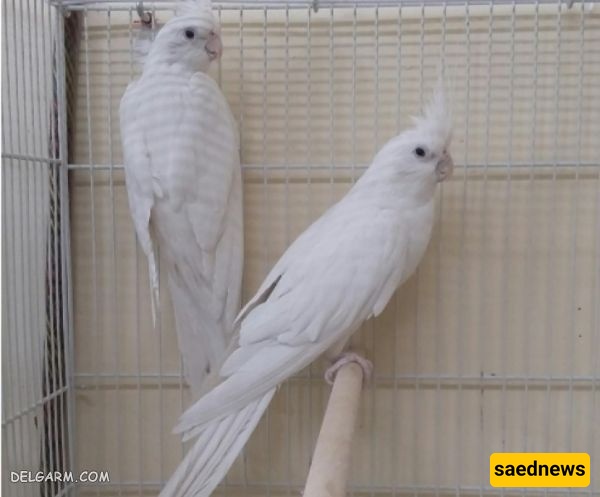
Albino is not considered a separate breed but rather a color mutation.
True albino cockatiels are rare and highly valued.
Characteristics of a genuine albino:
Completely white feathers
No colored markings
Red eyes
Pink feet
A cockatiel with different colored eyes is not considered a true albino.
Albino coloring can also be produced through breeding combinations such as:
Pure whiteface
Pure lutino
When these two mutations are combined, there is a high chance of producing an albino appearance.
Cockatiels are available in many beautiful colors and patterns due to decades of selective breeding. While their appearance may vary greatly, all cockatiel mutations share the same intelligent, affectionate, and social personality that makes them one of the world’s favorite companion birds.
Choosing a cockatiel should be based not only on color but also on temperament, health, socialization, and proper care.