SAEDNEWS: Researchers have long believed that the human brain is not designed to perform multiple tasks simultaneously, or multitask. However, a new study is now challenging this scientific understanding.

According to SAEDNEWS, Experts previously explained that when we think we are performing several tasks at the same time, we are actually just switching rapidly between different activities. The reason given was that the brain region responsible for managing thought, known as the prefrontal cortex, can only process one thing at a time.
However, new research suggests that over time, another part of the brain—the temporal cortex, which is involved in memory—comes to our aid. Maximilian Riesenhuber, a professor of neuroscience at Georgetown University, explains that the brain’s structure changes over time. In fact, the brain’s thinking center gradually transfers tasks to the memory system, freeing itself to handle new activities. This process increases mental capacity.
He explains:
“We have shown that brain circuits actually change so that we can perform two tasks at the same time. This represents true multitasking.”
In a small experiment, a group of men and women were trained to use an application to categorize images of cars. Over a period of 5 to 10 weeks, participants repeated this task more than 30,000 times. The researchers aimed to understand why we need complete focus when learning a new task, but once we become skilled at it, we can perform other activities simultaneously.
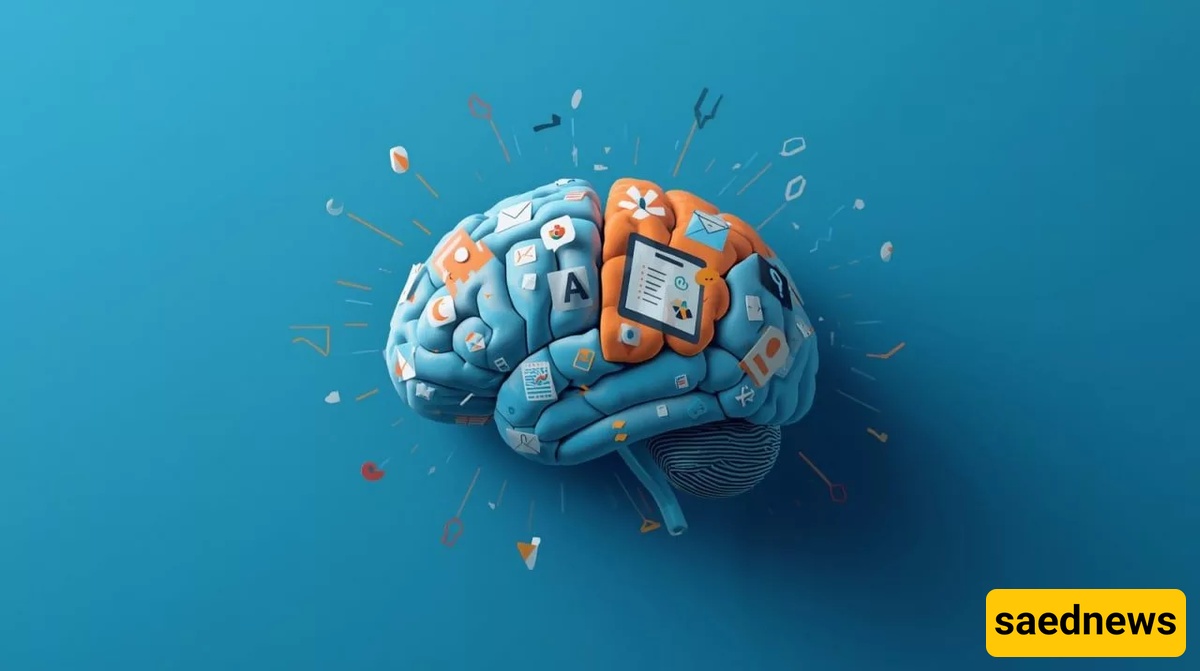
Brain scans taken before and after the experiment clearly revealed these structural changes. Patrick Cox, an assistant professor of psychology at Lehigh University, explains:
“Previous studies had shown that when experts view specific images (such as birds or cars), certain areas of their brains become active. However, the limitation of those studies was that they only examined people after they had already become experts. The strength of our study is that we tracked the changes over time. We compared brain activity before and after training and found that extensive practice actually creates a new brain region that did not exist before.”
Researchers have also discovered that some people’s brains are better than others at handling multiple tasks simultaneously. The reason for this difference is still unclear, but scientists know that multitasking is associated with stress and mental health difficulties. This is why experts suggest that multitasking can sometimes reduce productivity rather than improve it.
Scientists believe these findings could help provide a better understanding of obsessive behaviors and explain why humans are so skilled at continuous learning. They also emphasize that artificial intelligence systems are still struggling with this ability, and the results of this research could contribute to the development of better training methods for generative AI.
The researchers’ next step is to investigate the underlying process behind this phenomenon—specifically, how learning is transferred from one area of the brain to another. They also aim to determine the limitations of performing multiple tasks simultaneously through this mechanism.