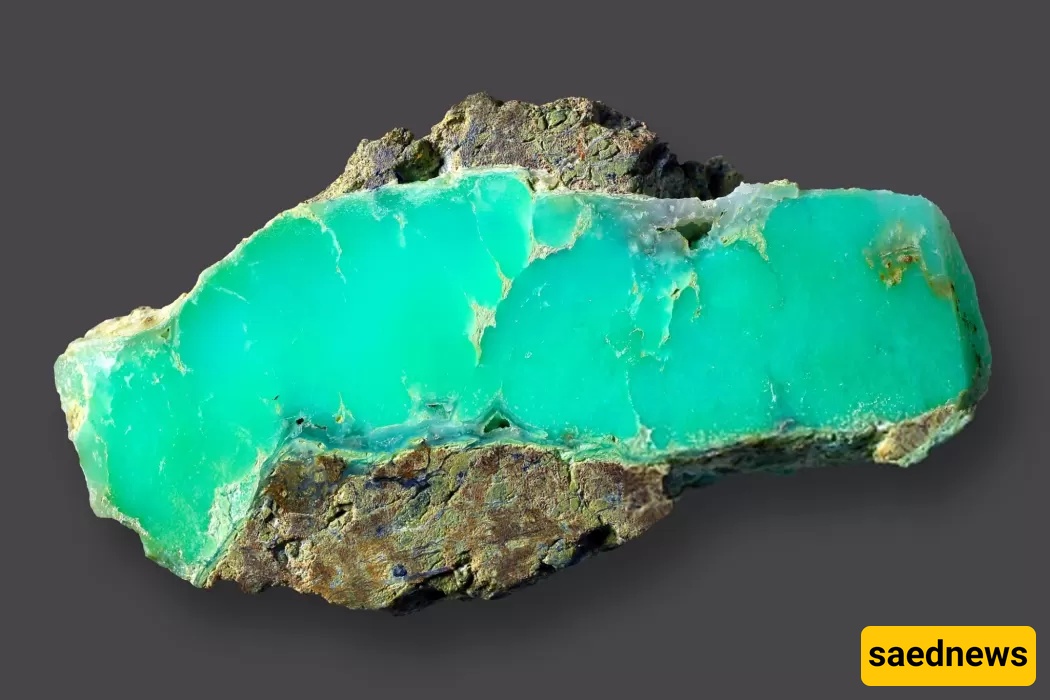
SAEDNEWS: Variscite stone, with its lively and soothing green color, is one of the rarest natural gemstones. It is used in jewelry making and is also valued in stone therapy practices.
According to Saednews, In the world of gemstones and precious minerals, every stone has a unique story to tell. Some gemstones are admired for their dazzling brilliance, while others attract attention because of their rare colors, unusual patterns, or traditional metaphysical associations. Variscite is one of these rare and captivating gemstones. With its vibrant, soothing green hues, this gemstone has gained popularity among collectors, jewelry designers, and gemstone enthusiasts. Often mistaken for turquoise, variscite possesses its own distinctive characteristics that make it a valuable and desirable mineral.
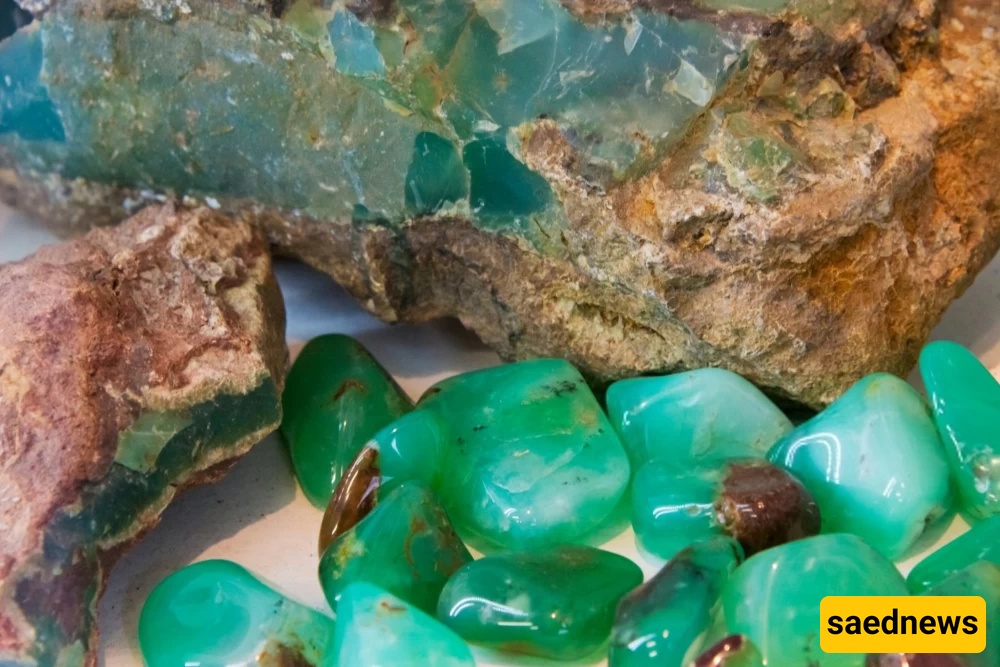
Variscite is a hydrated aluminum phosphate mineral with the chemical formula AlPO₄·2H₂O. It is best known for its beautiful green coloration, which is primarily caused by trace amounts of chromium within its crystal structure. The color of variscite can range from pale yellowish-green to deep emerald-like green.
Many variscite specimens feature darker veins, web-like patterns, or natural markings that enhance their visual appeal and make each piece unique. Unlike gemstones valued mainly for transparency and brilliance, variscite is appreciated for its color, texture, and natural patterns.
One of the most common identification challenges in the gemstone world is distinguishing variscite from turquoise. These two minerals can look very similar, but several important differences separate them:
Turquoise usually appears in shades of blue, blue-green, or greenish blue, while variscite is typically recognized by its purer green tones.
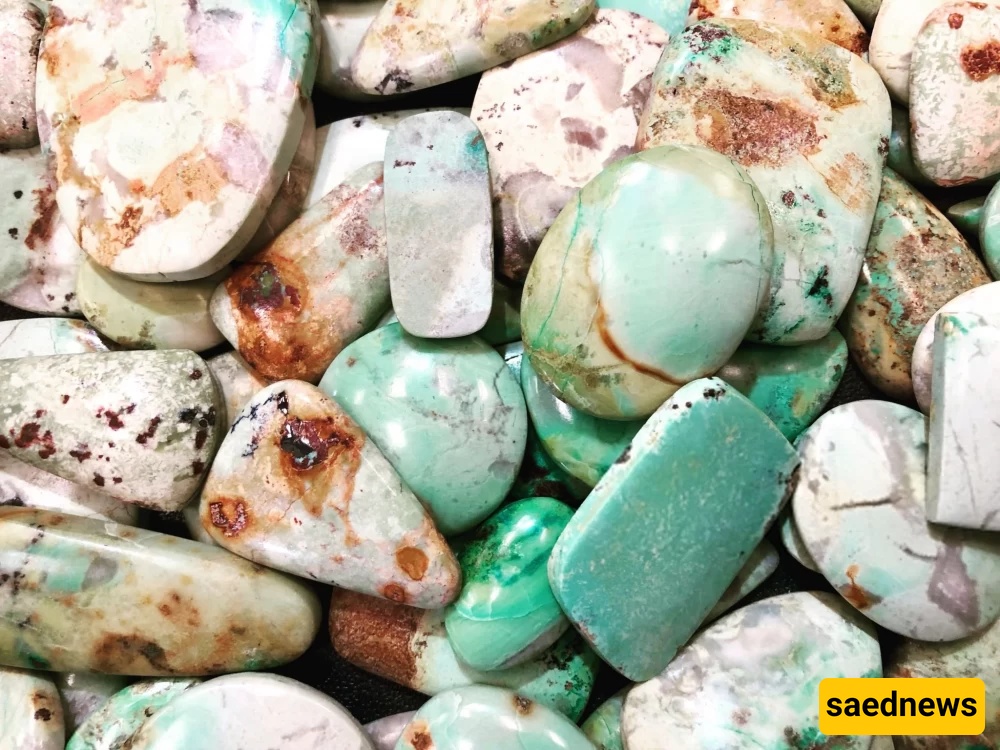
Variscite has a Mohs hardness of approximately 3.5 to 4.5, making it softer than turquoise, which generally ranges from 5 to 6 on the Mohs scale.
Turquoise is a copper aluminum phosphate mineral, whereas variscite is primarily a hydrated aluminum phosphate without copper as a major component.
Variscite often displays stronger and darker natural veins compared with turquoise, giving it a distinctive appearance.
The name Variscite comes from the Latin word “Variscia,” the ancient name for the Vogtland region of Germany, where the mineral was first identified.
Variscite was officially described in 1837 by German geologist August Breithaupt. However, archaeological evidence suggests that similar green phosphate minerals were used by ancient cultures thousands of years ago. Indigenous communities in North America used variscite for decorative objects, beads, and personal ornaments.
Variscite occurs in several locations worldwide, with some deposits producing especially attractive gemstone-quality material.
The state of Utah is one of the most famous sources of high-quality variscite. The Lucin deposit, located near the Nevada border, is particularly well known. Additional deposits are found in Nevada and Arizona.
Australia is an important producer of gemstone-quality variscite, with notable deposits located in Queensland and South Australia.
The Vogtland region of Germany, where variscite was first discovered, remains historically significant and continues to produce specimens.
Brazil contains important variscite deposits and contributes specimens to the international gemstone market.
Variscite has also been found in regions such as the Kola Peninsula and the Ural Mountains.
Variscite generally forms in sedimentary environments through the weathering of aluminum-rich rocks. The formation process requires specific geological conditions and may take millions of years.
It commonly occurs as veins, nodules, and cryptocrystalline masses within host rocks. The unique conditions under which variscite develops contribute to the diverse patterns and colors found in natural specimens.
Physical and Chemical Properties of Variscite
Hardness: 3.5–4.5 on the Mohs scale
Specific gravity: 2.57–2.61
Crystal system: Orthorhombic
Transparency: Opaque to translucent
Cleavage: Perfect in one direction
Fracture: Conchoidal to uneven
Luster: Vitreous to greasy
Refractive index: 1.563–1.594
Birefringence: 0.031
Pleochroism: Weak
The green color of variscite is mainly associated with chromium impurities within its crystal structure. Depending on the concentration of coloring elements, the gemstone may display shades ranging from soft pastel green to intense dark green.
Natural veins, patterns, and color variations make every piece of variscite visually different from another.
Metaphysical and Traditional Beliefs About Variscite
In crystal healing traditions and metaphysical practices, variscite is often called the “stone of tranquility.” These beliefs are cultural and spiritual interpretations rather than scientifically proven effects.
Some commonly attributed properties include:
Variscite is believed by some enthusiasts to encourage relaxation, reduce emotional tension, and create a sense of inner peace.
Because of its green color, variscite is often associated with nature, growth, and the energy of the Earth.
Some crystal practitioners associate variscite with emotional recovery, self-acceptance, and compassion.
Variscite is sometimes believed to support imagination and creative thinking.
In alternative healing traditions, variscite is commonly linked with the heart chakra and is believed to promote emotional balance.
Although gemstone healing properties have not been scientifically proven, some alternative practices associate variscite with:
Supporting overall wellness
Improving relaxation and sleep quality
Reducing feelings of stress
Supporting skin health
Enhancing vitality and vision
These uses belong to traditional and spiritual practices rather than medical science.
Variscite in Jewelry Design
Because variscite is relatively soft, it is usually cut as a cabochon rather than a faceted gemstone. Cabochon cutting highlights the stone’s natural colors, textures, and patterns.
Common variscite cuts include:
The most popular style for rings and necklaces.
Often used for earrings and pendants.
A popular choice for artistic and custom jewelry designs.
Less common but sometimes used to create smooth, polished surfaces.
Variscite is used in many types of jewelry, including:
Rings: Silver rings featuring variscite gemstones are especially popular.
Necklaces and Pendants: Designs range from simple natural styles to elaborate artistic pieces.
Earrings: Both stud and hanging earrings may feature variscite.
Bracelets: Variscite beads are commonly used in gemstone bracelets.
Brooches: The stone is suitable for vintage and classic jewelry designs.
Buying Guide for Variscite Jewelry
When purchasing variscite jewelry, consider the following factors:
Buy from reliable sellers and request information about the gemstone’s origin and authenticity.
High-quality variscite usually displays attractive, vivid, and balanced green tones.
The best specimens are free from major cracks, damage, or excessive inclusions.
A professional cut should enhance the stone’s natural beauty while maintaining its structure.
Because variscite is softer than many common gemstones, jewelry containing it should be worn carefully and is not ideal for heavy daily use.
Cleaning and Caring for Variscite
Variscite requires gentle care due to its softness and sensitivity.
Recommended cleaning methods:
Use lukewarm water and mild soap.
Clean carefully with a soft brush if necessary.
Dry gently with a soft cloth.
Avoid harsh chemicals and abrasive cleaners.
To protect variscite:
Store it separately from harder gemstones such as diamonds or sapphires.
Keep it in a soft fabric pouch.
Avoid prolonged exposure to direct sunlight.
Keep it away from excessive heat.
Protect it from strong impacts and scratches.
Variscite Value and Pricing Factors
The value of variscite depends on several characteristics:
Bright, attractive, evenly distributed green colors are generally considered more desirable.
Specimens with fewer cracks and better overall quality usually command higher prices.
Larger, well-formed pieces are often more valuable.
Material from famous deposits may have greater collector appeal.
High-quality cutting and polishing can significantly increase value.
Variscite prices vary widely. Small or lower-quality pieces may cost only a few dollars, while premium gemstone-quality specimens can reach several hundred dollars. High-quality variscite may commonly range from approximately $50 to $200 per carat, depending on quality, rarity, and market demand.
How to Identify Genuine Variscite
Several methods can help distinguish authentic variscite from imitations:
Its relatively low hardness of 3.5–4.5 can help separate it from harder gemstones.
Variscite has a relatively low specific gravity compared with many other gemstones.
A microscope can reveal internal structures and natural characteristics.
Advanced testing methods can confirm chemical composition.
Variscite can be sensitive to heat and may experience changes under high temperatures.
Common Variscite Imitations
Some materials may be sold as variscite substitutes or imitations:
Colored glass or plastic: Artificial green materials can resemble variscite.
Dyed stones: Less valuable stones may be artificially colored.
Fake turquoise: Some imitation turquoise products may be incorrectly marketed as variscite.
Final Thoughts: Variscite, a Rare Green Gemstone of Natural Beauty
Variscite is a remarkable gemstone admired for its calming green shades, unique patterns, and geological rarity. While it may not have the hardness or brilliance of traditional precious stones, its individuality and natural charm have made it a favorite among collectors and jewelry lovers.
With proper care, authentic variscite jewelry can remain a beautiful and meaningful piece for many years, representing the extraordinary creativity of nature hidden within the Earth.