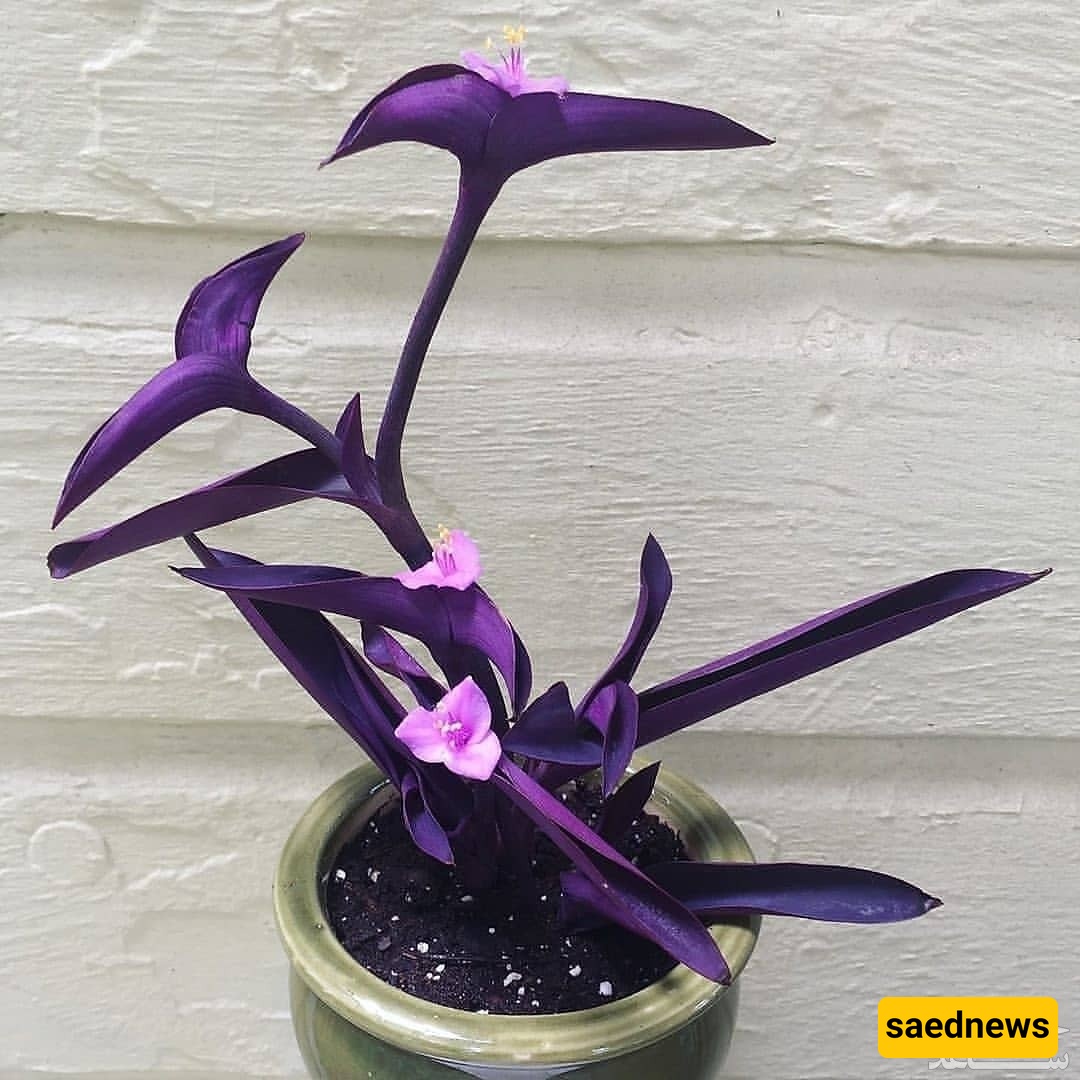
SAEDNEWS: The purple heart plant, also known as Tradescantia pallida, is a popular ornamental plant that is very easy to care for.
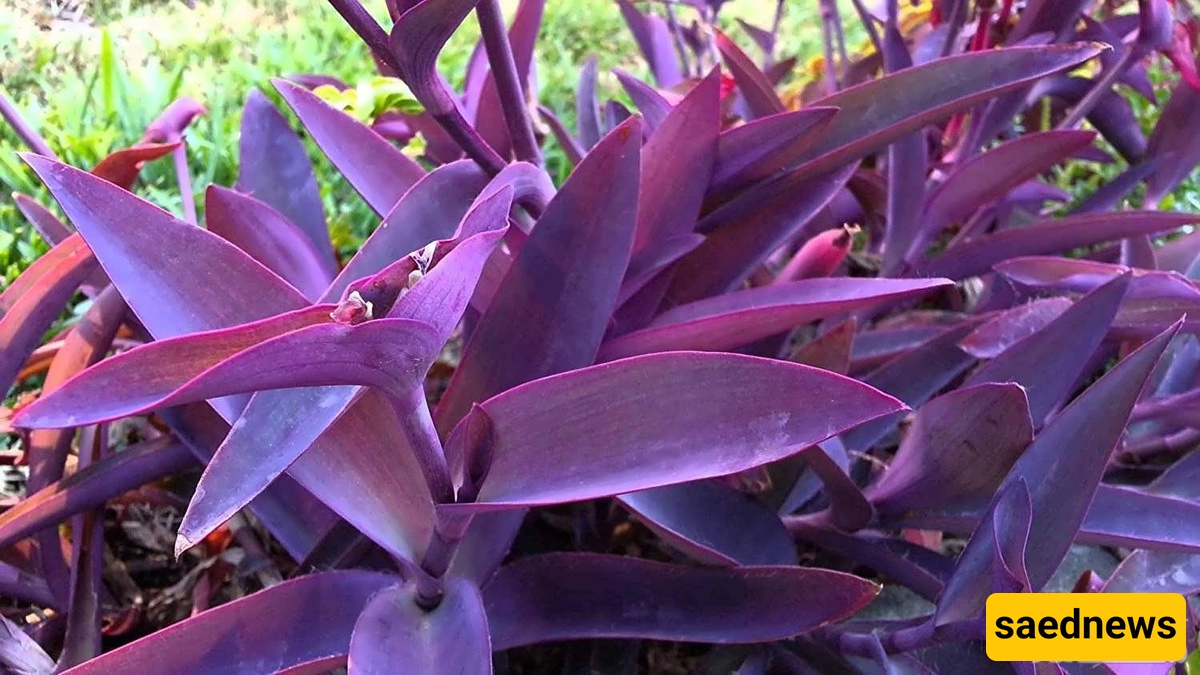
According to Saednews, The purple heart plant (Tradescantia pallida) is a popular ornamental houseplant that grows well indoors. It is easy to propagate at home, making it a favorite for plant lovers. Its leaves come in different colors such as green, cream, and purple, with the purple variety being especially attractive.
Caring for Tradescantia pallida indoors enhances the beauty of your living space. You can even place it in a purple pot to increase its visual appeal. The plant has delicate stems, so it should be handled carefully to avoid breakage. It is best placed in a location where it is unlikely to be bumped or disturbed.
This plant typically begins flowering in spring. If kept outdoors during summer, it should be protected from direct sunlight. The soil should be checked every other day, and watered when dry.
Purple heart is somewhat shade-tolerant but prefers bright, indirect, or mild light.
Too much direct sunlight can cause brown spots and leaf burn.
Insufficient light causes loss of purple color and leggy, stretched growth with wide spacing between leaves.
The plant is moderately drought-tolerant, but it should not be left completely dry for long periods. Water it when the top layer of soil becomes dry.
Overwatering can cause root rot.
Do not expose the plant to temperatures below 10°C, as cold can damage it.
Above 15°C, it can be kept outdoors, but it must be protected from intense midday sun.
The plant is generally hardy and can grow in heavy soil, but adding sand or compost improves drainage and helps prevent root rot.
Use fertilizer designed for ornamental plants every two weeks during summer.
Prune whenever the plant becomes overgrown or untidy.
Cut stems can be used for propagation.
Tradescantia pallida includes several varieties, such as:
Green-leaf form
Purple-leaf form
Moses-in-the-cradle type
Propagation is very easy and can be done through stem cuttings in water, soil, or sand.
Perform propagation in summer.
Cut a healthy stem at least 7 cm long with nodes.
Remove lower leaves, leaving 1–2 leaves at the top.
Place cuttings in soil mixed with compost and sand, or in a glass of water until roots develop.
If placed in water, change the water regularly using chlorine-free water.
When planting in soil, moisten the soil first, create a hole, and insert the cutting.
Keep cuttings at 18–20°C and avoid direct sunlight. Ensure the soil remains slightly moist during rooting.
Repot the plant when roots begin to emerge from drainage holes. Move it to a pot 2.5–5 cm larger with proper drainage to prevent waterlogging and root rot.
Leaves curl inward and dry → hot, dry air (increase humidity and watering; avoid direct sun)
Long, weak stems and loss of color → low light (move to brighter location)
Soft, pale leaves → cold damage (use healthy stems for propagation)
Bright green thick leaves → over-fertilization (pause feeding)
Brown burn spots → use of leaf polish (avoid use)
Overgrown plant → needs repotting
Red spider mites → fine webbing under leaves (use appropriate pesticide)
Sticky distorted leaves with green insects → pest infestation (treat every two weeks)
Pale leaves with brown spots → direct sunlight damage
Brown, wrinkled, wilted leaves → dry environment (increase misting)
Stem base rot → overwatering (allow soil to dry between watering; check drainage)
Proper care ensures a healthy, vibrant purple heart plant that adds color and beauty to indoor spaces.