SAEDNEWS: In this article, we aim to introduce you to the methods of cultivating and propagating this plant, as well as explain the proper care conditions needed to ensure better growth. Stay with SaadNews for more information.
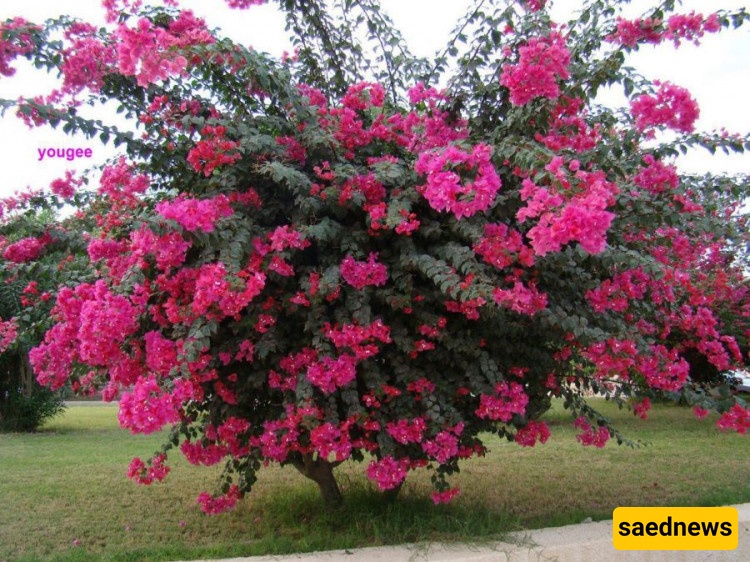
According to Saednews, The Touri shrub is an ornamental and highly distinctive plant in nature. Its beauty is significantly enhanced by its oval-shaped leaves arranged along its branches.
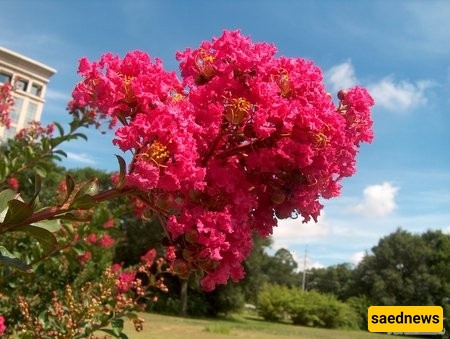
This genus includes several species, which may be either deciduous or evergreen. The indica species is deciduous, and its flowers appear in white, pink, cream, red, and purple. These attractive blossoms grow in clustered formations along the branches, giving the plant a striking ornamental appearance.
One of the key reasons for its popularity in landscape design is the long flowering period. The flowers typically appear in summer and remain in bloom for 2 to 4 months.
The bark of the Touri shrub peels annually, similar to plane trees, revealing a smooth gray surface underneath. Its leaves are small, dark green, and glossy, turning orange in autumn. The fruit is a capsule, and the seeds are brown to blackish in color.
Touri shrub can be propagated through three main methods:
Hardwood cuttings
Softwood cuttings
Seed planting
Below is an explanation of each method.
For propagation, hardwood cuttings are recommended. These are typically collected at the beginning of winter.
Cuttings should be about 20 cm long and planted in a soil mixture of peat moss, sand, and perlite.
Before planting, the cuttings should be moistened. After wetting, excess water must be allowed to drain completely before planting.
Using rooting hormone is also recommended, as it significantly increases the speed of root formation.
After planting, place the pot in an environment with a temperature of at least 18°C. The plant should receive 5 to 6 hours of indirect sunlight daily.
Root development usually takes 4 to 8 weeks.
Once new leaves appear, the plant can be gradually moved to a location with direct sunlight.
Softwood cuttings are taken from young shoots at the beginning of summer. These cuttings are usually 12 to 15 cm long and are collected from the tips of new branches.
To prevent wilting and encourage successful rooting, these cuttings require a highly humid environment.
It is important that softwood cuttings are handled carefully due to their tender structure and are planted in suitable conditions to ensure successful establishment.
Another method of propagation is by seeds. The fruits of the plant separate from the shrub during autumn.
Seeds should only be collected when the fruit is fully mature and dry.
After collection, seeds should be stored in a cool and dry place, preferably over the winter season.
Sowing is done in spring. Seeds are planted superficially (about 0.5 cm deep) in a mixture of leaf soil and perlite.
The pots should be placed near a warm and preferably sunny window.
The ideal temperature for growth is between 24°C and 30°C. Germination usually takes about 3 weeks.
The Touri shrub is highly sensitive to temperatures below 10°C. Therefore, it should only be moved outdoors when temperatures remain consistently above this threshold.

Regular watering is essential for proper flowering and plant health, especially during hot summer months. Water when the soil begins to dry. The soil should not remain constantly wet, as waterlogging can cause root rot.
This plant requires full and direct sunlight. Insufficient light can lead to pale leaves, bud drop, reduced flowering, and increased susceptibility to fungal diseases.
The Touri shrub is generally low-demand in nutrients. At the end of winter, after pruning, a complete chemical fertilizer should be applied (about one cup per square meter of soil). Additionally, a 5 cm layer of compost or well-rotted manure can be added around the base of the plant.
The best soil is a mixture of fresh garden soil and leaf mold in equal proportions. Each autumn, additional soil should be added around the base to protect surface roots from winter damage and to support weed control and soil stability.
Pruning is recommended in winter to remove overly dense branches. Cutting back old flowering shoots in summer can encourage a second or even third blooming cycle.
Since flowers develop on one-year-old branches, older branches should be pruned annually in late winter to promote new flowering shoots. Dead, broken, or diseased branches should also be removed to maintain plant health and prevent pest spread.
In older shrubs, removing aged branches completely helps rejuvenate the plant and encourages new growth.