SAEDNEWS: For the first time in Khuzestan, several varieties of papaya, also known as the “tree melon,” have been cultivated experimentally in a 3,000-square-meter greenhouse in Baghmalek. Stay with us to learn more about the ideal conditions for growing and maintaining papaya trees.
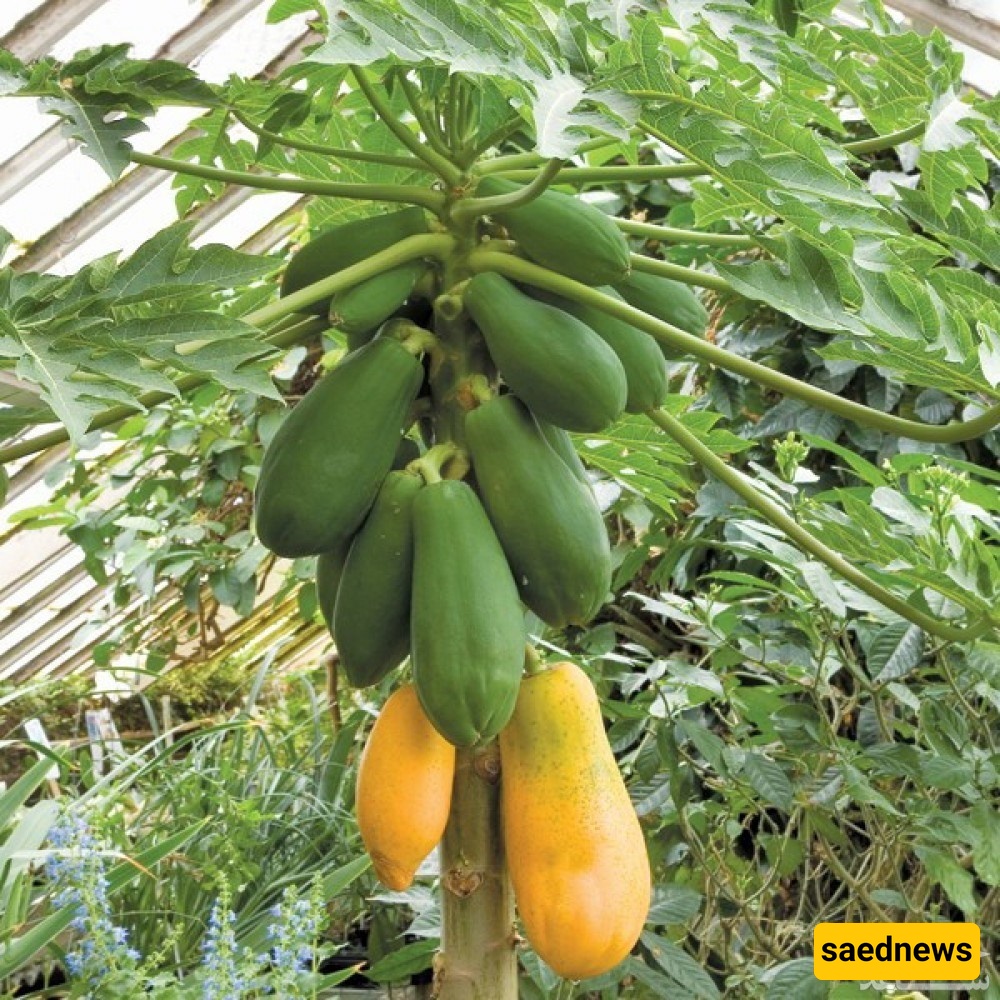
According to Saednews, The papaya (Carica papaya) belongs to the Caricaceae family, which includes many other species within the Carica genus. Papaya is a fast-growing tropical plant with a soft, single trunk and no branches, unlike most trees. Its large leaves form a crown at the top of the trunk, giving it an appearance similar to a palm tree.
Papaya is considered a perennial, evergreen, herbaceous plant that can grow between 1 and 10 meters in height. Although some plants may survive for up to 20 years, their economic productivity usually declines after three years. Dwarf varieties are also available and generally remain under two meters tall.
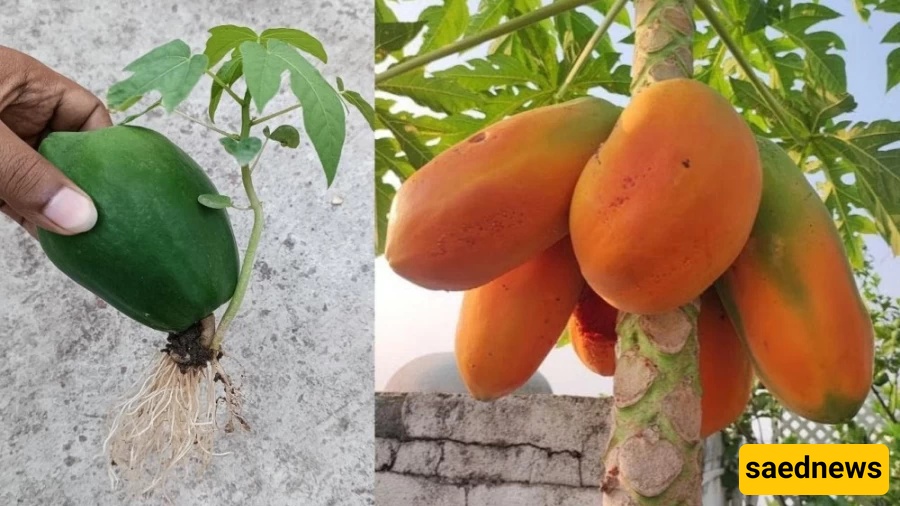
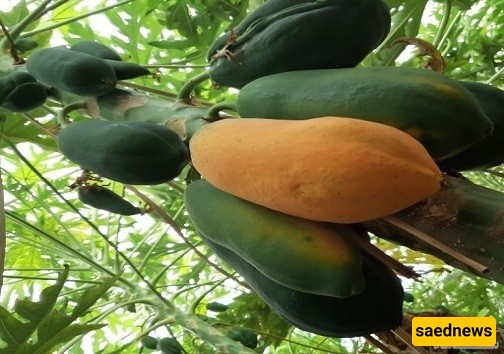
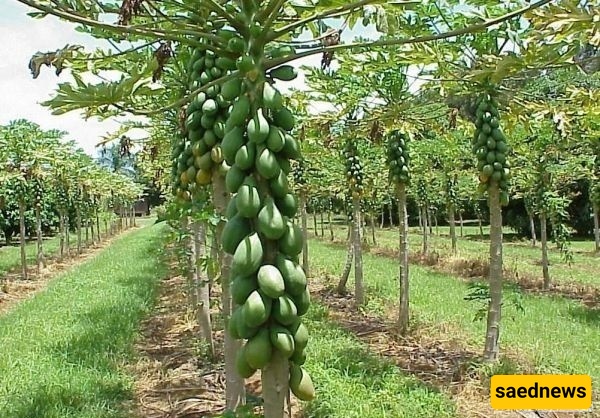
The fruit develops directly on the trunk. As the tree grows taller with age, harvesting the fruit becomes more difficult.
Papaya has a shallow root system and a thick, spongy stem. The stem is usually unbranched, although occasional side shoots may appear. The leaves grow at the top of the plant and are attached by long petioles that can reach up to 60 centimeters in length.
The plant contains a white milky sap called latex, found beneath the bark, in the leaves, and in unripe fruits. This latex is used to produce papain, an enzyme widely used for:
Tenderizing meat
Assisting digestion
Pharmaceutical production
Leather processing
Papaya flowers can be male, female, or hermaphroditic depending on the variety and environmental conditions such as temperature, day length, and climate. Flowers emerge along the stem near the leaf axils, either singly or in clusters.
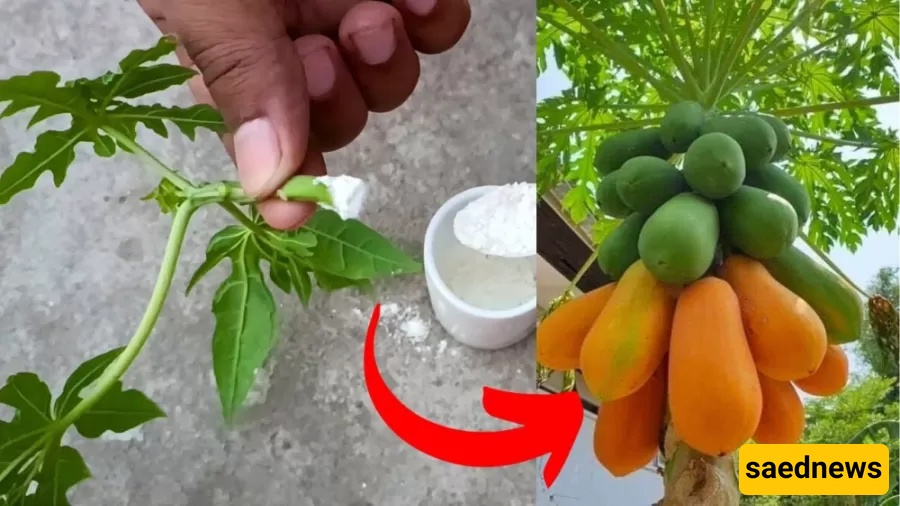
Papaya cultivation has recently gained attention in Iran. Around 30 hectares are currently under papaya cultivation, mainly in the province of Sistan and بلوچستان. The city of Sarbaz is considered the major production center, with more than 15 hectares dedicated to papaya farming.
Growing papaya from seeds is the most effective propagation method.
Select a sunny location with fertile, well-drained soil rich in organic matter. Papaya does not tolerate root disturbance well, so seeds should be planted directly into the ground rather than started in pots.
If the soil quality is poor, dig planting holes about half a meter deep and fill them with a mixture of fertile soil and compost.
Sow seeds 1 to 3 meters apart.
Ideal germination temperature ranges between 24°C and 30°C.
Place two seeds in each planting spot.
Cover lightly with compost and add mulch.
Seeds usually germinate within two to three weeks. Once seedlings grow stronger, remove the weaker plant and keep the healthiest one.
Papaya plants may be male or female. Male plants produce flowers but no fruit. When the plant reaches about one meter in height, flowering begins.
Male flowers grow on long, thin stalks in clusters.
Female flowers are larger, usually solitary, and closer to the trunk.
Only one male plant is needed for every 10–15 female plants to ensure proper pollination.
Fruit can typically be harvested around 10 months after planting.
Papaya thrives in warm tropical and subtropical climates. In regions with short summers or cold winters, it can be grown as an ornamental indoor plant in a large container placed near a sunny window.
However, cold climates generally prevent the plant from surviving long enough to produce fruit. During winter, potted papaya plants should be moved to a warm indoor environment.
Papaya prefers warm temperatures year-round. Prolonged exposure to frost damages or kills the plant. Growth slows significantly below 10°C, and temperatures below 2°C can destroy the plant entirely.
Because papaya has large leaves, it loses significant moisture through evaporation and therefore requires regular watering. However, excessive irrigation can cause root rot, especially in cool weather.
Watering every 7 to 10 days is usually sufficient.
Papaya is a heavy feeder and especially benefits from nitrogen-rich fertilizers. Organic fertilizers such as poultry manure and compost are highly recommended.
Papaya needs full sunlight for optimal growth and fruit production. Slight wilting during hot weather is normal and usually not harmful.
The best soil for papaya is sandy loam with good drainage and sufficient nutrients. Since the roots are shallow, deep soils are not essential.
The plant grows best in warm, humid climates and can be cultivated up to elevations of 1,000 meters above sea level. Strong winds can damage papaya plants because of their shallow root systems.
Papaya is highly sensitive to calcium deficiency and acidic soils. The ideal soil pH ranges from 6.5 to 7.
Papaya is mainly propagated through seeds. Since seeds are produced through cross-pollination, resulting plants often show significant variation.
For best results:
Extract seeds from fully ripe fruits.
Dry them in sunlight.
Store them at around 10°C before planting.
Before sowing, remove the gelatinous coating surrounding the seeds by rubbing them gently with cloth. This improves germination.
Seeds are commonly planted in nursery beds and later transplanted after about 60 days.
Papaya can also be propagated through stem cuttings, although this method is less common due to limited branching.
The first harvest usually occurs about 12 months after sowing, although some dwarf varieties may fruit earlier.
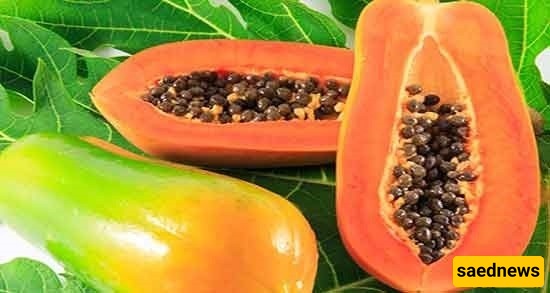
Each flower develops into a mature fruit approximately 145–165 days after pollination. As fruits ripen, their color changes from green to yellow or orange.
Papaya fruits continue ripening after harvest, making them suitable for transportation and storage. However, ripe fruits have delicate skin and require careful handling.
Artificial ripening is commonly achieved using ethylene gas under controlled temperature and humidity conditions.
Papaya can produce fruit year-round in warm climates. Flowering stops when temperatures drop too low but resumes once warm conditions return.
Young plants are generally more productive. As the plant ages, fruit size and yield decrease, and disease susceptibility increases.
Most papaya plants live only two to three years before declining due to disease and reduced productivity. However, some healthy specimens may survive much longer.
In rare cases, papaya plants have reportedly lived for several decades.
Overwatering is the most common cause of papaya failure. Cool and wet conditions greatly increase the risk of root diseases.
Strong winds can easily topple mature papaya plants because of their shallow roots and heavy trunks. Planting in sheltered locations is highly recommended.
Birds are attracted to ripening papaya fruits. Harvesting fruits as soon as their color begins to change helps reduce losses.
Tall trees become difficult to harvest and may produce lower-quality fruit. Cutting the trunk can stimulate new growth, but this should only be done during dry weather to prevent rotting.
Older plants are more vulnerable to insects, viruses, and fungal infections. Maintaining young, vigorous plants is one of the best preventive measures.
Saving seeds from healthy, high-quality fruits can also improve future plant generations.
Papaya is a highly productive tropical fruit plant valued for its fast growth, year-round fruiting, and nutritional benefits. With proper care, suitable climate conditions, and balanced watering, papaya can thrive in both home gardens and commercial farms.
Although sensitive to cold temperatures and excessive moisture, papaya remains one of the easiest tropical fruit plants to cultivate successfully.