SAEDNEWS: Almonds have been part of the human diet for thousands of years and remain the world’s most-consumed tree nut, but new research highlights a more complicated picture involving nutrition, agriculture, water use and sustainability.
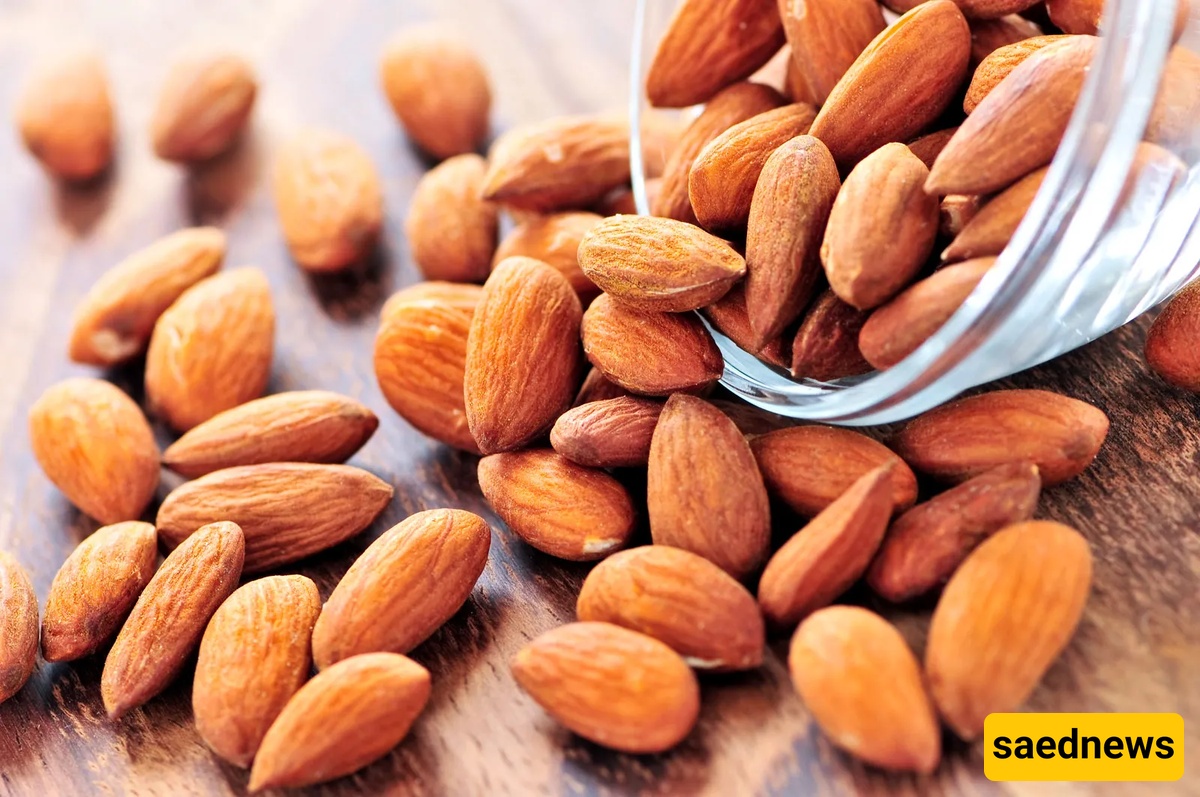
According to SaedNews: The almond may look like an ordinary snack, but its story stretches back roughly 5,000 years—and its importance today reaches far beyond what is served in a bowl of mixed nuts.
A recent review has taken a closer look at almonds from several angles, examining their nutritional value, global popularity, agricultural importance, health-related associations and the growing challenges surrounding their production.
The findings underline a striking reality: almonds occupy an unusually important place in both the human diet and modern agriculture. At the same time, the conditions required to produce them are becoming an increasingly important part of the conversation.
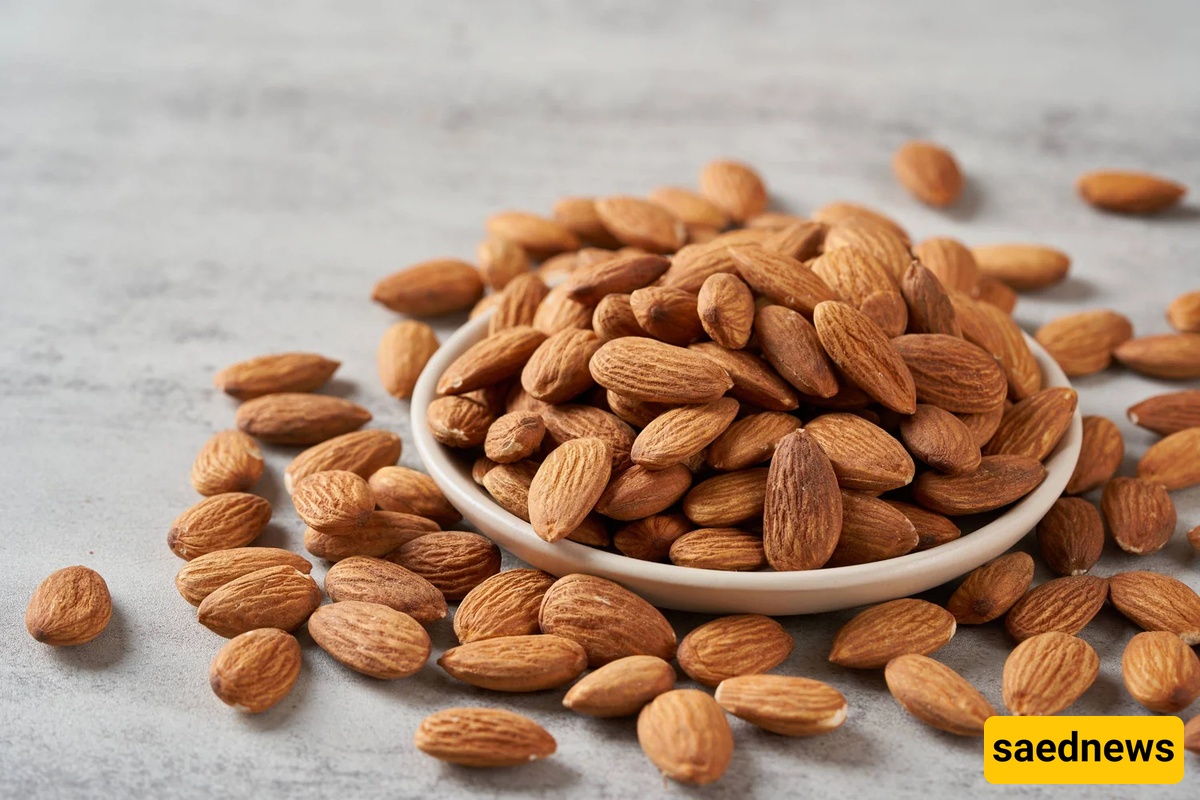
Almonds originated in southwestern Asia and belong to the rose family. They are considered among the oldest cultivated fruit trees in the world, with domestication dating back about 5,000 years in the fertile regions of the Middle East.
From there, almond cultivation spread to other parts of the world. Today, the nut is used in far more ways than simply being eaten whole. Almond flour, non-dairy beverages and a wide range of confectionery products have helped turn almonds into a versatile ingredient across many diets.
Their popularity is reflected in global consumption figures. According to the research reviewed in the study, almonds account for 39 percent of tree-nut consumption worldwide, placing them ahead of walnuts, cashews and hazelnuts.
That dominance makes almonds more than an agricultural commodity. It also means that changes affecting almond production can have consequences for food systems, farmers and consumers.
The research, conducted as a review by Mohammad Fazli of the Department of Horticultural Sciences and Engineering at Tarbiat Modares University, examined existing scientific findings rather than conducting a new field or laboratory experiment.
The review brought together research on almond history, nutrition, health, global production and cultivation conditions in Iran.
One of the central findings concerns the nutritional profile of almonds. The nut contains relatively low levels of saturated fat and has no cholesterol or sodium. It also has comparatively good shelf stability.
The study notes that almonds contain the highest level of tocopherols among tree nuts. Tocopherols are forms of antioxidants that can help reduce damage associated with oxidative processes in the body. These compounds also contribute to the stability of almond oil.
The research reviewed in the Iranian Journal of Biology, published by the Iranian Biology Society, also points to associations between almond consumption and several aspects of health.
Those findings link almond consumption with improved blood lipid profiles, cardiovascular health, assistance with diabetes management and weight management.
Importantly, these findings do not turn almonds into a cure-all food. Rather, they reinforce the broader nutritional value of a food already widely incorporated into diets around the world.
Perhaps the most important issue raised by the research lies outside the nutrition label.
Almonds are commonly cultivated in hot, dry Mediterranean-type climates. That makes them particularly relevant to regions where water resources are limited.
Iran is among the world’s major almond producers. The country produced more than 111,000 tons of almonds in 2018, ranking fourth globally at the time cited in the study.
But production has also faced challenges. Declining yields, drought, climate-related changes and frost damage have made the future of almond cultivation more complicated.
This is especially significant in Iran, where water scarcity is already a major agricultural concern. Since agriculture consumes a large share of the country’s water resources, improving water efficiency in almond orchards has become an important priority.
The review identifies several approaches that could help, including modern irrigation systems, deficit irrigation, the use of artificial intelligence to manage irrigation and greater attention to the concept of “virtual water”—the water embedded in the production of agricultural goods.
The study also looks at something much more immediate: what actually makes an almond taste and feel good to eat.
Almond flavor is not determined by a single substance. It emerges from a combination of non-volatile compounds, volatile and aromatic compounds, and the consumer’s perception of taste and smell.
Across varieties, almonds are primarily composed of fat, protein and fiber, with smaller amounts of soluble sugars.
Some phenolic compounds found in almond skins contribute to astringency—the slightly dry, puckering sensation that can be felt in the mouth.
Texture matters too.
According to Fazli, the crispness of an almond plays an important role in how consumers judge its quality. Raw almonds contain more moisture and tend to be less crisp, while research indicates that consumers generally prefer almonds that are drier and crunchier.
That preference helps explain why thermal processing is common in almond production. Heating can alter the nut’s physical characteristics and may also increase the amount of volatile and aromatic compounds, affecting the final aroma and flavor.
The sustainability question becomes even more striking when almond production is viewed as a complete system rather than simply a source of food.
The research points to more than 7 million tons of waste generated annually from almond cultivation worldwide. Such waste represents not only discarded agricultural material but also the loss of resources invested in production, including water, energy and carbon.
Yet the same material could potentially become part of the solution.
The study highlights the possibility of using almond by-products and biomass to produce biofuels and other valuable materials. Turning agricultural residues into useful products could help create a more efficient circular economic model while reducing carbon emissions.
This shifts the conversation around almonds. The question is no longer simply whether almonds are nutritious or popular. It is also about how efficiently they can be grown, processed and used.
The almond’s appeal is easy to understand. It has an ancient history, a wide range of culinary uses, a strong nutritional profile and enormous global demand.
But its future depends on more than consumer appetite.
For countries facing water shortages, maintaining almond production will require careful resource management. Better irrigation, technological tools and the more efficient use of agricultural by-products could become increasingly important.
The research ultimately presents almonds as an example of a much broader challenge facing modern agriculture: how to continue producing highly valued foods while using limited resources more responsibly.
That makes the almond story bigger than a snack. It is a story about nutrition, farming, climate pressures, water and the search for more sustainable ways to feed a growing world.
And perhaps the next time an almond is picked up as a simple snack, there will be a little more to consider behind that familiar crunch.