SAEDNEWS: PD stands for Power Delivery, a fast-charging technology that allows a power bank to deliver higher charging power to compatible devices. USB Power Delivery (USB PD) works through a USB-C connection and can automatically adjust the voltage and current according to the device’s requirements.
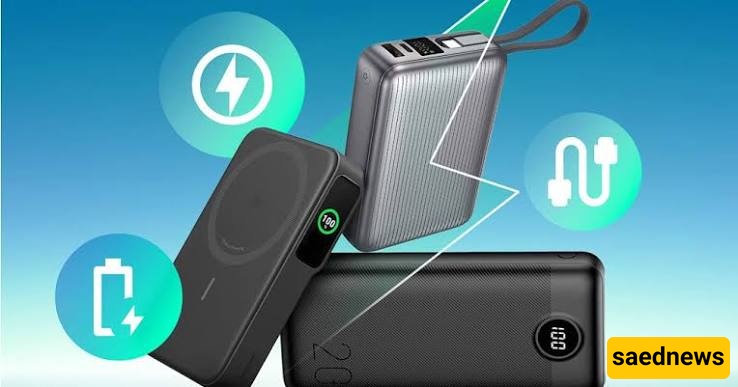
According to Saednews, In today’s connected world, smart devices such as smartphones, tablets, and laptops have become part of our daily routines. As our dependence on these devices grows, having access to fast and reliable charging has become increasingly important. Power banks provide a convenient portable source of energy, while modern fast-charging technologies—particularly PD (Power Delivery)—make it possible to charge compatible devices quickly and safely.
This article explains what PD technology is, how it works in power banks, its main advantages and limitations, and the key points to consider when choosing a PD power bank.
PD, or Power Delivery, is a fast-charging standard that operates through USB-C. Unlike conventional USB charging, USB Power Delivery can deliver higher levels of power and dynamically adjust voltage and current according to the requirements of the connected device.
This allows devices with different power requirements to receive an appropriate level of charging power and achieve faster charging speeds. The USB PD standard can support power levels of up to 240W. However, reaching higher power levels requires both the power source and the connected device to support the necessary PD specifications.
Broad compatibility: PD can work with a wide range of devices, including smartphones, tablets, laptops, and other USB-C gadgets, reducing the need for multiple dedicated chargers.
Intelligent power management: Voltage and current can be adjusted to provide the power required by the connected device.
High-power charging: Higher-output PD solutions are suitable for power-hungry devices, including many laptops and some gaming laptops.
Power banks equipped with Power Delivery offer several advantages over conventional models.

With PD support, a power bank can charge compatible smartphones, tablets, and even laptops at speeds approaching those of wall chargers. This can be particularly useful while traveling, commuting, or in situations where access to a power outlet is limited.
A PD power bank can provide different levels of power depending on the requirements of the connected devices. For example, a suitable multi-output model may be capable of charging a 30W smartphone and a 65W laptop without delivering inappropriate power to either device.
Because USB PD can support a variety of devices, one capable power bank can reduce the need to carry several separate chargers. Using fewer charging accessories can also help reduce electronic waste over time.
Some high-capacity PD power banks offer outputs of 100W or more, making them suitable for charging lightweight laptops and certain higher-performance laptops. The actual charging capability depends on the power bank, laptop, cable, and the laptop’s own charging requirements.
Check the power requirements of your devices before choosing a power bank. A model with insufficient output may not provide the charging speed you expect, particularly for laptops.
A USB-C cable capable of handling the required power level is essential for taking full advantage of PD charging. The power bank and device may support high-wattage charging, but an unsuitable cable can limit the available power.
Some PD power banks combine USB-C PD ports with conventional USB ports. Multiple outputs can be useful if you regularly need to charge several devices at the same time.
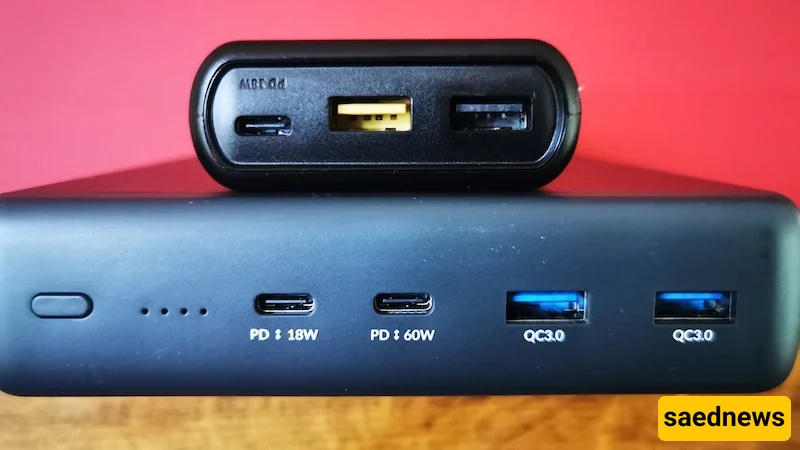
Look for a power bank with built-in protection circuitry. Features designed to protect against issues such as overcurrent, overvoltage, overheating, and short circuits can help provide safer charging for both the power bank and connected devices.
Power Delivery has made portable charging faster, more versatile, and more convenient. A PD power bank can provide suitable charging power for a wide range of devices, from smartphones and tablets to laptops, while reducing the need to carry multiple chargers.
As smart devices continue to become an essential part of everyday life, fast and efficient portable charging is increasingly valuable. Choosing a PD power bank with the right output capacity, compatible ports, suitable cables, and reliable safety features can make mobile charging considerably more practical and efficient.