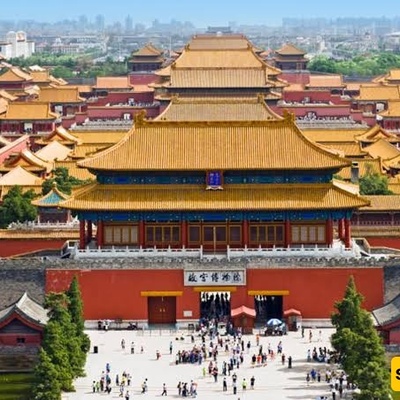
SAEDNEWS: The Forbidden City, an extraordinary and enchanting complex of ancient Chinese architecture, is located in the heart of Beijing, the capital of China. Renowned worldwide for its historical and architectural significance, the Forbidden City stands as one of the finest masterpieces of China's imperial architectural heritage.
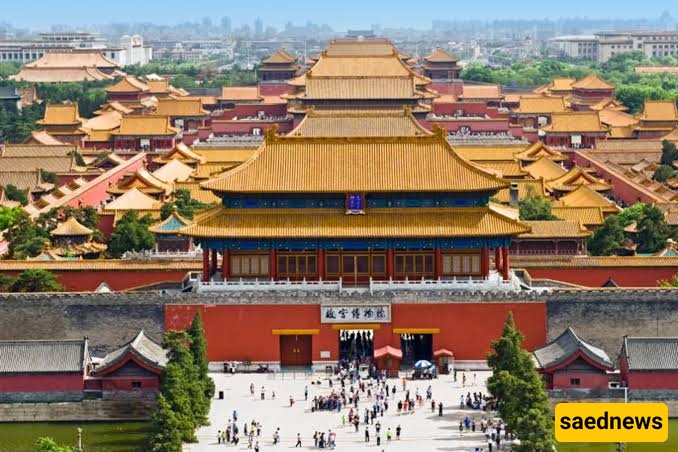
According to Saednews, Located in the heart of Beijing, the capital of China, the Forbidden City is one of the country's most magnificent and historically significant architectural treasures. Renowned throughout the world, it is considered a masterpiece of ancient Chinese architecture and the largest and most complete collection of surviving ancient wooden buildings in the world.
In 1987, UNESCO added the Forbidden City of Beijing to its World Heritage List. Construction began in 1406 under the orders of Emperor Yongle, the third emperor of the Ming Dynasty, and took approximately 14 years to complete.
For nearly 500 years, until the fall of the Qing Dynasty in 1911, the Forbidden City served as the imperial residence of 24 emperors, who governed the country from within its walls.
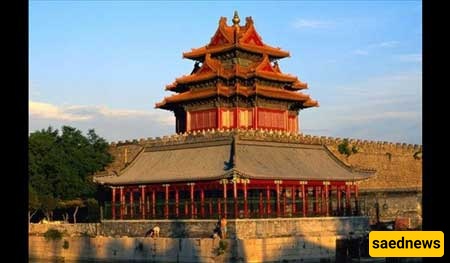
Covering an area of approximately 720,000 square metres, the Forbidden City stretches about 1,000 metres from north to south and 800 metres from east to west. Every aspect of its design, from its overall layout to its smallest decorative details, reflects philosophical and religious beliefs while symbolising the authority, prestige and supreme power of the emperor.
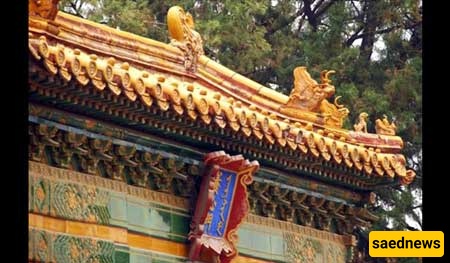
One of the most distinctive features is the extensive use of yellow, the imperial colour, which appears prominently on the roofs of many palace buildings. Today, the Forbidden City remains the largest and best-preserved imperial palace complex in the world.
The Forbidden City was constructed within the fortified central area of Beijing and was surrounded by another extensive enclosure known as the Imperial City.
Its massive walls stand approximately 10 metres high, while a protective moat, about 50 metres wide, surrounds the complex.
The entire palace complex was carefully designed according to the strict ceremonial traditions, political hierarchy and moral principles of China's feudal dynasties. Its overall layout, architectural style, dimensions, colours and decorations reflected the status and rank of the imperial family and its officials.
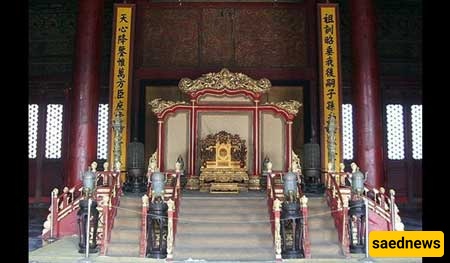
Among its most remarkable structures are three principal halls: the Hall of Supreme Harmony, the Hall of Central Harmony and the Hall of Preserving Harmony. These magnificent buildings served as important centres of imperial authority and hosted grand state ceremonies and official celebrations.
The Hall of Supreme Harmony stands at the centre of the Forbidden City's ceremonial complex. Inside, the magnificent golden imperial throne symbolises the emperor's supreme authority.
It is the most magnificent and elaborately decorated building in the entire palace complex.
The hall stands on an impressive white marble terrace approximately eight metres high, overlooking a vast square covering around 30,000 square metres. With a height of approximately 40 metres, it is the tallest structure within the Forbidden City.
In traditional Chinese culture, the dragon symbolises imperial power. The emperor was regarded as the Son of Heaven and was often associated with the image of the True Dragon.
The Hall of Supreme Harmony features approximately 13,000 dragon motifs throughout its interior and exterior decorations, demonstrating the importance of this mythical creature in imperial Chinese symbolism.
The Forbidden City contains an extraordinary number of palaces, halls and rooms, each reflecting the grandeur of imperial life.
According to ancient Chinese beliefs, the heavenly residence of the Celestial Emperor contained 10,000 rooms. Since earthly emperors were considered the sons of the Heavenly Emperor, they were not supposed to have more rooms than their celestial counterpart.
The architectural complex of the Forbidden City represents the remarkable intelligence, craftsmanship and artistic achievements of the Chinese people.
From the overall structure of the palace buildings to the intricate decorations on individual rooms and walls, every element reflects carefully developed artistic, cultural and symbolic ideas.
For example, the magnificent white marble terrace beneath the Hall of Supreme Harmony enhances the building's grandeur and reinforces its importance within the imperial complex.
The Forbidden City's architectural ingenuity can also be seen in its sophisticated drainage system.
The white marble terraces feature numerous carved dragon-head sculptures that function as drainage outlets. Across the three levels of the terrace, more than 1,000 dragon-head carvings were installed.
During heavy rainfall, water flows through the mouths of these sculpted dragons, creating spectacular fountain-like effects.
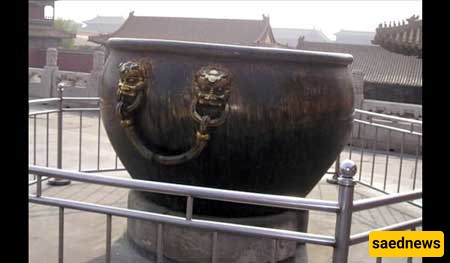
Another remarkable feature is the presence of 308 large bronze vessels distributed throughout the palace courtyards. These vessels were filled with water and served as an essential fire-prevention measure.
During winter, palace workers lit fires beneath the vessels to prevent the stored water from freezing, ensuring that it remained available in case of emergencies.
The construction of the Forbidden City was an extraordinary undertaking. During the Ming Dynasty, approximately 100,000 skilled craftsmen and one million labourers were employed to create this vast architectural masterpiece.
Building materials were transported from different parts of China, including Yunnan Province, located thousands of kilometres away from Beijing.
The Forbidden City is not only an architectural masterpiece but also an extraordinary repository of China's historical and cultural heritage.
It houses an extensive collection of valuable historical objects and archaeological treasures, estimated at approximately one million items. This collection represents a significant proportion of China's preserved cultural artefacts.
The palace complex stands as a symbol of China's brilliant civilisation and artistic heritage.
According to Chinese and international architectural experts, the design and construction of the Forbidden City represent exceptional achievements in architectural history. Its buildings preserve the country's ancient traditions, cultural values and the outstanding craftsmanship developed over five centuries.
In recent years, the Forbidden City has experienced a remarkable increase in visitor numbers, attracting millions of tourists from around the world.
Its annual attendance has exceeded 10 million visitors, making it one of China's most popular historical and cultural attractions.
Today, the Forbidden City offers visitors a unique opportunity to explore China's imperial past, admire extraordinary traditional architecture and discover the artistic achievements of one of the world's oldest civilisations.
As a UNESCO World Heritage Site, it remains an enduring symbol of China's imperial history, architectural excellence and cultural identity.