SAEDNEWS: Near the Imam Reza Shrine stands a remarkable Safavid-era school that combines centuries of religious education, intricate tilework and a fascinating connection to the powerful Shamlu family. Abbasqoli Khan School remains an active educational center while also offering visitors a glimpse into Mashhad’s architectural past.
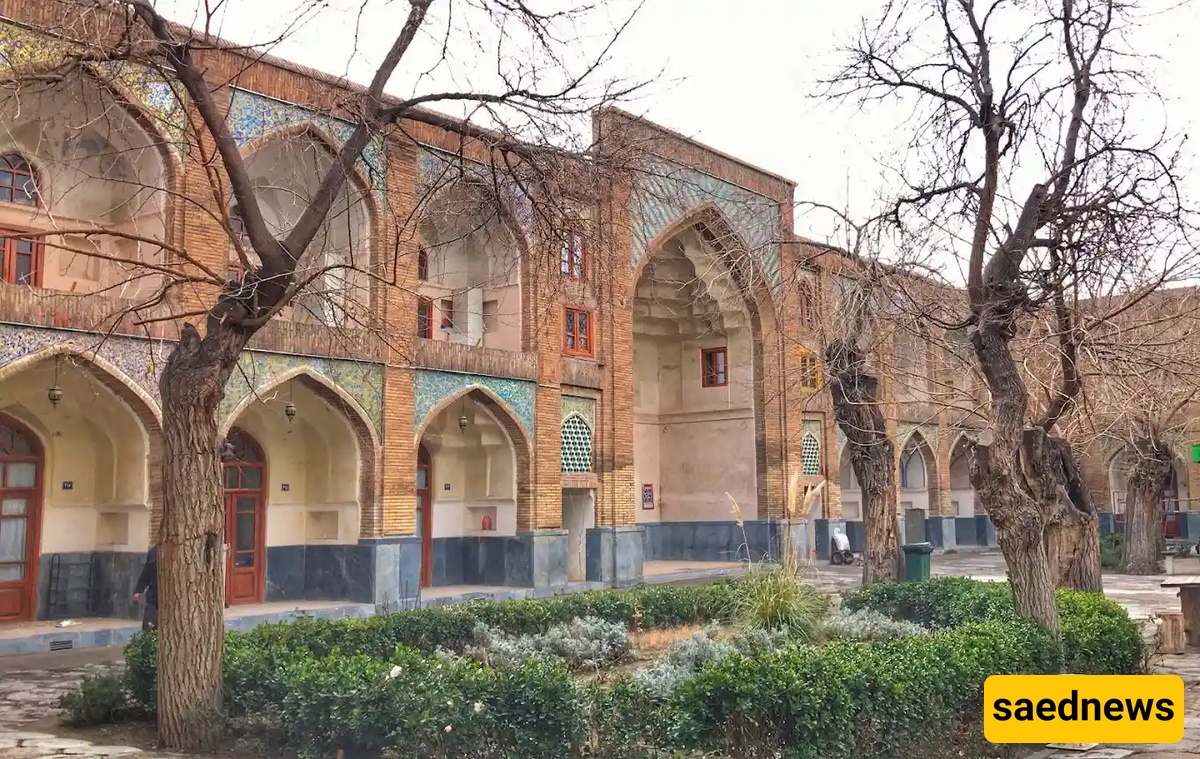
According to SaedNews: Some historic buildings are preserved only as silent reminders of the past. Abbasqoli Khan School in Mashhad is different. Centuries after it was built, the Safavid-era complex remains a functioning religious educational center, while its architecture continues to attract people interested in the history and cultural identity of the city.
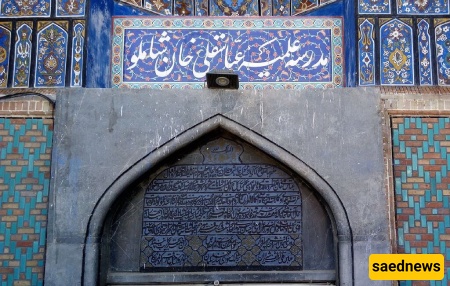
Located near the Imam Reza Shrine, the school is one of Mashhad’s lesser-known historic attractions. For visitors who usually focus their sightseeing around the shrine and the city’s better-known landmarks, Abbasqoli Khan School offers an opportunity to see another side of Mashhad—one shaped by Safavid architecture, religious scholarship and the legacy of an influential family.
The school was built in 1077 AH during the Safavid period by Abbasqoli Khan Shamlu, a prominent figure from the Shamlu family. Its history is closely connected to the rise of the Shamlu clan, a powerful group from northern Khorasan that became closely associated with the Safavid court.
The Shamlu family’s influence increased during the Safavid era, including through family ties with the Safavid dynasty. One of the most significant marriages mentioned in the historical account was that of Shah Ismail Safavid and the daughter of Abdi Beg from the Shamlu family. The relationship strengthened the family’s position and contributed to its influence in the region.
Abbasqoli Khan Shamlu became one of the notable rulers associated with the title of Beglerbegi of Khorasan. He was also described as having a strong interest in learning and literature. In support of education and scholarship, he established several endowments in Khorasan, including the land on which the school was built.
According to the account, Abbasqoli Khan specified in his will that after his death, the school’s trusteeship should pass to his descendants. The institution remained under the management of the Shamlu family for many years before its administration was transferred to the Khorasan Endowments Organization in more recent decades.
In 1375 in the Iranian calendar, Mortaza Sepehri Shamlu, described as the seventh-generation descendant of Abbasqoli Khan, sought to restore the family’s trusteeship. His effort succeeded, and the administration was returned to the Shamlu descendants.
But the school’s story is not only about ownership and family history. It is also about a building that has continued to serve its original educational purpose.
Today, approximately 200 religious students are studying at Abbasqoli Khan School. That continuing use gives the historic complex a distinctive character: visitors are not simply walking through a preserved monument, but encountering a place that still has an active educational and religious role.
The architecture is perhaps the most immediately striking feature.
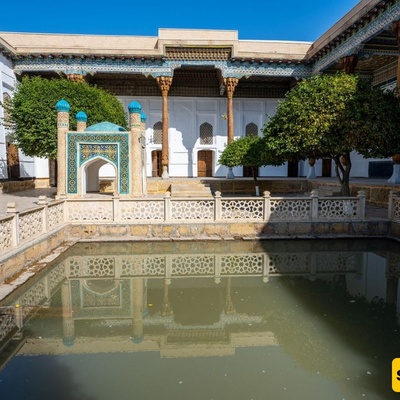
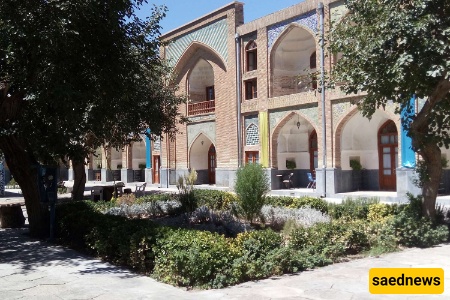
The school follows the traditional four-iwan layout associated with prominent Iranian architectural complexes. It is built across two levels and contains 104 chambers arranged around a rectangular central space. The chambers were designed with access to areas overlooking the school’s broad courtyard, creating a structured environment for residential and educational life.
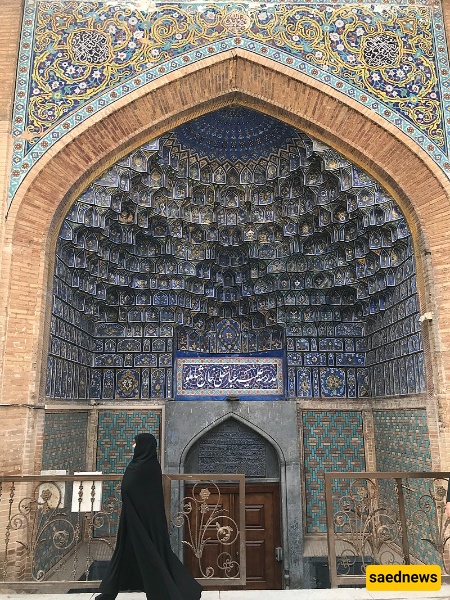
The iwans are decorated with colorful tilework, including blue tiles and mosaic-style patterns. Elaborate muqarnas add another layer of detail, giving the building an imposing appearance without overwhelming its overall simplicity.
Brick forms the principal construction material, while tile and mosaic tilework provide much of the decorative character. One particularly notable feature is the entrance façade. The original entrance was moved back as a result of changes connected to the expansion of the Imam Reza Shrine and the widening of Navab Safavi Street. Even after that alteration, the entrance continues to retain much of the visual grandeur associated with the historic building.
The school also has a scholarly connection that extends beyond its classrooms and chambers. In 1344 in the Iranian calendar, Seyyed Ali Beheshti endowed a library to the complex. Known as the Seyyed Library, it became an important scholarly resource in Mashhad.
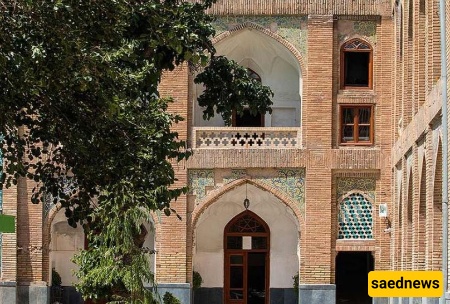
For travelers, the appeal of Abbasqoli Khan School lies precisely in this combination of architecture and living history. Its tiled surfaces, iwans, brickwork and courtyard tell one story, while the continued presence of religious students tells another.
The location also makes it particularly interesting for visitors exploring Mashhad. Because the school stands near the Imam Reza Shrine, it can form part of a broader historical and cultural itinerary. Yet its importance is not simply a matter of being close to one of Iran’s most significant religious destinations.
It represents a surviving example of Safavid architectural and educational traditions, preserving details that can help visitors understand how religious schools were designed and used.
For anyone planning to visit, the school is located at the beginning of Navab Safavi Street in Mashhad, near the Imam Reza Shrine. Its combination of historical background, religious function and architectural detail makes it worth considering alongside the city’s more famous attractions.
Perhaps the most interesting question is why such a significant building remains less familiar to many visitors. Abbasqoli Khan School does not rely solely on spectacular scale. Its appeal is found in the details: 104 chambers, decorated iwans, carefully designed brick stairways, traditional tilework and a history stretching back to the Safavid era.
It is also a reminder that historic architecture does not always have to be separated from modern life to remain meaningful. Abbasqoli Khan School continues to educate religious students while preserving the architectural language of another era.
For travelers interested in Iranian history, architecture and culture, that combination may be the strongest reason to add the school to a Mashhad itinerary. A visit offers more than a look at an old building—it opens a window onto the relationship between education, religion, architecture and political history in Safavid-era Iran.