SAEDNEWS: After the Apache Helicopter Crash and Its Destruction in the Strait of Hormuz, the Fighter’s Name Has Become Highly Searched
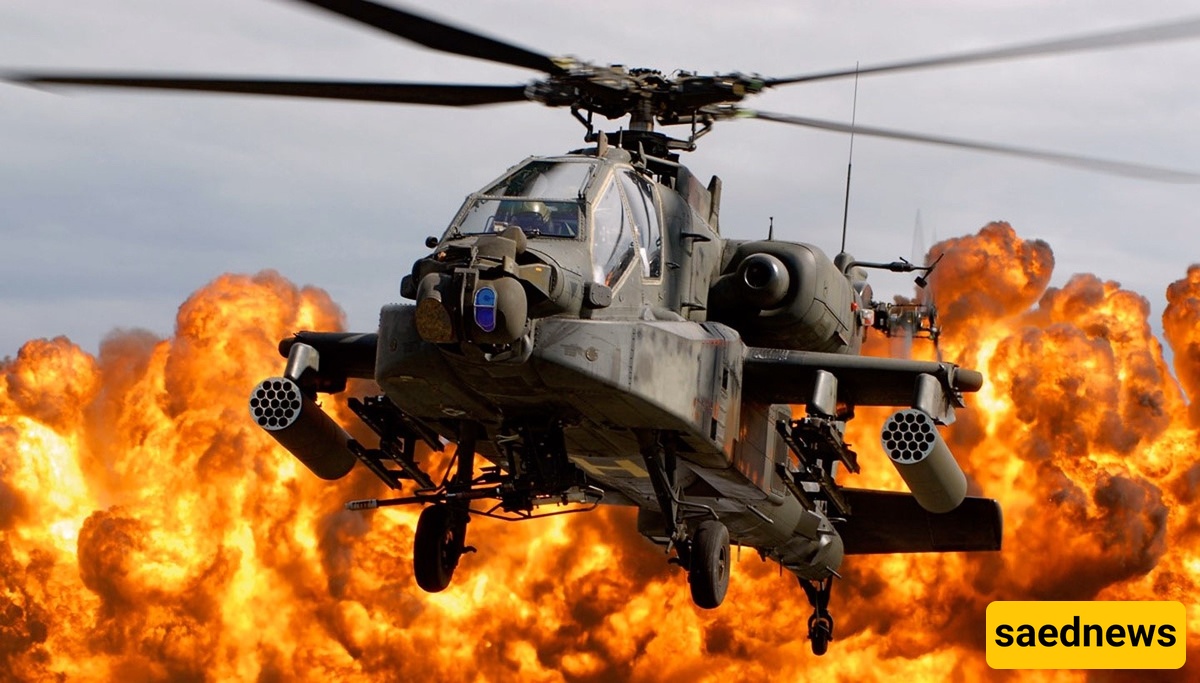
According to Saednews, Following the media coverage of the crash of an Apache helicopter in the Strait of Hormuz on June 8, 2026 (19 Khordad 1405) and Donald Trump’s comments on the incident, many audiences have become interested in watching Apache helicopter videos or want to know what the Apache Longbow helicopter is and how it works. For this reason, this section provides information about this attack helicopter.
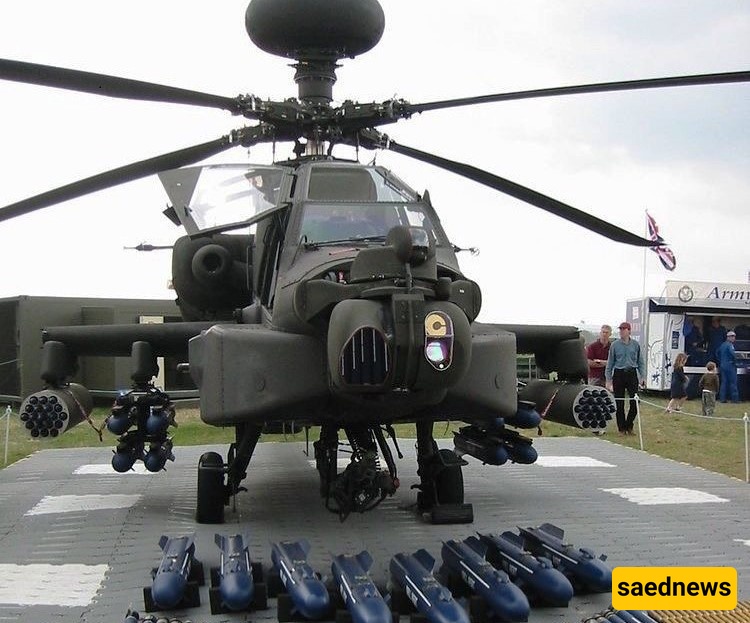
The Apache helicopter is a twin-engine attack helicopter with a four-blade main rotor, designed to replace the Cobra helicopter. Its first flight took place on September 30, 1975. Since then, it has undergone extensive development under Boeing’s defense division. More than one thousand units of different models have been produced to date.
In terms of design, the Apache is similar to other modern attack helicopters. It has two engines mounted on both sides of the fuselage, and a two-person crew seated in tandem.
The main pilot sits in the rear seat, while the co-pilot/gunner sits in the front seat, responsible for both flight control and weapons operation.
On both sides of the fuselage, there are small stub wings designed to carry various types of weapons and military equipment.
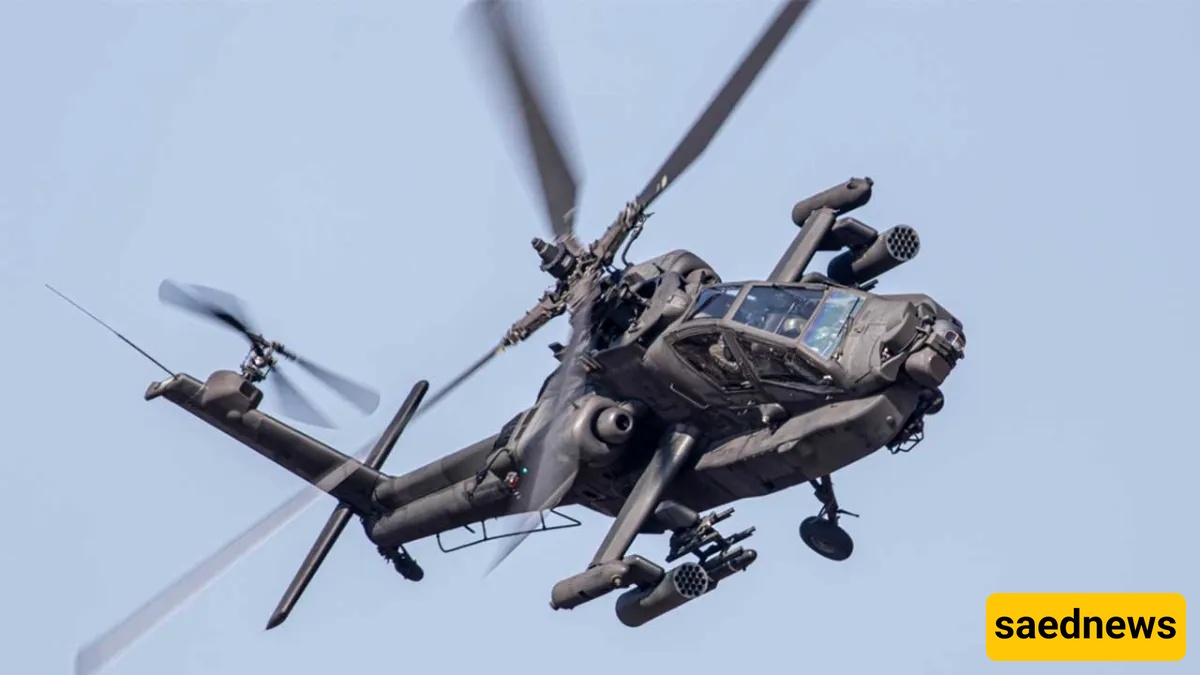
The Apache attack helicopter was manufactured by Hughes Helicopters and McDonnell Douglas (now part of Boeing’s defense industry).
Depending on the variant, the cost of an Apache helicopter is estimated in various sources to range between 18 and 31 million US dollars.
The Apache helicopter has an operational range of about 480 kilometers without aerial refueling, and up to approximately 1,900 kilometers with aerial refueling.
It can operate at a maximum altitude of about 6,400 meters above sea level. Its climb rate is around 13 meters per second, and its rate of ascent is approximately 12.7 meters per second. The maximum speed of this military aircraft reaches about 273 km/h.
Technically, the helicopter uses a four-blade main rotor system and a four-blade tail rotor, arranged at a non-perpendicular angle to improve stability and control during flight.
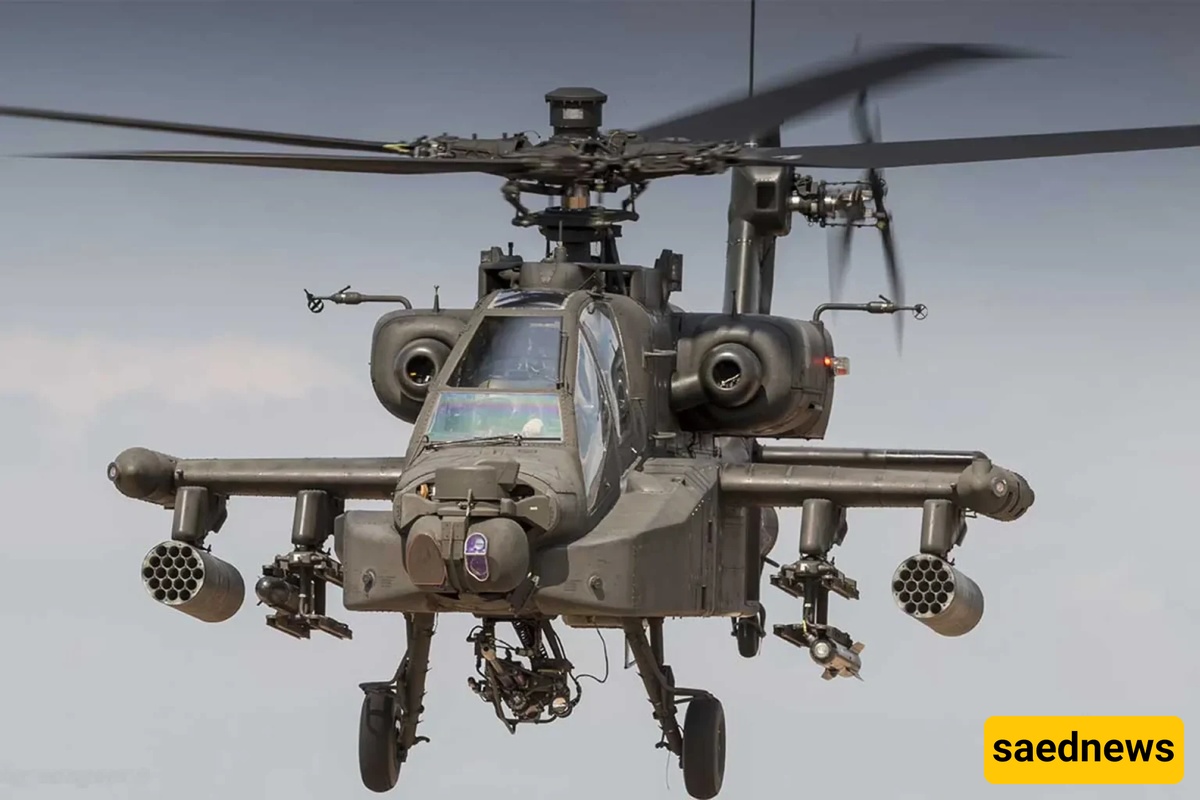
Based on military sources and analytical reports, the main weaknesses of this helicopter include:
Vulnerability in close combat: At low altitudes, it can be vulnerable to man-portable air-defense systems (MANPADS) and ground fire.
High cost: Both procurement and maintenance are very expensive, limiting large-scale deployment.
Complex maintenance: Its advanced systems require specialized and time-consuming repairs.
Heavy logistical dependence: It relies on continuous spare parts, technical teams, and logistical support.
Weather sensitivity: Performance may decrease in fog, dust, or low-visibility conditions.
Limited multi-target engagement: Managing multiple simultaneous targets can be challenging in complex scenarios.
Detectability: Due to its size and systems, it can be relatively easier to track thermally and sometimes by radar.
Countries operating Apache helicopters include the United States Army, the Israeli Air Force, the Royal Netherlands Air Force, and the Japan Ground Self-Defense Force.
At the end, a video of a modern Apache helicopter flight is shown.