SAEDNEWS: Caserta Palace, located in the city of Caserta, is one of Italy’s most remarkable historic landmarks. This article explores its history and cultural significance.
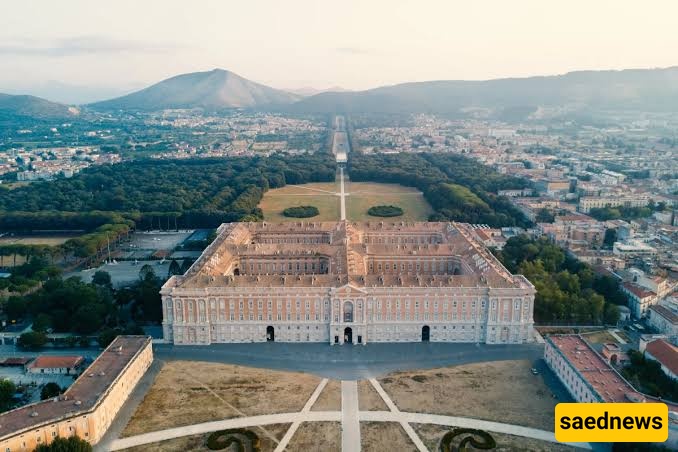
According to Saednews, The Royal Palace of Caserta is one of the greatest achievements of Baroque architecture and one of Italy's most magnificent royal residences. Located in the city of Caserta, north of Naples, this UNESCO World Heritage Site symbolizes the power and ambition of the Bourbon monarchy. Beyond its impressive architecture, the palace is renowned for its rich history, breathtaking gardens, and lasting cultural significance.
Construction of the Royal Palace of Caserta began in 1752 under the orders of King Charles VII of Naples (later Charles III of Spain). The king commissioned the celebrated architect Luigi Vanvitelli to design a royal residence that would rival the grandeur of the Palace of Versailles in France.
According to historical accounts, Charles was deeply moved when he first saw Vanvitelli's model of the palace. However, he never spent a single night in the completed residence because he left Naples in 1759 to become King of Spain. The project was continued under his son, Ferdinand IV of Naples, although several elements of Vanvitelli's original vision remained unfinished.
Vanvitelli designed the palace with Versailles as a political and architectural inspiration while adapting it to Italian traditions. The goal was not only to create a luxurious royal residence but also to establish a complete administrative center where the king, court, government offices, military headquarters, library, museum, and other institutions could operate together.
To support the project, the nearby settlement of Casertavecchia was relocated closer to the construction site, and a silk factory was established at San Leucio, cleverly integrated into the surrounding landscape.
The palace also served a strategic purpose. Unlike Naples, which was vulnerable to naval attacks and political unrest, Caserta offered a safer inland location for the Bourbon court and government.
The Royal Palace of Caserta is considered one of the largest royal palaces ever built.
Some of its most impressive features include:
Five floors
Approximately 1,200 rooms
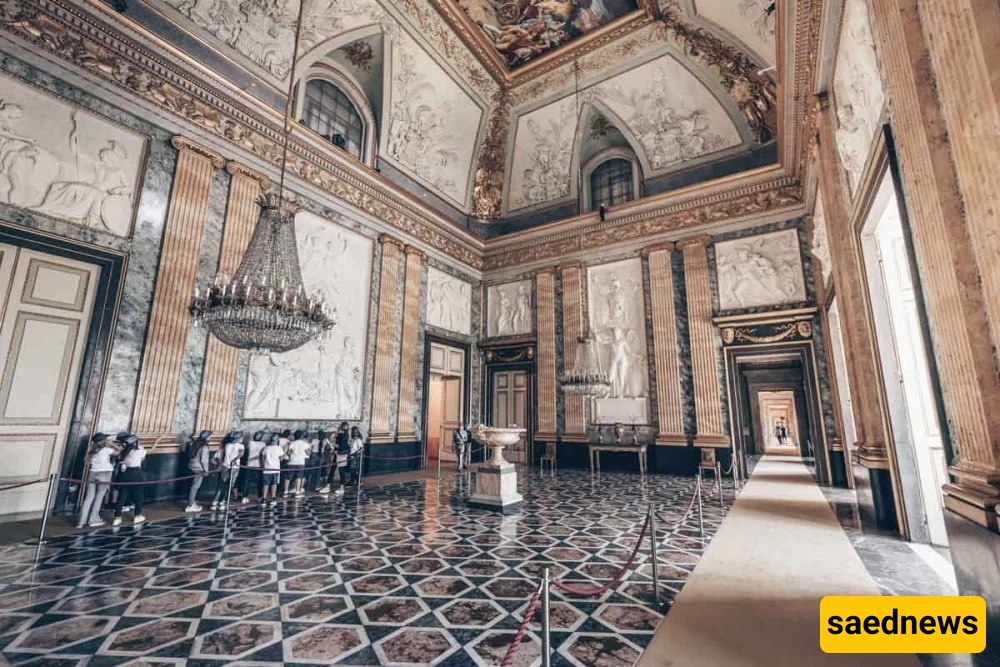
Around 40 richly decorated state rooms
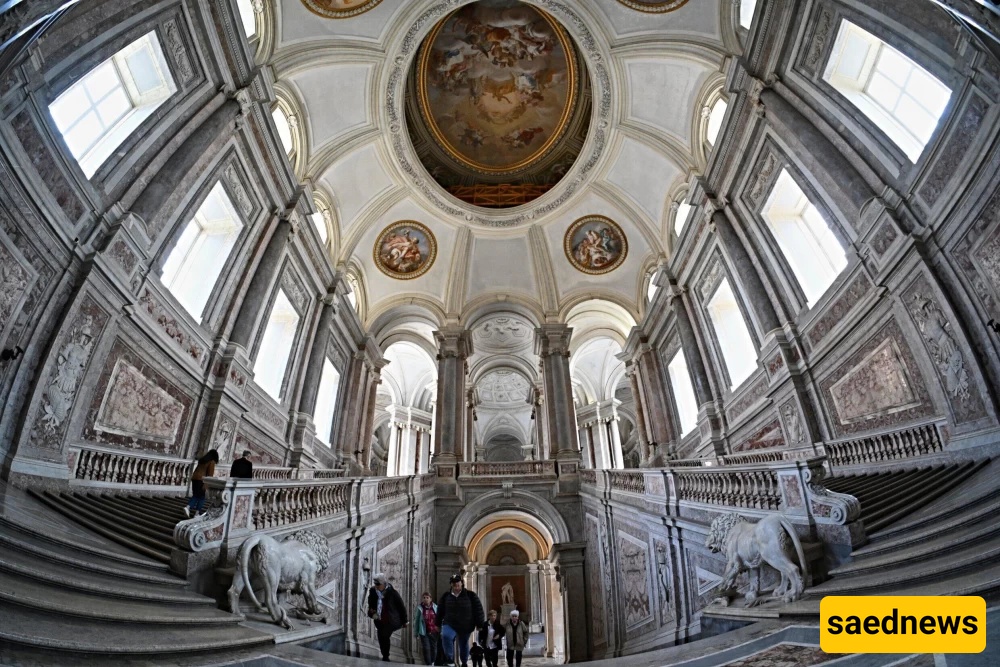
34 grand staircases
1,742 windows
1,026 fireplaces
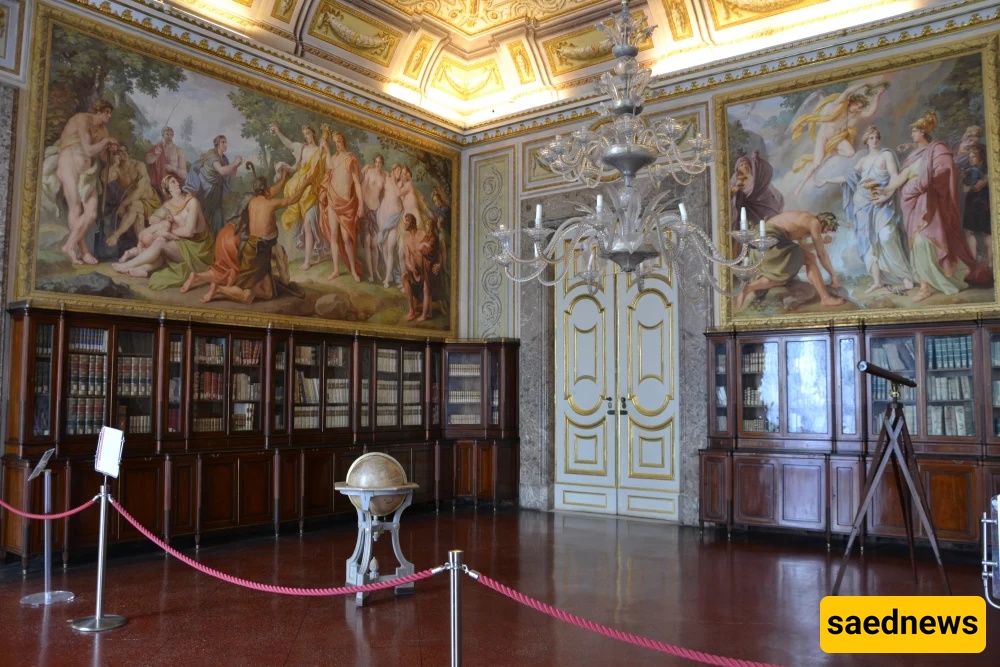
A magnificent royal library
A royal theater modeled after Naples' Teatro di San Carlo
The building has a massive rectangular layout measuring approximately 247 × 184 meters, enclosing four spacious courtyards. With a total volume exceeding 2 million cubic meters, it remains one of the largest palace complexes in the world by volume.
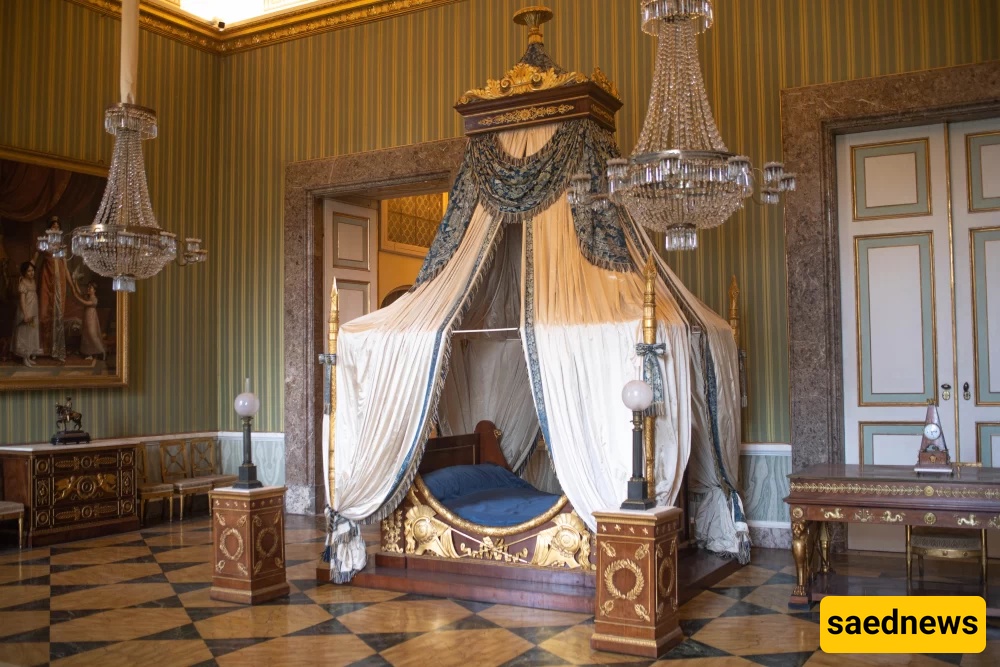
Its elegant façade, endless sequence of ceremonial halls, marble staircases, frescoes, and lavish decorations showcase the wealth and prestige of the Bourbon dynasty.
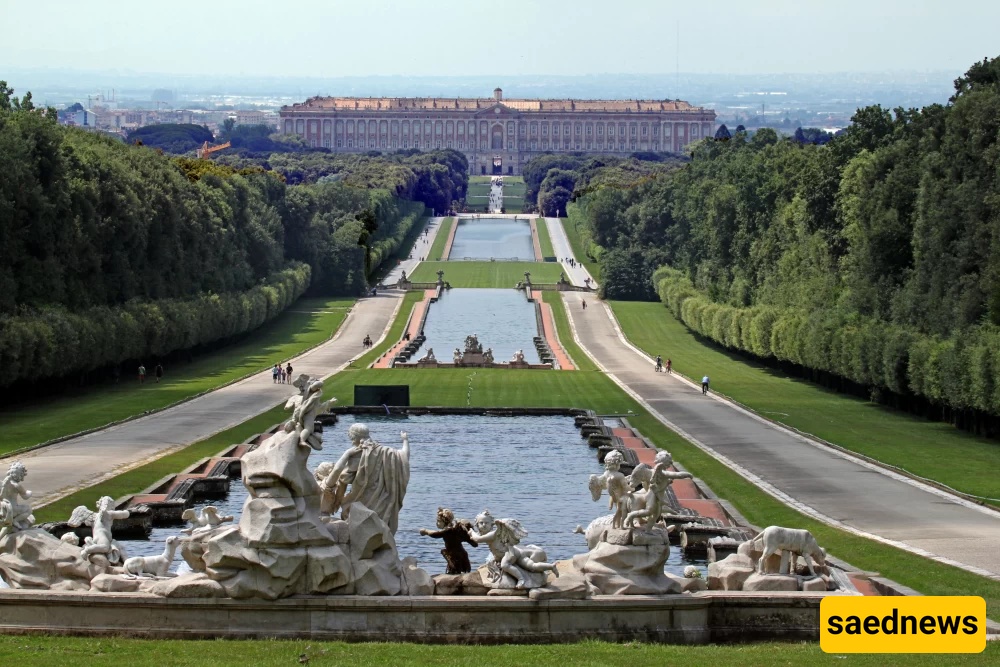
The palace is surrounded by one of Europe's most spectacular royal parks.
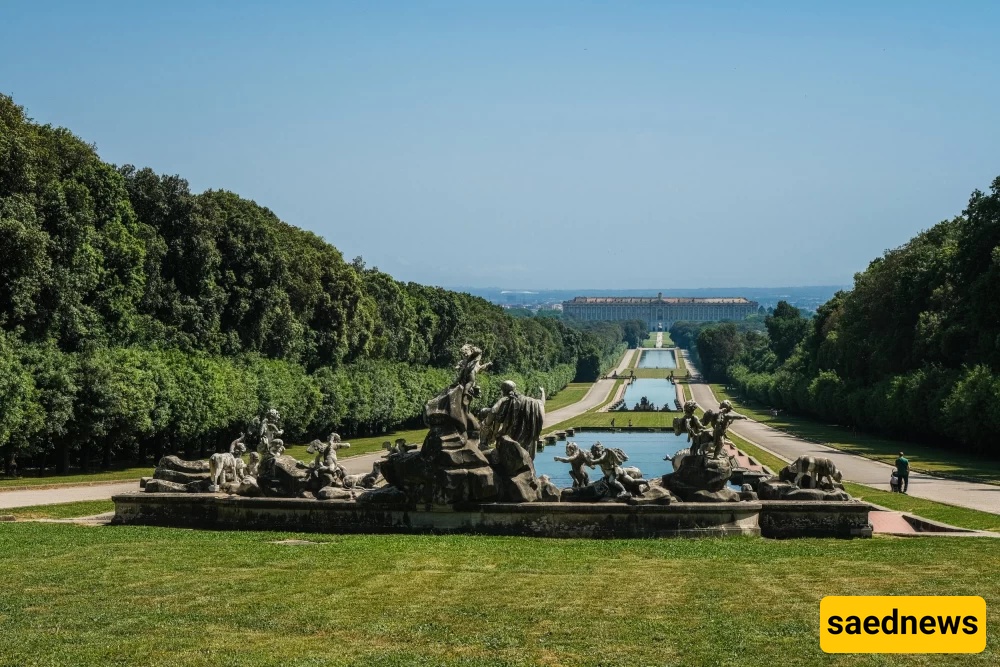
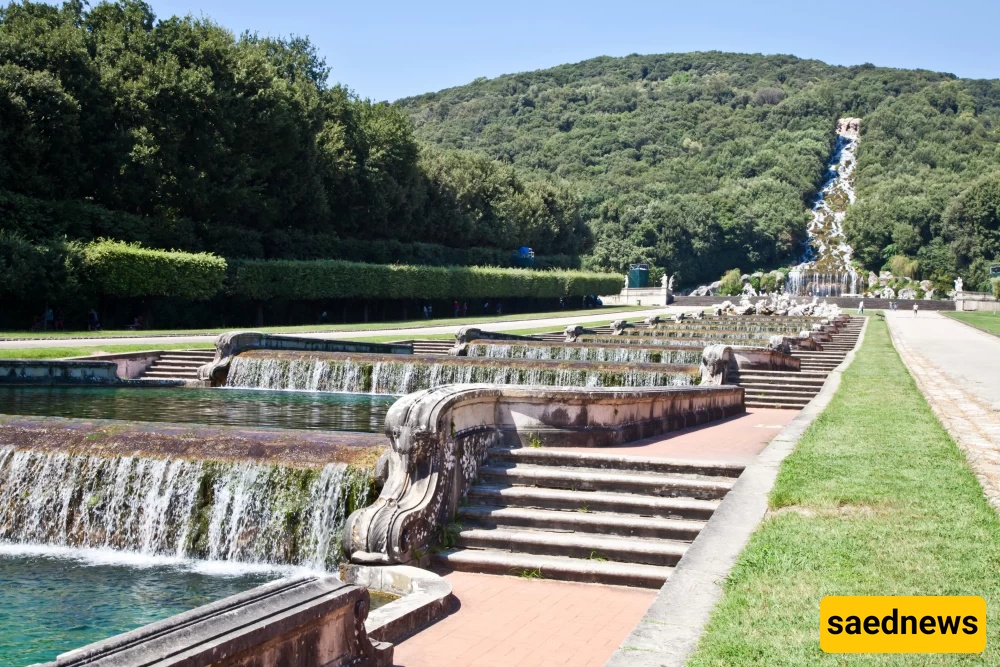
Stretching over approximately 120 hectares, the landscape combines formal Italian gardens, grand fountains, ornamental pools, waterfalls, woodlands, and an English Garden. A carefully designed "telescopic effect" creates an uninterrupted visual axis extending from the palace to the distant waterfall.
The gardens feature:
Monumental fountains
Reflecting pools
Artificial waterfalls
Woodland paths
Classical sculptures
Rare botanical collections
An English landscape garden
Historic hunting lodges
Unlike many earlier royal estates, Caserta successfully combines formal gardens with natural forests and practical facilities such as the historic silk factory at San Leucio.
Following the unification of Italy in 1861, the palace became state property under the House of Savoy.
Between 1923 and 1943, it served as the home of the Italian Air Force Academy.
During the Second World War, the palace became the headquarters of the Allied Forces in the Mediterranean. In 1945, it hosted the signing of the unconditional surrender of German forces in Italy, marking one of the most significant military events of the war.
Although bombing in 1943 damaged parts of the palace and much of its original furniture was lost during the conflict, extensive restoration work has preserved its historic interiors.
The Royal Palace of Caserta has appeared in several internationally acclaimed films.
Its magnificent interiors represented the Royal Palace of Naboo in Star Wars: Episode I – The Phantom Menace (1999). The palace has also been featured in productions from the Mission: Impossible film series and numerous historical documentaries.
The Royal Palace, Park of Caserta, Aqueduct of Vanvitelli, and the San Leucio Complex were collectively designated as a UNESCO World Heritage Site in 1997.
UNESCO recognizes the estate as an outstanding example of 18th-century urban planning, architecture, engineering, and landscape design that successfully combines artistic beauty with practical functionality.
The palace is located approximately:
38 km (24 miles) north of Naples
200 km (124 miles) southeast of Rome
It is easily accessible by:
High-speed and regional trains
Intercity buses
Private vehicles
Taxi services
Regular trains connect Naples Central Station with Caserta throughout the day, while high-speed rail services also operate from Rome.
Visitors can explore:
The Royal Apartments
The Grand Staircase
The Palatine Chapel
The Royal Theater
The English Garden
Monumental fountains
The expansive royal park
Bicycles, shuttle buses, and horse-drawn carriages are also available for exploring the vast gardens.
Often described as Italy's answer to Versailles, the Royal Palace of Caserta combines monumental architecture, remarkable engineering, elegant interiors, and one of Europe's finest royal landscapes. Whether you are interested in history, architecture, art, or garden design, Caserta offers one of the most unforgettable cultural experiences in Italy.