SAEDNEWS: In the past, the use of secret codes was common. Over time, most ancient texts have been deciphered, but some remain highly complex and mysterious.
According to Saednews, Looking back through history, we find ancient writings and tablets that still remain undeciphered. Few things are as fascinating as deciphering a mysterious historical text. Numerous ancient inscriptions and manuscripts remain beyond human understanding. Following the discovery of the Rosetta Stone, which provided the key to deciphering ancient Egyptian hieroglyphs, archaeologists and researchers have made countless attempts to crack other ancient codes. Here are five mysterious ancient scripts that have yet to be deciphered.
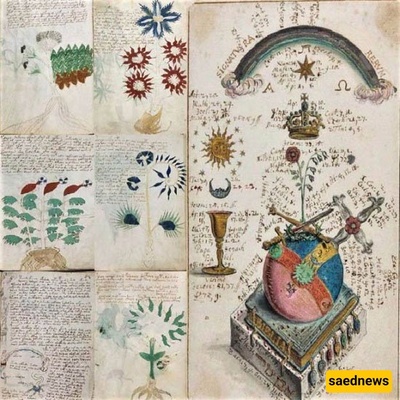
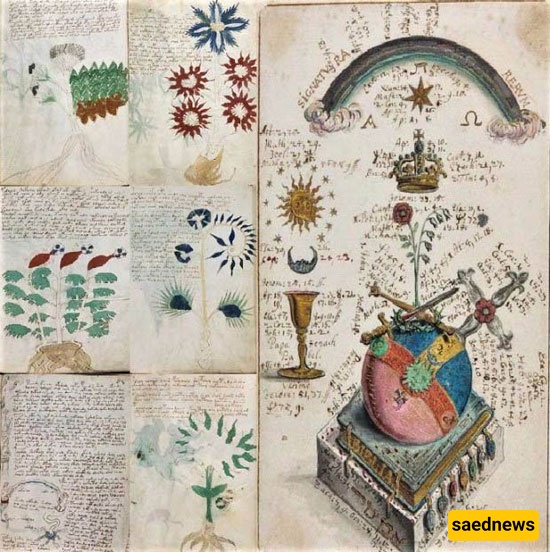
The manuscript was named after Wilfrid Voynich, a Polish-born antiquarian who acquired it. This mysterious ancient book is a complex puzzle featuring extraordinary illustrations of plants and animals, along with unusual symbols and depictions of a world associated with cosmology and pharmacology.
It also contains distinctive diagrams and structures that bear no resemblance to any known classical, modern, or ancient language. At one time, people believed the manuscript contained hidden and mysterious secrets that could unlock unlimited knowledge and power.
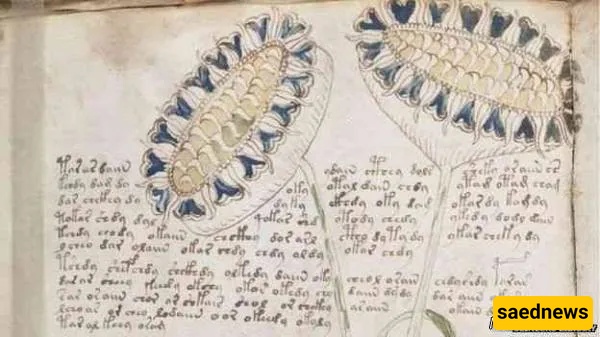
Many of the world's leading codebreakers, including John Tiltman and members of the US National Security Agency, have attempted to decipher this mysterious manuscript. However, they have been unable to establish the meaning of its complex encoded symbols.
The manuscript's unusual complexity has been cited as evidence against the theory that it is a hoax, although some researchers continue to disagree. One recent hypothesis suggests that the text uses a writing system designed to conceal its meaning. According to this theory, most of the text is meaningless, while only a few sections contain linguistically plausible words.
The Indus Script, also known as the Harappan Script, refers to short sequences of symbols associated with the Indus Valley Civilization. These inscriptions date to the Harappan period, approximately 2600–1900 BC.
Despite numerous attempts to decipher the script and various ambitious claims about its meaning, it remains undeciphered. One major obstacle is the absence of an established understanding of the underlying language, making it difficult to identify the meanings of the symbols.
Some researchers suggest that the lack of a bilingual inscription may be one reason decipherment has proved so challenging. Over the years, numerous interpretations of this mysterious ancient script have been proposed, but none has gained widespread acceptance within the international academic community.
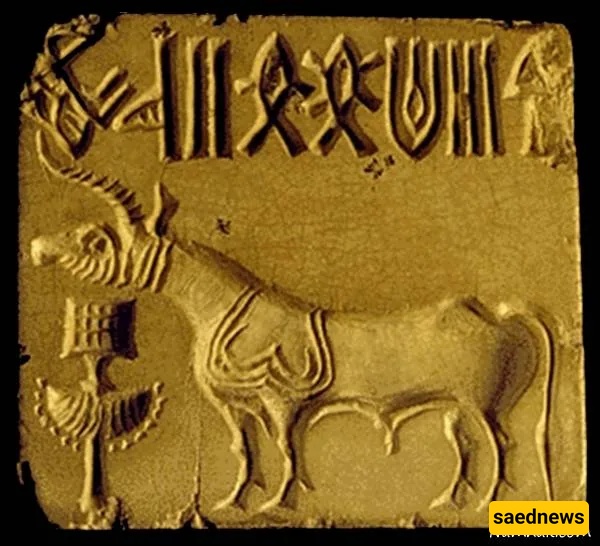
The Indus Script remains a popular subject of debate among both amateur enthusiasts and professional researchers, and its meaning continues to elude scholars.
The Codex Seraphinianus is a book created by Italian artist, architect, and industrial designer Luigi Serafini. It is believed to have been written over approximately 30 months, between 1976 and 1978.
The book contains around 360 pages and resembles an illustrated encyclopedia of an imaginary world. It features a unique visual language, with elaborate symbols that appear to form an entirely new alphabet.
Its illustrations often depict surreal versions of things found in our own world. For example, one image shows a fruit-bearing plant bleeding as it grows into something resembling a chair. Another depicts a transformed crocodile apparently created through the lovemaking of a couple. The book contains many other equally bizarre scenes.
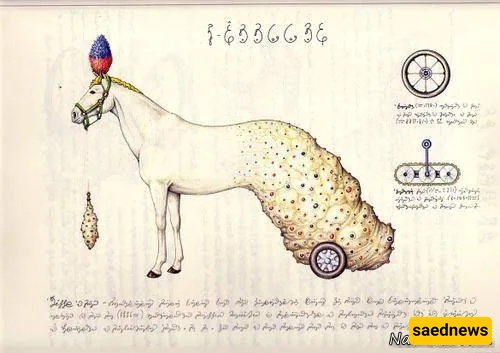
At first glance, many of these images appear nonsensical. Some depict delicate-looking machines held together by numerous tiny threads, while others contain recognizable objects, including maps and human faces. Many illustrations, particularly those in the physics section, are almost entirely abstract.
Virtually all the illustrations are vivid, colorful, and rich in detail. The book is filled with an extraordinarily unusual alphabet that has never been definitively deciphered. Even intensive study by professional linguists has failed to produce a conventional translation.
The Codex Seraphinianus remains Luigi Serafini's most famous artistic work, presenting a world that is simultaneously beautiful, imaginative, and deeply unsettling.
In 1885, a man named James Ward published a pamphlet in Virginia, United States, titled The Beale Papers. According to the pamphlet, a man named Thomas Jefferson Beale had hidden a treasure of gold and jewels at an undisclosed location. The treasure would be worth approximately $65 million in today's money.
The pamphlet claimed that the location and details of the treasure were recorded in three encrypted documents. According to Ward's account, Beale had entrusted the documents to an innkeeper in a locked box, instructing him to open it if neither Beale nor his associates returned within ten years.
Beale was supposedly going to provide the innkeeper with the key to deciphering the documents at a later date. However, neither Beale nor the key ever appeared.
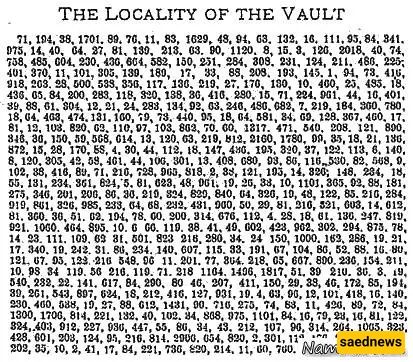
The innkeeper eventually passed the box to a friend, who spent 20 years attempting to crack the codes. He reportedly succeeded in deciphering one of the three documents. This text allegedly revealed the precise quantities of gold, silver, and jewels in the treasure, along with the approximate location where they had been buried. The other two documents remain undeciphered.
However, some researchers have questioned the authenticity of the entire story. They argue that there is no reliable evidence that a man named Beale ever existed and that his identity is known only through Ward's pamphlet. Some have even suggested that Ward and Beale may have been the same person.
American investigator Joe Nickell considers the Beale treasure story a complete fabrication, noting its similarities to a tale about a secret Masonic treasure. Despite numerous attempts to decipher the two remaining documents, no widely accepted solution has emerged.
The Dispilio Tablet, also referred to as the Dispilio Book or Dispilio Disk, is a wooden artifact bearing a series of markings.
It was discovered during excavations led by George Hourmouziadis at Dispilio, Greece. Radiocarbon dating has placed the artifact at approximately 5260 BC.
The Dispilio archaeological site appears to have been occupied over an extended period, spanning the later stages of the Middle Neolithic through the Late Neolithic.
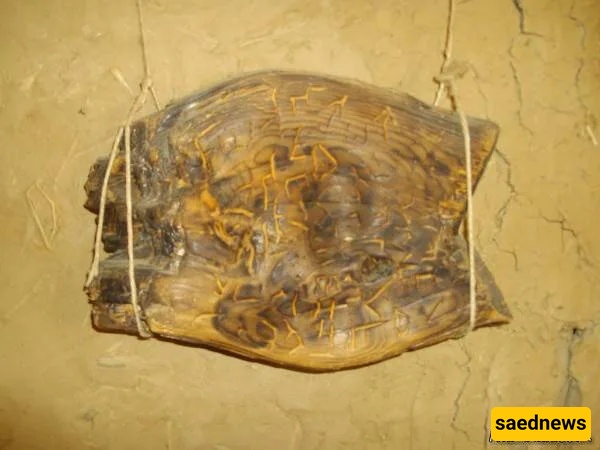
Numerous artifacts have been discovered at the site, including pottery, wooden structural elements, seeds, bones, figurines, personal ornaments, and flutes. One of the flutes has been dated to approximately 6000 BC and has been described as one of the oldest known musical instruments discovered in Europe.
Despite the significance of the archaeological discoveries at Dispilio, the markings on the tablet remain poorly understood. Researchers have yet to establish whether they represent a writing system or another form of symbolic communication.
For now, the meaning of the Dispilio Tablet remains uncertain, and it is possible that its markings may never be fully deciphered.