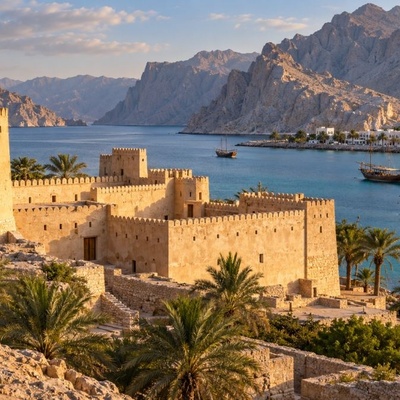
SAEDNEWS: Khasab, the capital of Oman's Musandam Governorate, is located on the Musandam Peninsula near the Strait of Hormuz. This strategic port city plays an important role in regional maritime trade, connections with Iran, and marine tourism.
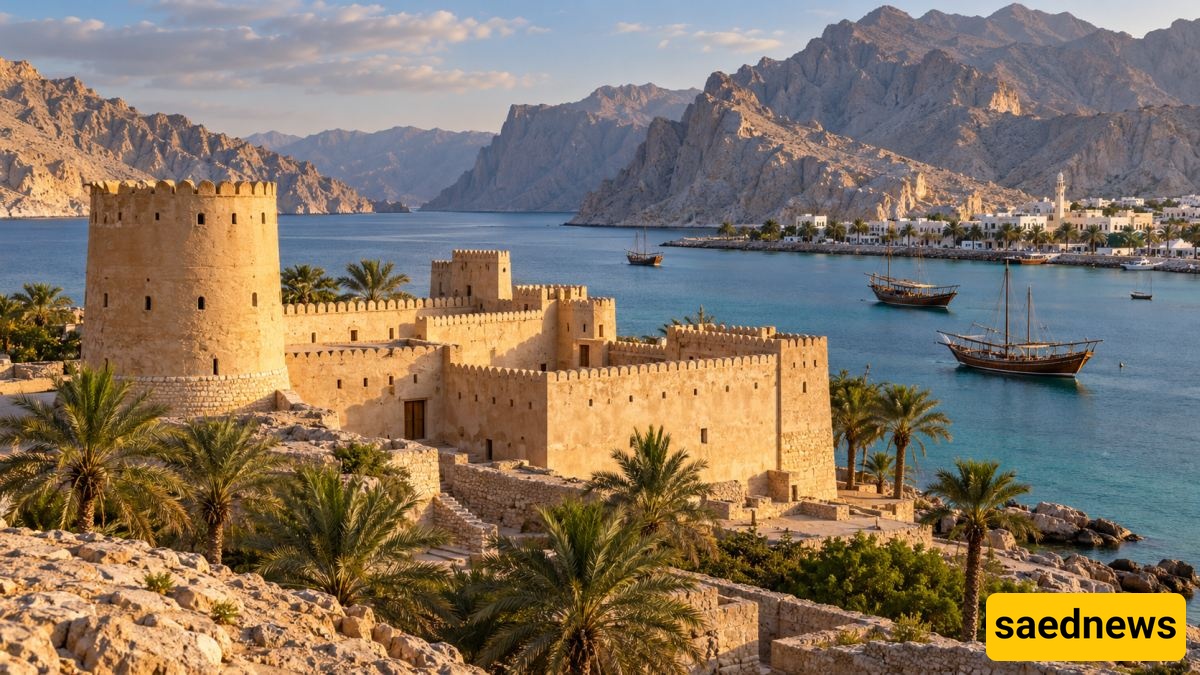
According to Saednews, Khasab is a port city in northern Oman and the administrative capital of Musandam Governorate. Located on the Musandam Peninsula along the Strait of Hormuz, it lies close to the border of the United Arab Emirates, particularly Ras Al Khaimah. Due to its unique geographical position, Khasab is part of an Omani territory separated from the country's main landmass, with most of its land connections running through the UAE.
Khasab's strategic location makes it important for Oman's maritime connectivity and trade with neighbouring markets. It is also one of the region's notable marine tourism destinations. However, it is important to distinguish between the global significance of the Strait of Hormuz and the specific activities of Khasab Port. Although these two are closely connected, they are not the same.
Khasab, also spelled Khasab in English, is situated on the Musandam Peninsula, a northern exclave of Oman separated from the country's main territory by the United Arab Emirates.
Although geographically close to the UAE, Khasab is an Omani city. Across the waters of the Strait of Hormuz lie the southern coastlines and islands of Iran. This strategic position makes Musandam an important link between the Persian Gulf, the Gulf of Oman and the maritime routes leading to the Indian Ocean.
Feature | Description |
|---|---|
Country | Oman |
Administrative status | Capital of Musandam Governorate |
Geographical location | Northern Oman, Musandam Peninsula |
Nearby waterway | Strait of Hormuz |
Regional characteristic | Separated from mainland Oman by UAE territory |
Main port activities | Regional trade, maritime transport and tourism |
The history of Khasab is closely connected to maritime navigation, Persian Gulf trade and historical competition for control of the Strait of Hormuz.
Today, Khasab serves as the administrative centre of Oman's Musandam Governorate. Historically, however, it developed from a local port into a strategically important maritime outpost. Although the exact date of the city's establishment remains uncertain, its historical significance grew through successive periods of regional trade and foreign influence.
Before becoming a Portuguese military outpost, Khasab was part of the network of ports associated with the Kingdom of Hormuz.
The Kingdom of Hormuz controlled important parts of trade on both sides of the Persian Gulf, with its commercial connections largely dependent on maritime routes.
According to research by the Heritage of Portuguese Influence Portal (HPIP), following Portugal's conquest of Hormuz in 1515, Khasab, like other ports under the kingdom's authority, became subject to Portuguese tribute.
However, this political and financial dependence does not necessarily mean that Portuguese forces established a permanent and substantial military presence in Khasab immediately after 1515. Its more prominent military role emerged in the following decades.
Following the end of Portuguese control over Hormuz in 1622, the Portuguese increasingly needed alternative bases to maintain their influence in the region.
Khasab, located on the opposite shore and close to the strategic maritime routes of the Strait, became one of these important locations.
According to HPIP, Iranian forces captured Khasab in February 1623. Portuguese commander Rui Freire de Andrade recaptured it in 1624.
After this event, Khasab became increasingly important as a base supporting Portuguese efforts to regain Hormuz and maintain their naval presence in the region.
This period demonstrates how the city's history was shaped by the wider rivalry between Iran, Portugal and the coastal powers of Oman.
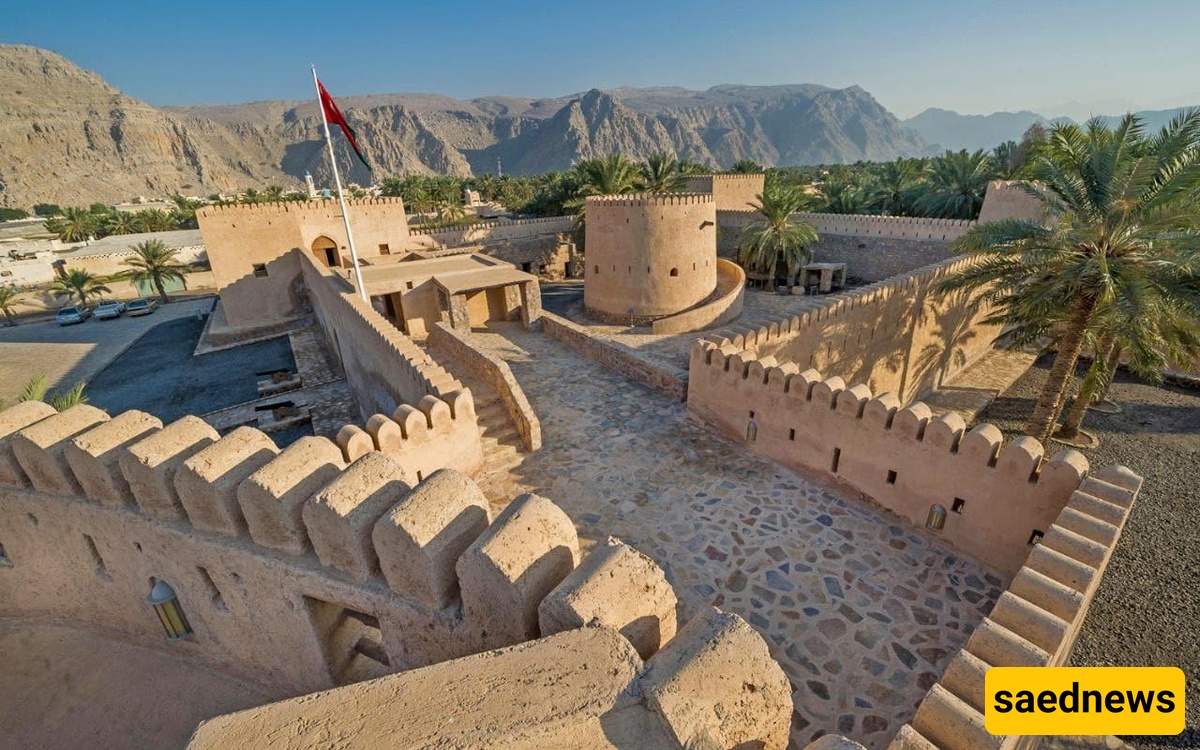
Khasab Castle is the city's most significant historical landmark. However, the exact construction date of its earliest structure remains uncertain, and historical sources offer different accounts of its original builders and subsequent renovations.
According to HPIP research, when the Portuguese returned to Khasab in 1624, they found the existing fortifications abandoned and undertook repairs and improvements.
This suggests that defensive structures were already present before 1624. The same research associates the large-scale expansion of the defensive complex with the 1630s.
Oman's official tourism website also explains that the castle developed through several construction phases under different rulers. Its central circular tower is considered the oldest surviving section.
Later Omani rulers strengthened the fortifications further. Therefore, it would be historically inaccurate to describe the entire castle in its present form as a single structure built exclusively by the Portuguese.
The rise of the Ya'aruba dynasty in Oman gradually weakened Portuguese control over coastal strongholds.
The capture of Muscat by Omani forces in 1650 marked a major turning point in this process.
Nevertheless, according to HPIP research, the Portuguese presence in Khasab continued until 1656, when their base was eventually abandoned.
Therefore, the fall of Muscat should not automatically be treated as the end of Portuguese control in Khasab. Some local historical accounts provide different dates, making it important to distinguish between sources when discussing this event.
Khasab Castle continued to play an important role after the Portuguese period.
During subsequent centuries, it served several administrative and military purposes, including:
Residence of the local governor.
Accommodation for soldiers.
Administration of local affairs.
Judicial and governmental activities.
Official Omani sources mention fortification improvements during the reigns of Ahmad bin Said Al Busaidi and Said bin Sultan, as well as restoration work during the rule of Said bin Taimur.
These changes demonstrate that the castle was more than a military structure; it also formed part of the local system of government.
During the 19th century, Musandam attracted increasing British attention because of its maritime and communications significance.
According to historical documents available through the Qatar Digital Library, the deep-water anchorage of Khasab Bay attracted considerable interest.
Lewis Pelly, the British Political Resident in the Persian Gulf, proposed moving the British naval base and political headquarters to the area.
However, this was a proposal rather than a confirmed relocation.
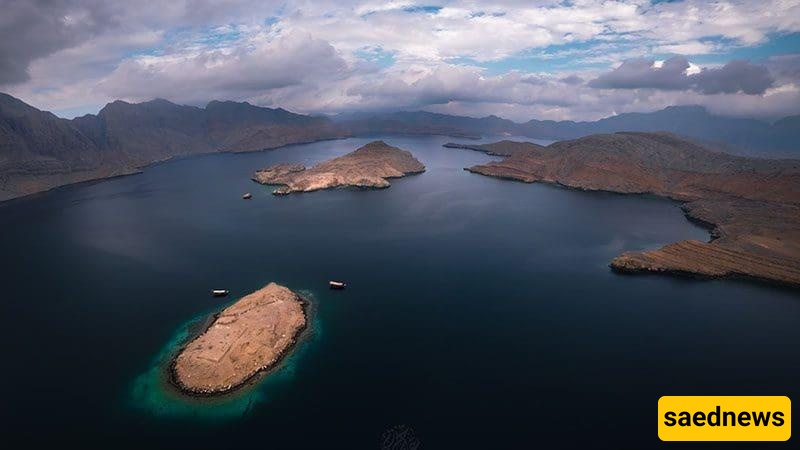
Another important historical landmark from this period is Telegraph Island, also known as Jazirat Al Maqlab, located in the waterways near Khasab.
On 17 November 1864, an agreement was signed with the Sultan of Muscat to establish a telegraph station on the island.
The station was abandoned in 1868 after a new submarine cable route was established along the Iranian coastline.
It is important to note that the telegraph station was not located inside Khasab city itself but on a nearby island.
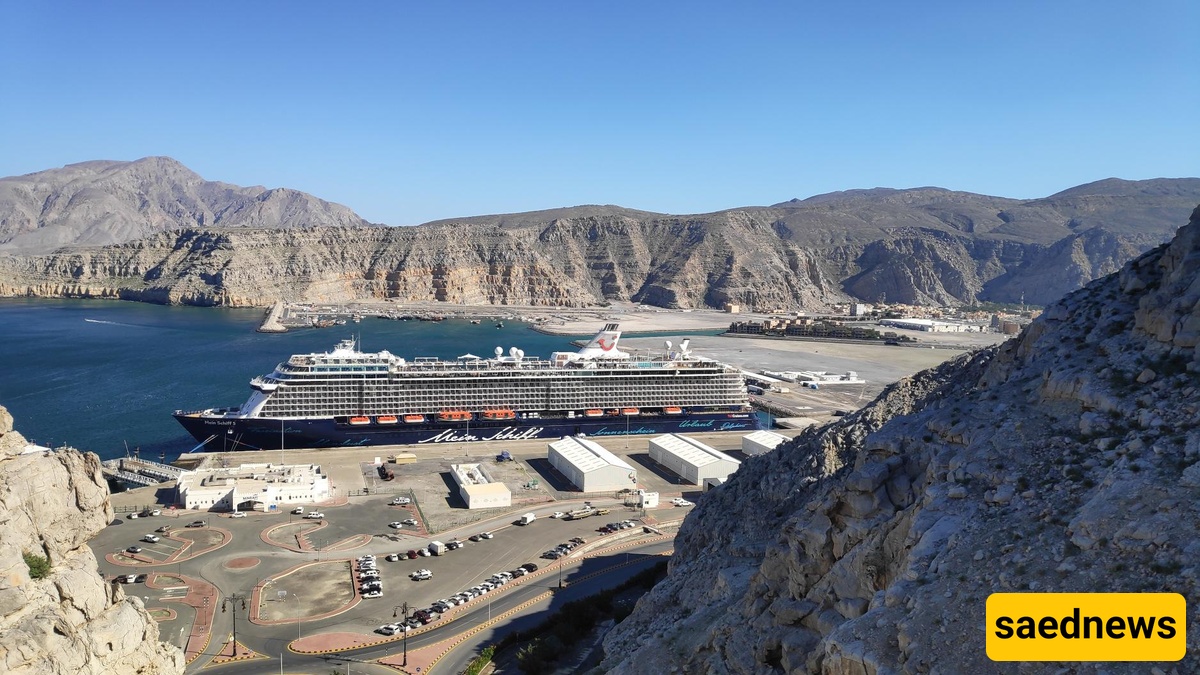
In the modern era, Khasab has retained its administrative importance as the capital of Musandam Governorate.
Its port plays a role in regional trade, maritime connectivity and the reception of cruise ships.
Port development has focused on supporting the local economy and expanding commercial and tourism activities.
Khasab Castle has also been transformed into a cultural and heritage attraction. Exhibitions featuring traditional maritime equipment, historical objects, clothing and displays of local lifestyles help visitors understand Musandam's history beyond its wars and foreign occupations.
Period | Major Historical Event |
|---|---|
Before 1515 | Khasab formed part of the port network associated with the Kingdom of Hormuz |
1515 | Became subject to Portuguese tribute following the conquest of Hormuz |
1623–1624 | Captured by Iranian forces and subsequently recaptured by the Portuguese |
1630s | Expansion of Portuguese fortifications |
1656 | Portuguese base abandoned, according to HPIP research |
19th century | Increased British interest in Khasab Bay and regional communications |
1864–1868 | Telegraph station operated on nearby Maqlab Island |
Modern era | Expansion of administrative, commercial and tourism activities |
Khasab's importance is primarily linked to its proximity to the Strait of Hormuz, one of the world's most strategically significant maritime waterways.
The Strait connects the Persian Gulf to the Gulf of Oman and, beyond that, international waters leading to the Indian Ocean.
Large numbers of commercial vessels use this route to transport energy resources and goods between Persian Gulf ports and international markets.
To understand the scale of its importance, the International Energy Agency reported that approximately 20 million barrels of crude oil and petroleum products passed through the Strait of Hormuz per day on average in 2025.
This figure relates to the entire Strait of Hormuz and the specified year. It should not be interpreted as the volume of oil handled by Khasab Port or as a permanent annual average.
An important distinction must be made: ships passing near Khasab do not necessarily dock at Khasab Port.
The area's global importance comes primarily from its position along international shipping routes, whereas Khasab Port's operational role depends on its facilities, maritime services, regional trade and passenger transport.
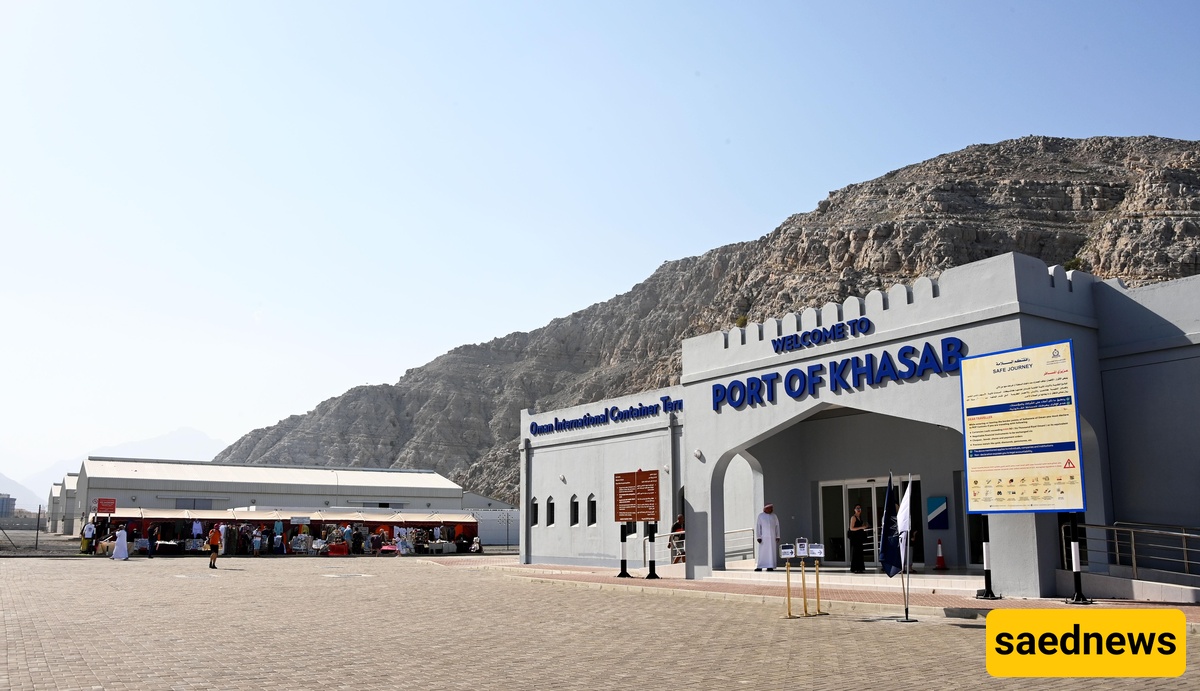
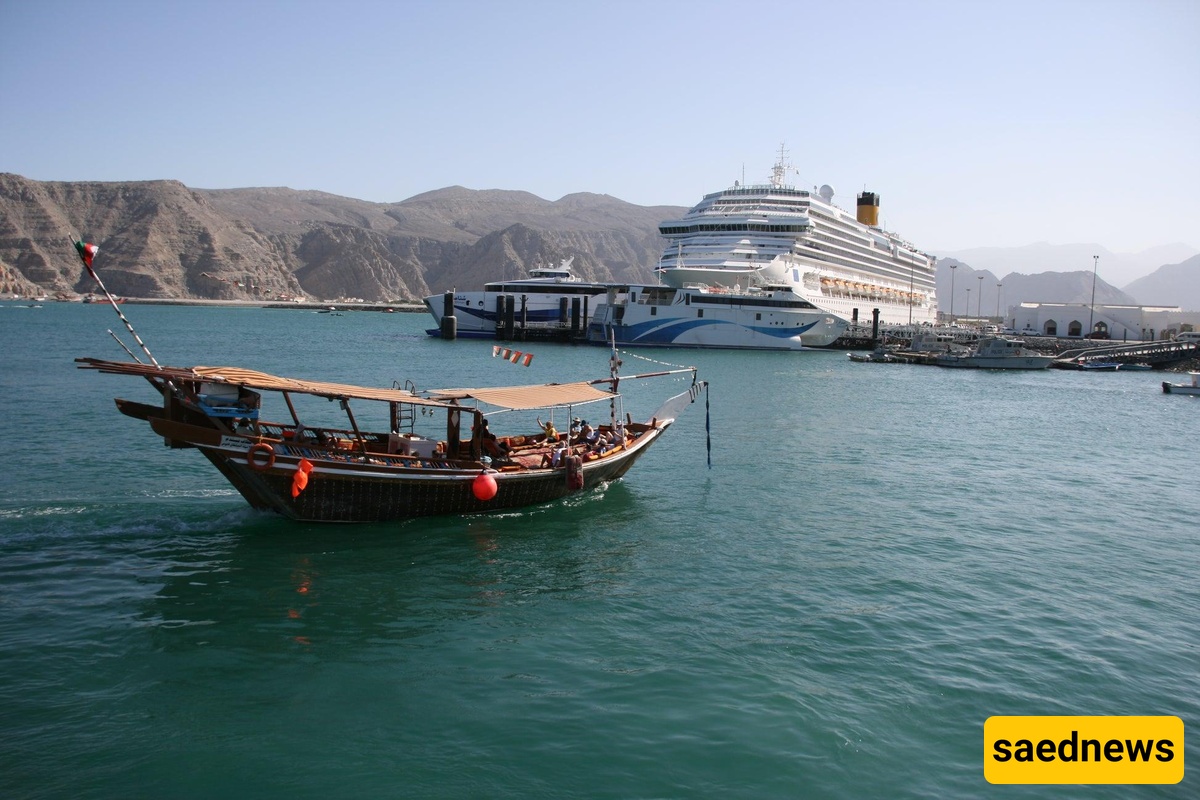
Khasab is both a commercial and tourism port.
According to information published by Oman's Ministry of Transport, Communications and Information Technology, the port has a commercial quay measuring approximately 300 metres in length, while the entrance channel has a stated depth of 10.5 metres.
The port's infrastructure also includes government berths, floating pontoons and breakwaters.
Oman's Ministry of Information has additionally highlighted the development of breakwaters, commercial berths and the deepening of the harbour basin to approximately 10 metres to support commercial and tourism activities.
The difference between the harbour basin depth and entrance channel depth does not necessarily represent a contradiction, as these measurements refer to different sections of the port.
These figures provide a general overview of the port's infrastructure. For a specific vessel, permissible draft and operational conditions should be confirmed directly with the relevant port authority.
Because Musandam is geographically separated from mainland Oman, maritime connectivity has particular importance for the governorate.
Khasab Port is one of the region's essential economic and transportation facilities. The Omani government has pursued port development to strengthen regional trade and support the local economy.
The economic contribution of a port extends beyond loading and unloading cargo. Maritime transport can also generate demand for:
Local transportation services.
Warehousing and storage.
Vessel-related services.
Cargo handling and logistics.
Businesses connected to maritime trade.
These are typical economic effects of a regional port rather than statistics about the actual number of jobs in Khasab.
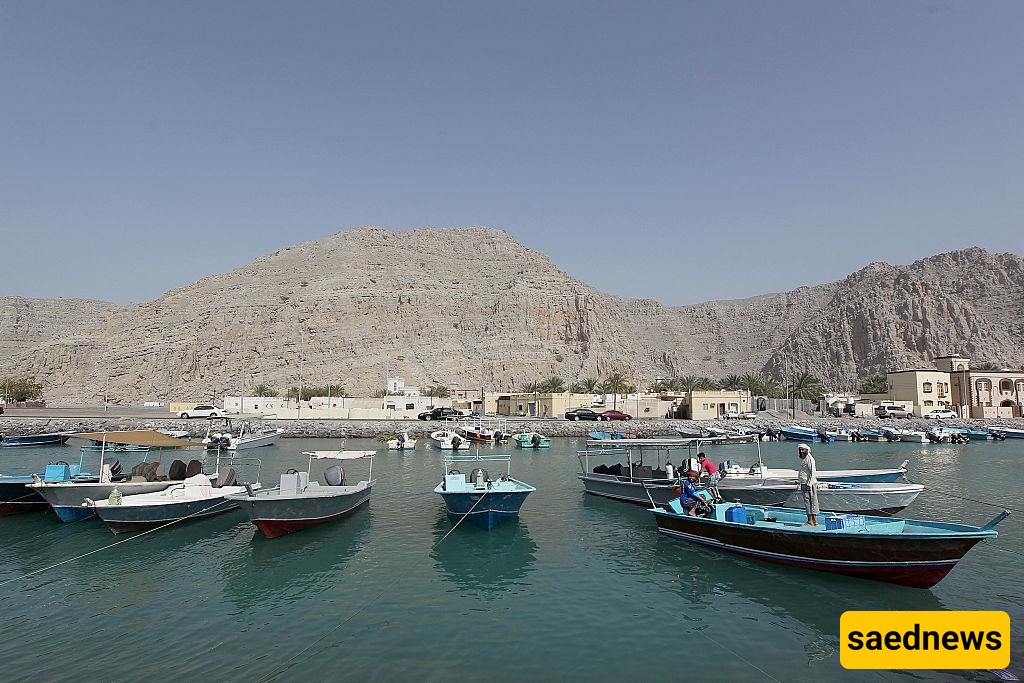
Khasab's proximity to the southern Iranian coastline provides a geographical advantage for maritime exchanges across the Strait of Hormuz.
Oman's Ministry of Information has also identified trade with Iran as one of the opportunities for developing commercial connections with neighbouring markets.
Shorter maritime distances can offer advantages for regional cargo transportation. However, a shorter route does not automatically guarantee lower shipping costs.
The final cost depends on several factors, including:
Vessel type and capacity.
Cargo volume.
Port service charges.
Waiting and handling times.
Inland transportation costs at both origin and destination.
Consequently, Khasab's commercial importance should be evaluated in relation to specific trading requirements and the complete transportation route.
Khasab Port also plays an important role in passenger and vehicle transportation.
Oman's official national transport operator, Mwasalat, lists the Shinas–Khasab–Shinas route among its ferry services and publishes fares for passengers and different types of vehicles.
This route illustrates how maritime transportation helps connect Musandam with the rest of Oman.
Geographically, the ferry connection also provides a way to travel between the two parts of the country without crossing UAE territory by road.
However, sailing schedules, operating days and service availability should always be checked with the operator before planning a journey.
Oman's Ministry of Information also identifies services for ships and oil tankers passing through the Strait of Hormuz as part of Khasab Port's activities.
This demonstrates that the port's economic relevance is not limited to local trade. It may also benefit from maritime traffic operating around the Strait.
Nevertheless, this general description does not mean that every specialised service is available for every type of vessel.
The availability of individual services depends on port equipment, authorisations, capacity and operational conditions.
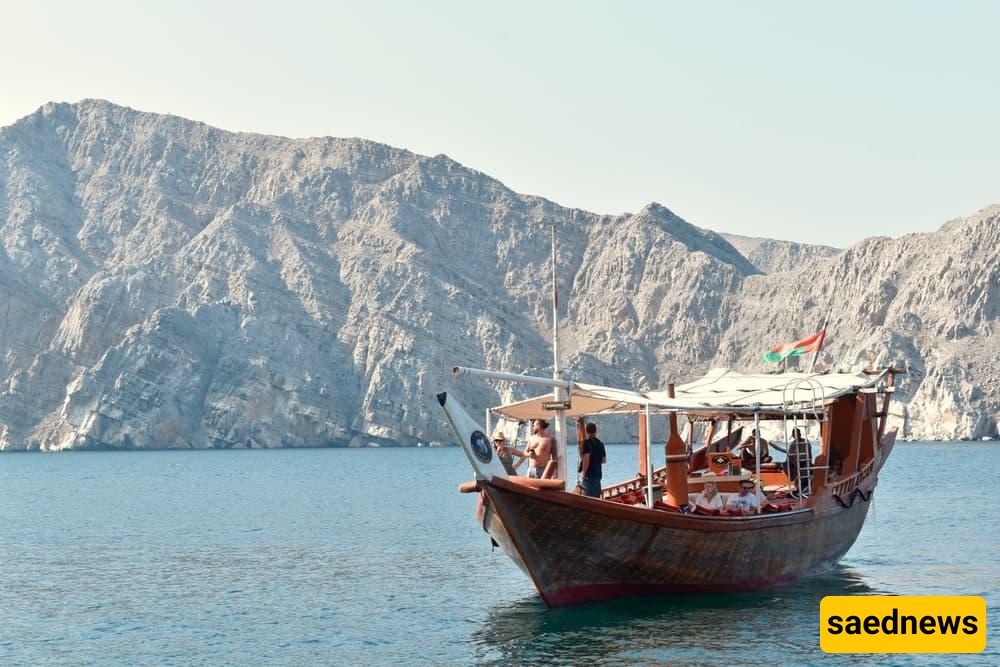
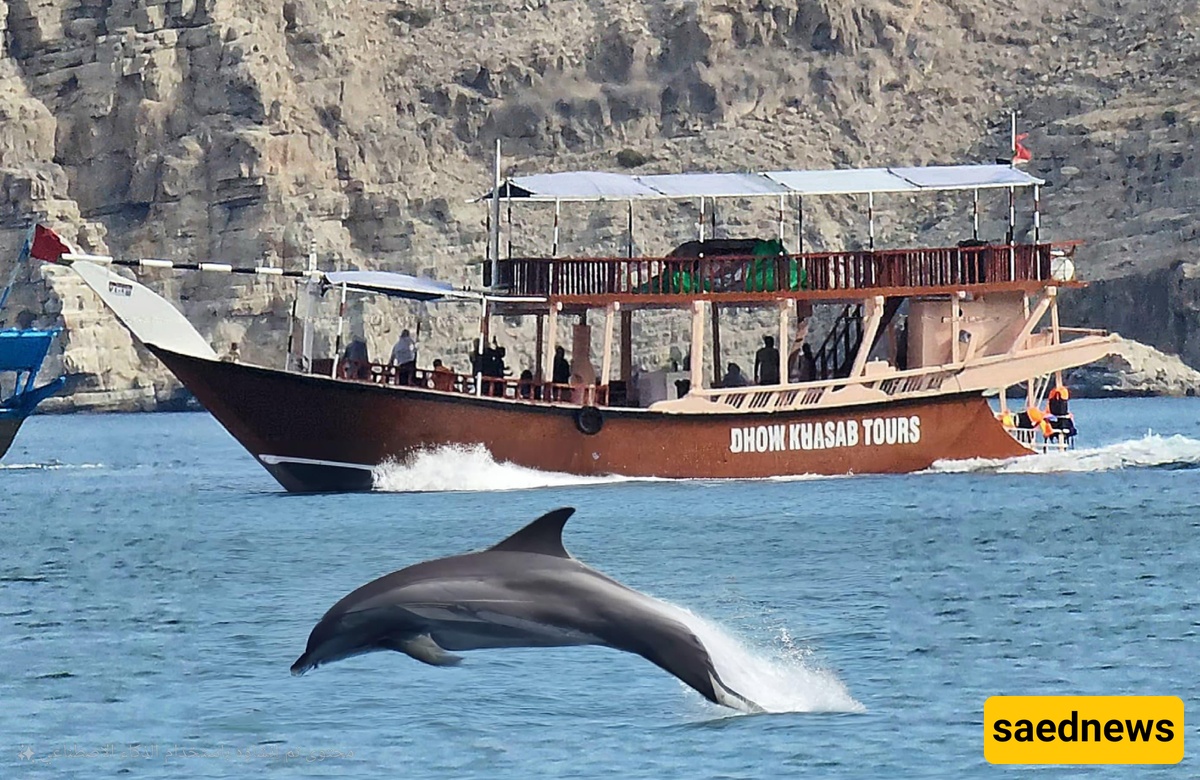
Beyond its commercial activities, Khasab is widely recognised as a marine tourism destination.
The narrow waterways between mountains, rocky coastlines and secluded bays of Musandam create attractive opportunities for maritime experiences.
Popular activities include:
Traditional dhow boat cruises.
Dolphin-watching excursions.
Scuba diving and snorkelling.
Coastal sightseeing.
Swimming and exploring secluded bays.
Mountain and coastal photography.
Khasab Port also receives cruise ships, bringing international visitors to the region.
Tourism creates economic connections between the port and the city. Accommodation providers, restaurants, tour operators, transport companies and local retailers can all benefit from maritime tourism.
For this reason, assessing Khasab's maritime economy solely through cargo volumes would provide an incomplete picture.
Khasab is best described as a strategically located regional port rather than a major global shipping hub.
Official Omani sources emphasise its commercial, tourism and local transportation functions.
By comparison, the logistics group Asyad identifies Sohar, Salalah and Duqm among Oman's major deep-water ports.
This distinction is important.
Being located beside one of the world's busiest maritime waterways does not automatically make Khasab a major container transshipment centre or a principal oil export terminal.
Furthermore, Khasab's geographical position beside the Strait of Hormuz does not make it an independent alternative route for bypassing the Strait.
Its significance comes from its strategic location, regional connectivity and specialised port activities rather than the scale of global cargo handled.
Several factors are likely to influence the future development of Khasab Port and its regional economic role.
1. Quality of maritime connectivity: Regular and reliable transportation services are essential for passengers and commercial cargo.
2. Port capacity and operational efficiency: Effective coordination between berths, storage areas and loading and unloading facilities can improve productivity.
3. Regional trade demand: Commercial growth will depend partly on the demand for goods and services in neighbouring markets.
4. Coordination between trade and tourism: Efficient use of port facilities for both cargo and passenger activities can support economic diversification.
5. Maritime security: Conditions in the Strait of Hormuz can influence shipping decisions, insurance costs and the confidence of vessel owners and international traders.
These factors represent an assessment of the conditions affecting future port development. They should not be interpreted as confirmation of specific projects or guaranteed future growth.
Khasab is a city whose geography has played a decisive role in shaping its history and economy.
As the administrative capital of Musandam Governorate, it occupies a distinctive position near Iran and alongside one of the world's most important international maritime waterways.
Its practical economic importance can be seen in several areas:
Regional maritime trade.
Transportation links between Musandam and mainland Oman.
Services for passing vessels.
Commercial port operations.
Marine and cruise tourism.
Although Khasab is not among the world's largest commercial ports, its geographical position and regional functions give it significance beyond its relatively small urban size.
Its combination of historical heritage, maritime connectivity and tourism potential makes Khasab an important part of Oman's northern maritime landscape and its wider relationship with the Strait of Hormuz.