SAEDNEWS: Archaeologists have discovered far more than human waste inside ancient toilets and latrines. Seeds, food remains, parasite eggs, personal objects and even an unusual burial have turned these unglamorous places into some of archaeology’s richest sources of information about everyday life.
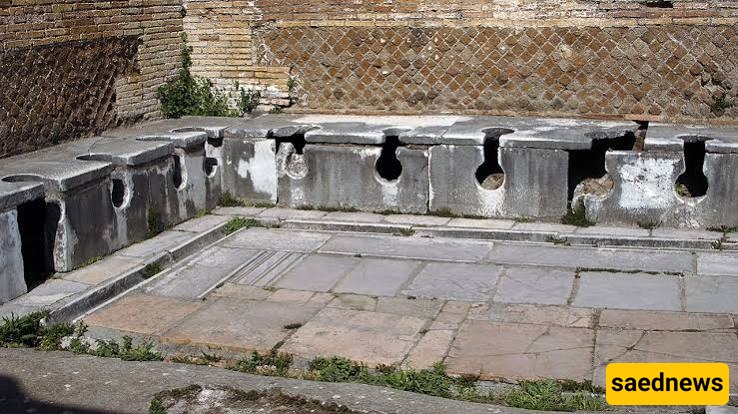
According to SaedNews, the archaeological record has a strange blind spot: many of the objects that tell us how ordinary people lived have disappeared, while material discarded in toilets sometimes survived remarkably well.
A latrine was never intended to become an archive. Yet because some ancient cesspits were damp, sealed and protected from oxygen, they could preserve organic material that would normally decay. Archaeologists can therefore recover evidence of what people ate, which parasites infected them, what plants they encountered and, occasionally, objects that were accidentally lost or deliberately discarded.
That makes ancient toilets much more than archaeological curiosities. They are biological snapshots of past societies.
One of the clearest examples comes from Jerusalem.
A stone toilet seat discovered at the Armon Hanatziv site belonged to a luxury estate dating to the 7th century BCE. Private toilets were rare enough at the time to be associated with wealth and high social status.
But sediment from the cesspit beneath the seat told a less glamorous story.
Researchers identified eggs belonging to four groups of intestinal parasites: whipworm, roundworm, tapeworm and pinworm. The findings showed that even people wealthy enough to possess a private toilet could suffer from significant parasitic infections.
The discovery is especially valuable because parasite eggs can survive for extremely long periods under suitable conditions. In this case, some survived for nearly 2,700 years. Archaeoparasitologists can study such microscopic remains to reconstruct aspects of ancient health and sanitation that skeletons alone cannot reveal.
A later study also found evidence of Giardia duodenalis in sediments associated with Iron Age toilets in Jerusalem, suggesting that the parasite was present in the region roughly 2,600 years ago.
Human waste is not the only thing that ends up in a latrine.
Plant remains can survive as seeds, fruit fragments, pollen and other microscopic material. When archaeologists combine these remains with animal bones and parasite evidence, a surprisingly detailed picture of diet can emerge.
At a Roman-period latrine in Arlon, in present-day Belgium, researchers recovered thousands of waterlogged seeds and fruits. The material included cereals, fruits, nuts, spices and vegetables. The same latrine also contained evidence of intestinal parasites and traces associated with fish sauce.
The significance goes beyond knowing what someone ate for dinner. Plant remains can reveal agriculture, trade, culinary preferences and the economic circumstances of the people using a particular building.
A latrine in Renaissance Copenhagen produced a similarly remarkable record. Researchers found evidence for fish, bread or porridge, fruits, nuts and herbs, as well as exotic products such as citrus, cloves, figs and grapes. Parasite evidence provided a less pleasant counterpart to this picture of dietary variety.
In other words, a cesspit can sometimes function like an ancient pantry combined with a medical record.
Some discoveries are even more intriguing because they hint at how people attempted to deal with disease.
Research into ancient Japanese toilet deposits has found parasite eggs alongside pollen and seeds. Researchers have suggested that some plant remains may reflect the use of medicinal plants intended to combat parasite infections. The same studies show that toilet sediments can contain insects, animal bones and other tiny remains that are easily overlooked during ordinary excavation.
The value of this evidence lies in the combination. A single seed might mean very little. A group of seeds, pollen types, parasites and animal remains found in the same archaeological context can reveal a much richer story about diet, environment and health.
Ancient toilets also preserve objects that have nothing to do with digestion.
Archaeological studies note that cesspits and latrines can contain pottery, glass, coins, food refuse and other household material. Some objects may have been deliberately thrown away, while others were simply dropped and never recovered.
Coins, for example, can help archaeologists establish when a latrine was in use. At a Roman communal latrine at Viminacium, coins found on the floor helped date the period of use, while a preserved coprolite—the archaeological term for fossilized fecal material—provided material for parasite analysis.
This is one reason archaeologists do not treat everything inside a cesspit as meaningless rubbish. The location of an object can be just as important as the object itself.
One of the most extraordinary recent examples comes from Paderborn, Germany.
In 2026, archaeologists excavating medieval latrines discovered a small notebook made from wooden tablets coated in wax and protected by a decorated leather cover. The object dates to the 13th or 14th century and contains Latin writing.
Its survival is remarkable precisely because it ended up in a latrine. The damp, sealed environment helped protect the organic materials from the normal processes of decay.
The discovery also came with another unusual clue about medieval life: fragments of silk were recovered from the same latrine and may have been used as toilet material. Archaeologists believe the collection of objects points toward users of relatively high social status.
This is a useful reminder that archaeology does not always recover grand treasures from palaces and tombs. Sometimes an everyday accident creates a better record of ordinary life than an intentionally preserved monument.
Perhaps the most unexpected example is not an object at all.
At Ephesos in present-day Türkiye, researchers recently re-examined a carefully constructed burial of two newborns discovered inside a disused channel belonging to a Roman-era public latrine.
The latrine had originally formed part of the Roman Odeion and contained around 30 seats. But the burial occurred centuries after the building had been abandoned. Radiocarbon dating places the burial in the 8th or 9th century CE, when the former structure was being used for a very different purpose.
The infants, who died at roughly 33–34 weeks of gestation, were buried side by side in a small brick-and-stone grave. Their position and the construction of the grave are consistent with early Christian burial practices. An iron object near one infant's head may have helped secure a shroud.
Researchers caution against automatically interpreting unusual infant burials as evidence of disposal or infanticide. In this case, the careful construction of the grave suggests deliberate care rather than simply throwing the bodies into a sewer.
The real importance of ancient toilets is not their shock value.
Unlike many archaeological deposits, latrines can preserve a direct mixture of human biological material and the things that passed through everyday life. Seeds can reveal food. Pollen can reveal plants and landscapes. Parasite eggs can reveal disease. Animal remains can reveal diet. Coins and artifacts can provide chronological and cultural clues.
Researchers therefore describe latrines and cesspits as unusually valuable evidence for reconstructing diet, health, economic conditions and environmental history.
The evidence can even challenge assumptions about supposedly advanced ancient societies. Roman civilization, for example, developed impressive public latrines, sewers, aqueducts, baths and waste-management systems. Yet research comparing archaeological parasite evidence suggests that sanitation technology did not necessarily eliminate intestinal parasites. Some parasite species actually became more common during the Roman period, possibly because of factors such as human waste being used as fertilizer, population movement and long-distance trade.
That is the paradox at the heart of toilet archaeology: the places people once considered dirty and disposable can be among the cleanest windows we have into the past.
A palace may tell us what rulers wanted the world to see. A toilet can tell us what people actually ate, what infected them, what they threw away—and sometimes what they accidentally carried into the darkness with them.