SAEDNEWS: The Great Chicago Fire of 1871 destroyed much of a rapidly growing city, but its ashes produced new ideas about fire safety, construction standards, and urban design that influenced cities far beyond Chicago.
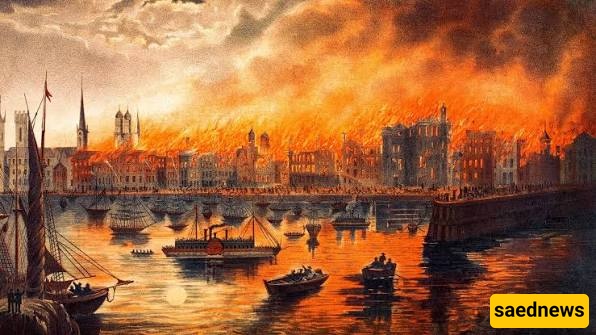
According to SaedNews, On a cold October night in 1871, Chicago was transformed from a booming industrial center into a landscape of smoke, ruins, and destruction. The Great Chicago Fire burned for nearly three days, destroying thousands of buildings and leaving a large part of the population homeless. Yet the disaster also triggered one of the most important transformations in the history of urban construction.
The fire did not simply destroy buildings. It exposed a weakness in the way rapidly expanding cities were being built. Nineteenth-century Chicago relied heavily on wooden structures, wooden sidewalks, and other highly flammable materials. When the flames spread through the city, these choices turned a local fire into an urban catastrophe.
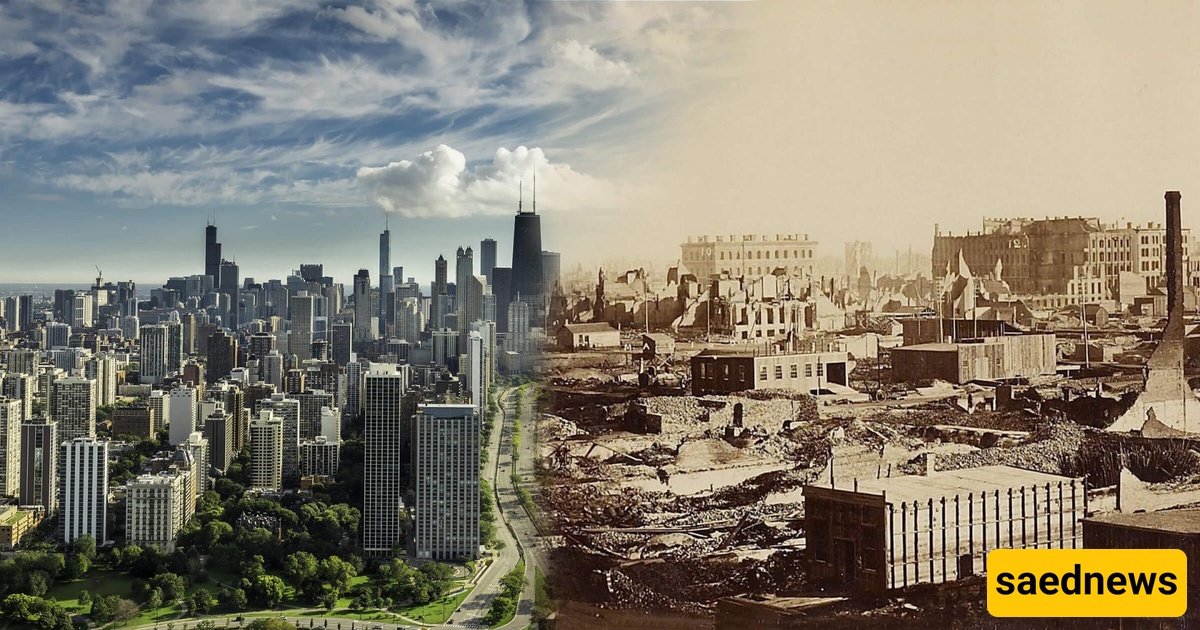
Before the disaster, Chicago was growing at extraordinary speed. Its population had expanded rapidly as railroads, industry, and trade transformed it into one of America’s most important economic centers. But the city’s physical growth had outpaced its safety systems.
Many buildings were constructed quickly and cheaply, with limited fire protection. The disaster revealed that a modern city needed more than economic ambition; it needed rules governing how buildings were designed, what materials were used, and how neighborhoods were organized.
After the fire, Chicago officials and builders faced a difficult question: how could the city rebuild without repeating the same mistakes?
One of the first answers was stricter building regulation. New rules encouraged or required the use of more fire-resistant materials such as brick and stone, especially in important areas. The concept of “fire limits” restricted certain types of construction and became part of a broader movement toward modern building codes.
The rebuilding process was not simple. Many residents wanted affordable homes, while business leaders pushed for stronger and more expensive construction standards. The debate showed a conflict that still exists today: balancing public safety with the cost of building.
The Great Chicago Fire is often connected with the rise of the skyscraper, although the relationship is more complicated than the popular story suggests. The fire did not immediately create tall buildings overnight. In fact, many early rebuilding efforts looked similar to what existed before the disaster.
However, stricter safety expectations, new engineering methods, and a demand to rebuild on valuable urban land helped create an environment where architects experimented with new materials and designs. By the late nineteenth century, Chicago became the birthplace of the modern skyscraper, including the Home Insurance Building completed in 1885.
The influence of the Chicago Fire reached beyond Illinois. It became part of a larger global shift toward urban safety regulations. Cities increasingly recognized that disasters were not only emergencies to survive but also warnings about weaknesses in planning and construction.
Modern building codes, fire-resistant materials, emergency exits, and professional urban planning all reflect lessons learned from past disasters like Chicago’s great fire.
The tragedy remains a reminder that cities are not only collections of buildings. They are systems shaped by decisions about safety, technology, and human priorities. Chicago’s greatest transformation began not with a new invention, but with a disaster that forced people to rethink what a city could become.