SAEDNEWS: A medieval skeleton discovered at Stirling Castle has more than 160 fractures that a bioarchaeologist believes were caused by a high-speed projectile, possibly launched by one of Edward I’s trebuchets during the 1304 siege.

According to SaedNews: In 1304, England’s Edward I deployed the War Wolf, a huge wooden trebuchet built during his campaign against Scotland. The siege engine was reportedly the largest wooden trebuchet ever constructed and could hurl projectiles weighing more than 300 pounds. More than seven centuries later, archaeologists have found what may be evidence of the devastating force of such weapons.
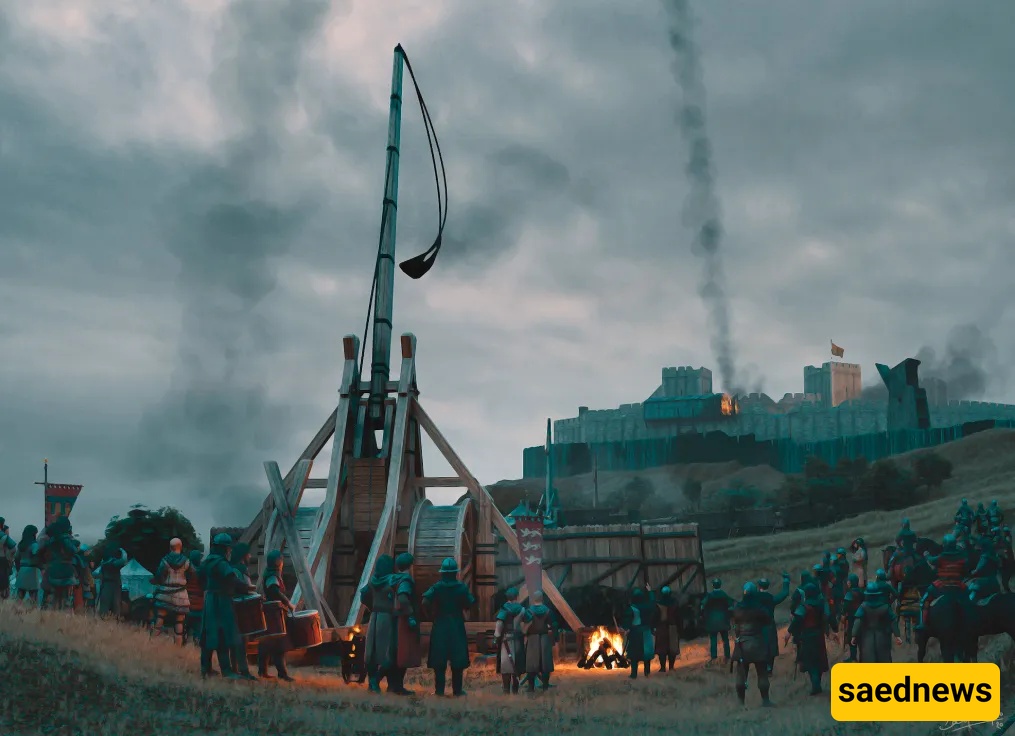
A skeleton excavated at Stirling Castle has more than 160 fractures sustained around the time of death, with the skull and ribs suffering most of the damage. Jo Buckberry, a bioarchaeologist at the University of Bradford, presented the findings at a recent Paleopathology Association meeting and argues that the remains could represent the first archaeological evidence of trauma caused by a trebuchet.
Buckberry says the injuries initially reminded her of victims of modern car crashes or people struck by trains. The pattern suggested that the man had been hit from behind by something moving at very high speed.
After comparing the injuries with documented trauma cases, she concluded that a large stone probably slammed into the man’s right shoulder and the back of his head, forcing him to the ground. The extent of the fractures indicates that death was likely instantaneous.
Radiocarbon dating places the skeleton, one of nine discovered at Stirling Castle in 1997, within the period of the Wars of Scottish Independence, which lasted from 1296 to 1357. Unlike many medieval victims of warfare, however, the remains show no evidence of sword or other close-combat wounds. Instead, the injuries are dominated by crushing, blunt-force trauma.
Buckberry has not yet published the findings in a peer-reviewed journal, but forensic osteologist Lukas Waltenberger of Vilnius University, who was not involved in the research, told Science that he considers the evidence convincing. He described the injuries as consistent with a powerful, high-speed impact occurring over a very short period.
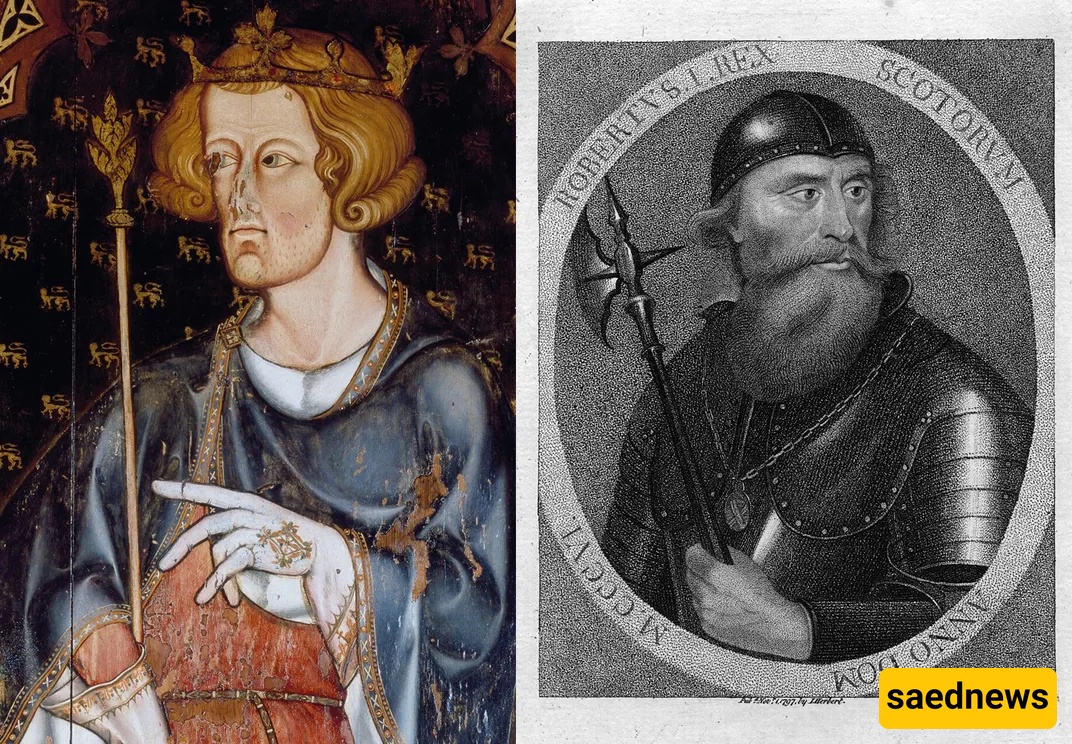
The man, who was between 22 and 34 when he died, cannot definitively be identified as a victim of the War Wolf. Buckberry considers it “quite likely” that he was struck by a missile fired from one of Edward’s trebuchets, whether the famous War Wolf or an earlier machine.
Stirling Castle was the final major stronghold of the Scottish independence movement at the time. William Wallace was fleeing English forces and would soon be captured and executed, while most Scottish nobles had surrendered to Edward. The remaining defenders resisted for three months before yielding to the destructive threat posed by the king’s new siege engine.
According to historian Michael Prestwich’s 1997 biography of Edward, the War Wolf was still unfinished when the castle garrison surrendered. Edward nevertheless refused to allow anyone to enter or leave until he had seen the machine tested.
If that final demonstration killed Buckberry’s subject, the man was an extraordinarily unlucky target. Siege engines were intended to break castle walls and force surrender, not to strike individual people, meaning their attacks were not especially precise.
Edward’s campaign eventually suppressed Scotland’s independence ambitions, although only temporarily. Robert the Bruce defeated the English at Bannockburn in 1314, helping lead to England’s recognition of Scottish sovereignty in 1328. That peace also proved temporary, and England and Scotland were ultimately united under one crown in 1603.