SAEDNEWS: Pregnant Mummy Discovery in Poland Described by Scientists as an Extraordinary Archaeological Find
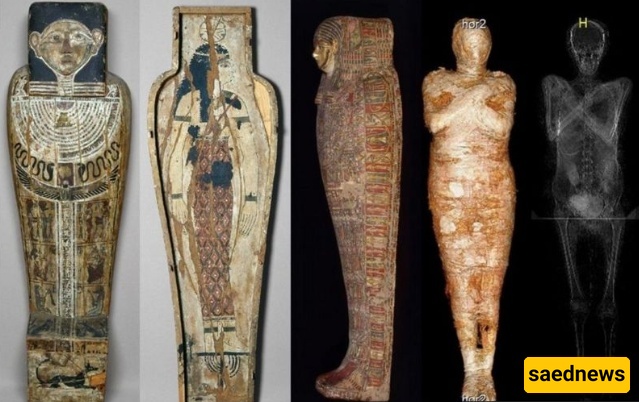
According to the analytical news outlet Saed News, A team of Polish researchers has announced what they believe is the world's first confirmed discovery of a naturally mummified pregnant woman from ancient Egypt. The remarkable finding was made by scientists involved in the Warsaw Mummy Project and published in the Journal of Archaeological Science.
The Warsaw Mummy Project, launched in 2015, uses advanced imaging technologies such as computed tomography (CT) scans and radiological analysis to study ancient Egyptian artifacts housed in the National Museum in Warsaw. The project aims to uncover new information without damaging these invaluable archaeological remains.
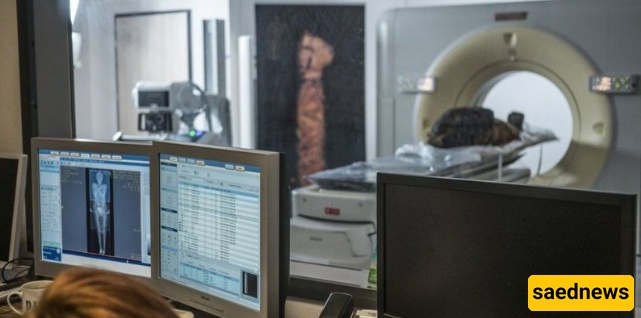
For many years, experts believed the mummy belonged to a male priest. However, detailed CT scans revealed a very different story. The remains actually belong to a woman who was in the final stages of pregnancy at the time of her death.
Researchers estimate that she was between 20 and 30 years old and likely belonged to a wealthy social class. Based on archaeological evidence, they believe she lived and died during the first century BCE.
According to the research team, this is the only known example of a pregnant Egyptian mummy ever identified and also provides the first radiological images of a fetus preserved inside a mummified body.
By measuring the fetus's head, scientists estimate that the woman was approximately 26 to 30 weeks pregnant when she died, although the cause of her death remains unknown.
The project brought together archaeologists, CT scan specialists, and radiologists to examine the mummy in unprecedented detail.
Wojciech Ejsmond, a member of the research team from the Polish Academy of Sciences, described the discovery as the project's most important achievement to date, calling it "a complete surprise."
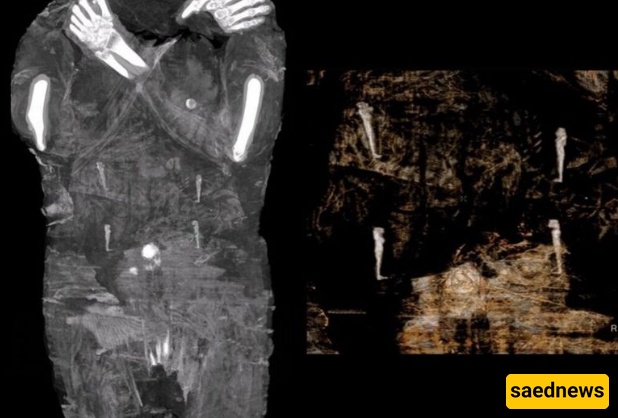
During the examination, researchers identified four embalmed bundles within the mummy's abdomen. Despite their presence, the fetus had never been removed from the uterus.
Scientists are still uncertain why ancient embalmers chose not to extract and mummify the fetus separately. They suggest several possible explanations, including religious beliefs concerning the afterlife or practical difficulties associated with removing the unborn child.
The researchers have nicknamed the mummy the "Mysterious Lady" of the National Museum in Warsaw because of the conflicting stories surrounding her origin.
Historical records indicate that the mummy was donated to the University of Warsaw in 1826. The donor claimed it had been discovered in the royal tombs of Thebes.
However, modern researchers note that during the nineteenth century it was common practice for antiquities dealers to falsely attribute artifacts to famous archaeological sites in order to increase their market value.
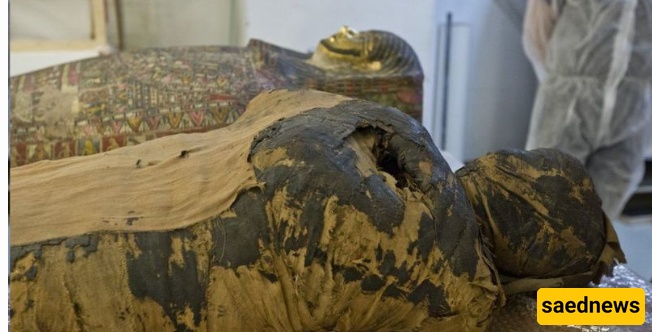
The inscriptions and elaborate decorations on the coffin had long convinced twentieth-century scholars that it contained the remains of a male priest named Hor-Djehuty.
Modern scanning technology has now demonstrated that the mummy inside the coffin is actually a pregnant woman.
Researchers believe that sometime during the nineteenth century, antiquities dealers mistakenly—or deliberately—placed the mummy into the wrong coffin. During that period, looting, relocating, and rewrapping ancient remains were not uncommon practices.
The mummy has been described as exceptionally well preserved. Nevertheless, scientists observed damage around the neck, suggesting that grave robbers searching for valuable objects had disturbed the body in the past.
The researchers also identified at least fifteen valuable artifacts hidden within the wrappings, including an extensive collection of amulets and protective charms, indicating that the woman likely held a high social status.
Dr. Marzena Ożarek-Szilke, one of the project's researchers, explained that her husband was the first to notice what appeared to be a tiny foot during one of the CT scans, leading to further investigation.
The research team hopes that future analysis of small tissue samples will help determine the exact cause of the woman's death and provide additional insights into pregnancy, burial customs, and mummification practices in ancient Egypt.