SAEDNEWS: The story of Yuzarsif was first recorded in 300 BCE in the writings of Manetho, an Egyptian priest and historian. The historical origin of this story is a matter of debate, and there are different views regarding it.
According to the Saed News analytical website, citing Faradid, most of us, when we hear the name Yuzarsif, immediately imagine the face of Mostafa Zamani in the TV series Prophet Joseph. This is understandable, since it was likely the first time many of us encountered this name. However, it may be interesting to know that using this name for Prophet Joseph was not merely a product of Fereydoun Jeyrani’s imagination. Here we take a look at what historical books say about this figure.
Yuzarsif, or more accurately pronounced “Osarseph,” is a mysterious figure whose name appears in one of the oldest books related to Egyptian history. This book is known as Aegyptiaca (Egyptian History), written by an Egyptian named Manetho around 300 BCE. The book has not survived in full, but fragments of it are preserved in the works of later historians such as Flavius Josephus, a Jewish historian of the first century CE.
Manetho was likely a follower of ancient Egyptian religious traditions and held a negative view of the Jews. He recounts the story of Osarseph in a section of his work describing events during the reign of a pharaoh named Amenophis. The summary of the story is as follows:
Amenophis desired to see the gods. He shared this wish with his priest and seer. The priest told him that he could only see the gods if Egypt were purified of lepers and impure people. By order of Amenophis, eighty thousand such individuals were gathered from across Egypt and sent to the stone quarries east of the Nile. However, since priests and religious figures were also among them, the court priest feared the consequences of his action. He became convinced that this deed would bring disaster and committed suicide, which caused the king sorrow and discouragement.
After a long time, the exiled people, suffering greatly, asked the pharaoh to relocate them to the abandoned city of Avaris so they could live there. Avaris had originally been inhabited by shepherds who had previously been expelled to Palestine. Amenophis agreed.
But once they arrived in Avaris, they turned it into a center of rebellion. They chose a priest from Heliopolis named Osarseph as their leader and swore loyalty to him. Manetho states that the name Osarseph was derived from Osiris, the Egyptian god. Osarseph established laws for them, including forbidding the worship of Egyptian gods, prohibiting the sacrifice of sacred animals, and banning intermarriage with outsiders.
Osarseph then wrote to the shepherds who had previously been expelled to Palestine, asking them to join the rebellion. They agreed, and two hundred thousand of them marched toward Egypt. Amenophis initially prepared for war but later fled with his young son Ramses to Ethiopia. Thus, Egypt fell under the rule of Osarseph and his followers. Manetho says they ruled for thirteen years, during which they destroyed statues of gods and turned Egyptian temples into places for cooking sacred animals. Finally, Osarseph changed his name to Moses.
Josephus, who first transmitted Manetho’s account, argued that Manetho mixed fiction with truth. From Josephus’s perspective (based on the Torah), Moses lived about 500 years earlier than Manetho’s chronology suggests and had no connection to Egyptian gods like Osiris. Therefore, Osarseph cannot be identified with Moses, let alone Joseph.
Modern historians also do not believe that Manetho’s work is an accurate historical record. It is generally considered a mixture of myth and historical fact, and there is significant debate about how its narratives correspond to real events. The story of Osarseph is no exception.
One debated issue is the origin of the name Osarseph. One theory suggests that the story is a combination of traditions Egyptians heard from Jews about Moses and Joseph. As seen in the narrative, some elements resemble the story of Moses, while others resemble the story of Joseph. For example, the final enemy of Osarseph is named Ramses, linking him to Moses. On the other hand, the name Osarseph may resemble a combination of Osiris and Joseph.
Another theory connects the story to the Hyksos period. “Hyksos” means “foreign rulers” and refers to a dynasty of non-Egyptian kings who ruled Egypt around 1650–1500 BCE. There is limited information about them, but archaeological findings from Tell el-Dab’a near the Nile Delta suggest that they were of Semitic and Canaanite origin, with cultural and religious practices similar to those of Babylonians and other Semitic peoples.
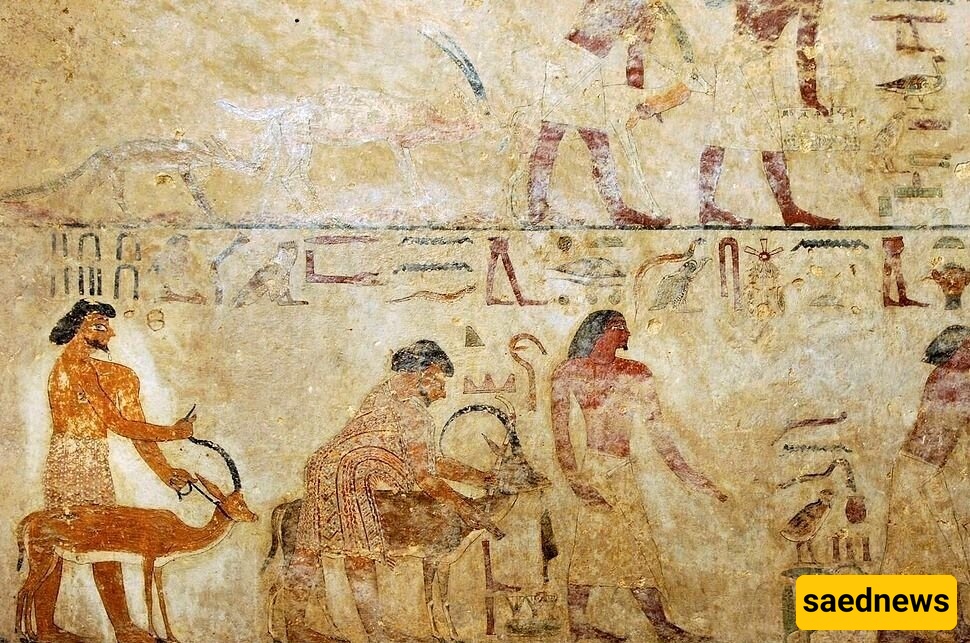
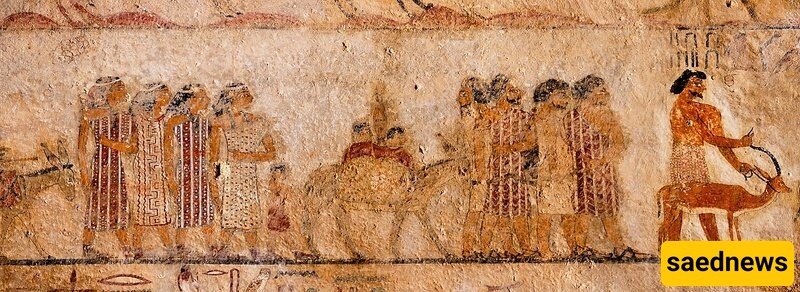
Ancient Jewish historians such as Josephus sometimes identified the Hyksos with the Jews and their era with the biblical period of Israelite kings. Some modern scholars, such as Howard Vos, even compare descriptions of Joseph’s garment in the Bible with Canaanite clothing depicted in the tomb of Khnumhotep II.
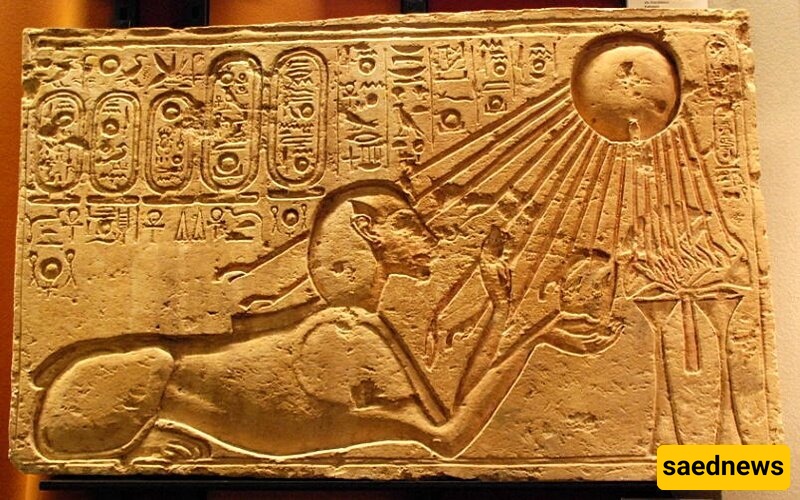
Another view links the entire narrative to the religious reforms of Pharaoh Akhenaten, who ruled Egypt around 1300 BCE. Originally named Amenhotep IV, he later changed his name to Akhenaten and introduced major religious reforms, replacing Egypt’s polytheism with a form of monotheism. He promoted Aten (previously just a sun god) as the sole deity and ordered the destruction of other temples and statues. After his death, Egypt gradually returned to polytheism. One relief shows Akhenaten depicted in sphinx-like form worshipping Aten.
In any case, the story of Osarseph cannot be accepted exactly as Manetho narrated it. However, it is highly likely that a combination of historical events shaped this narrative. The presence of Semitic rulers in Egypt, periods of monotheistic tendencies, and conflicts between Egyptians and Semitic peoples are all historically supported by archaeological evidence. Therefore, the possibility that the story of Osarseph has a real historical basis cannot be completely ruled out.