SAEDNEWS: Researchers have created an approximate reconstruction of the face of a 45,000-year-old individual, who is believed to be the oldest anatomically modern human ever genetically sequenced.
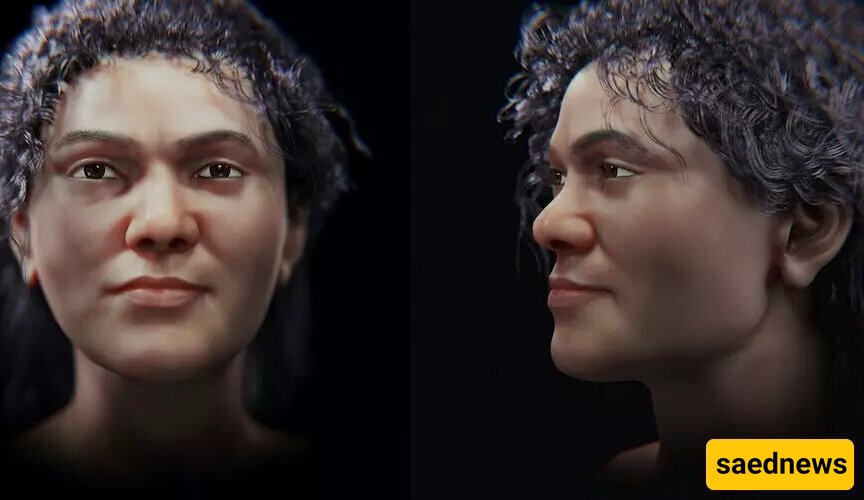
According to Saed News, citing Khabar Online, a simulated image of “Zlatý kůň” (Golden Horse), the oldest sequenced modern human, presents a realistic depiction of a woman with dark, curly hair and brown eyes.
In 1950, archaeologists discovered a fragmented skull buried deep within a cave system in the Czech Republic. Because the skull was split into two parts, researchers initially concluded that the remains belonged to two separate individuals. However, decades later, genome sequencing revealed that the skull actually belonged to a single individual: a woman who lived about 45,000 years ago.
Although a great deal of genetic information has been obtained from this woman, little is known about her physical appearance. Now, a new online article published on July 18 provides fresh insights into her possible appearance through facial approximation.
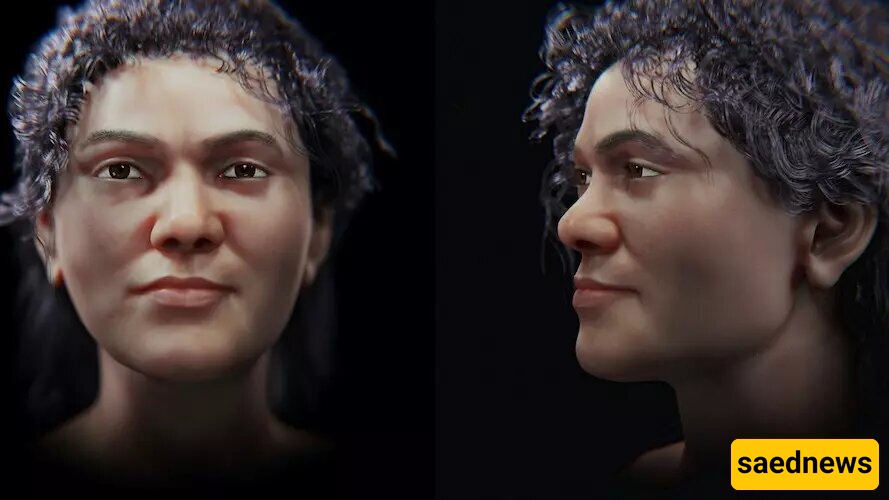
Morais said: “We looked for elements that could form a visual structure of the face only at a speculative level, because no information was available regarding skin, hair, or eye color.”
Cosimo Post, an archaeologist who has extensively studied Zlatý kůň, confirmed that much about this woman remains a mystery.
Post, a professor of archaeology at the University of Tübingen in Germany, said: “The genetic data from Zlatý kůň that I have worked on cannot tell us much about her facial features. In my view, morphological data can provide a reasonable idea of the shape of her head and face, but not an accurate representation of her soft tissues.”
Morais added: “Once we had the initial face, we produced more objective, scientific images in grayscale, with closed eyes and no hair. Later, we created a more speculative version with pigmented skin, open eyes, and hair. The goal was to present a more understandable face for the public.”
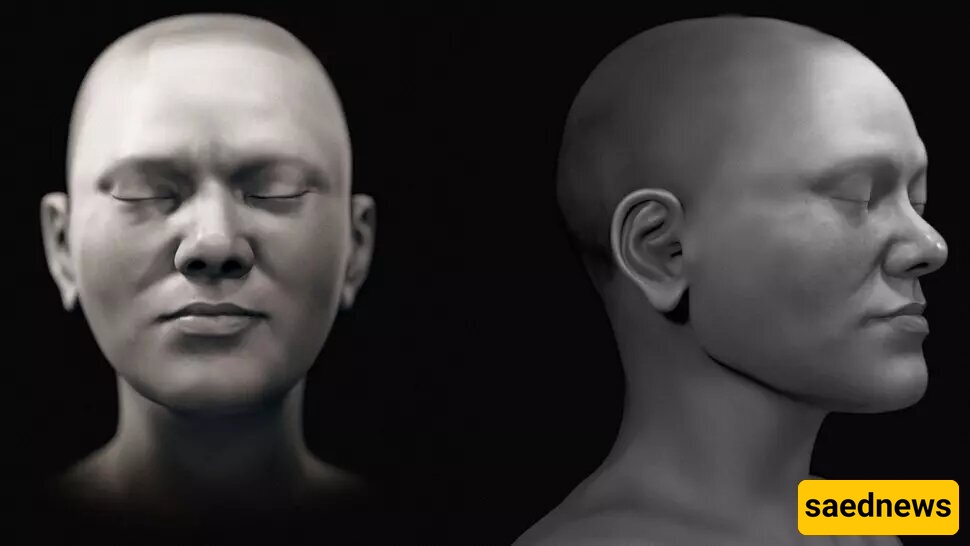
The strong jawline was not the only feature that drew researchers’ attention. They also found that the endocranial volume—the cavity housing the brain—was larger than that of modern humans in their database. However, Morais attributed this to “a stronger structural affinity between Zlatý kůň and Neanderthals than between her and modern humans.”
Morais and his team used statistical data compiled in 2018 by researchers who had worked on reconstructing the skull to replace missing parts. They also consulted CT scans of a modern female and male while creating the digital face.
Morais said: “What caught our attention most was the robustness of the facial structure, especially the mandible. When archaeologists first discovered the skull, the initial experts thought it belonged to a male because of the strong jaw.”
He added: “We see that Zlatý kůň’s jaw structure is more consistent with Neanderthals.” To reconstruct her appearance, researchers used data from multiple CT scans of her skull. However, like the archaeologists who unearthed the remains more than 70 years ago, they found that parts of the skull— including a large portion of the left side of her face—were missing.
Cicero Morais, a Brazilian graphics expert and co-author of the study, said: “One interesting detail about the skull is that an animal chewed it after death. This animal could have been a wolf or a hyena, both of which existed at the time.”
Researchers named her Zlatý kůň, or “Golden Horse.” Further DNA analysis revealed that her genome contained approximately 3% Neanderthal ancestry, placing her within an early population of modern humans.