SAEDNEWS: More than 1,300 years ago, a young woman in England was buried alongside various medieval treasures. Now, one year after the discovery of this ancient grave, experts have uncovered another “unique” artifact from the site.
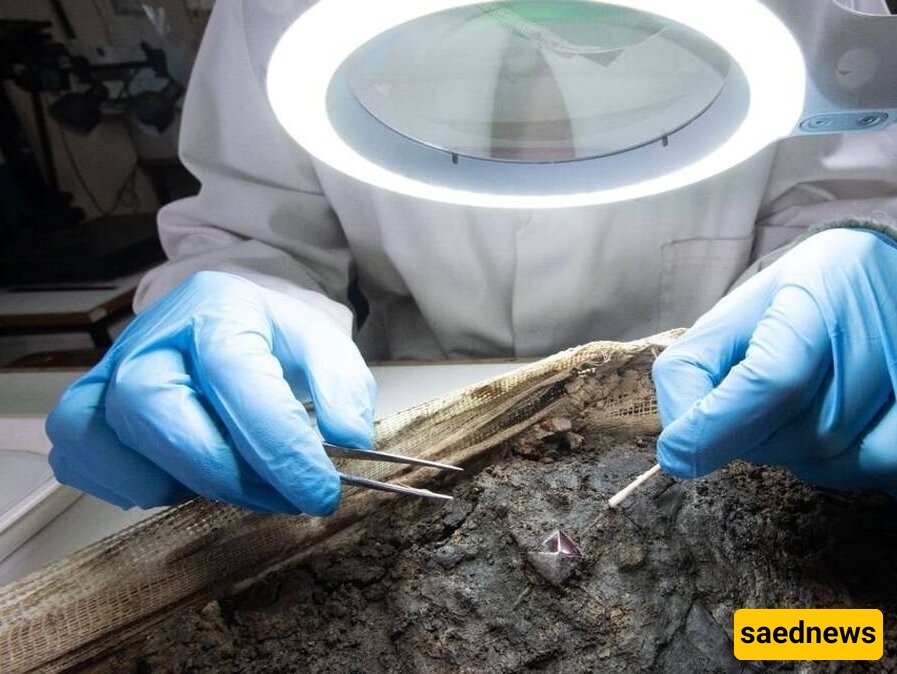
According to Saed News Agency, citing Faradid, archaeologists have discovered a very delicate and large silver and gold cross mounted on wood. The cross has been described as an unusual object and was found in a grave dating back to between 630 and 670 AD.
The cross was first identified using X-ray imaging. Archaeologists then carried out careful excavations by removing entire blocks of soil from the site before analyzing them in a controlled laboratory environment.
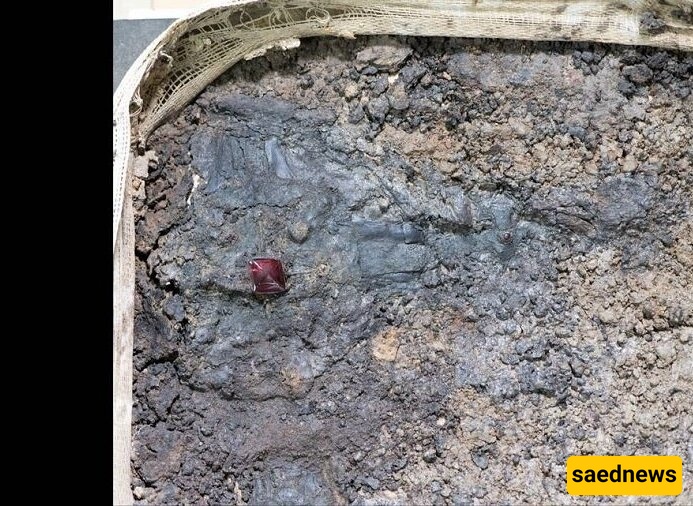
According to officials, laboratory excavations revealed that this artifact is a central cross decorated with a smaller gold cross. It contains five garnets—one large and four smaller ones—and at the end of each arm there is a small circular silver cross with a garnet and gold in its center.
Experts say the cross is similar to others found from the same period in the graves of high-status women, suggesting that the woman buried there likely held a very important position within Christian society.
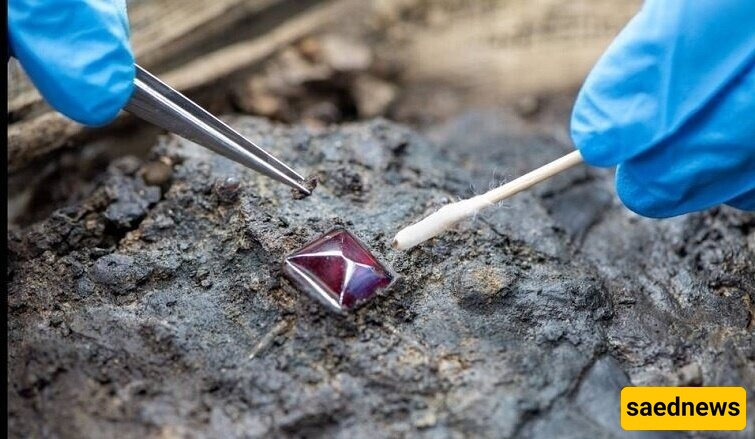
Archaeologists say the cross was attached to wood that has largely decayed, but the research team hopes to identify the type of wood used.
When the grave—described by experts as one of the most significant early medieval female burials in Britain—was first discovered in April 2022, archaeologists found nearly 30 pendants and beads belonging to a necklace. Updated images show a gold necklace and precious gemstones after cleaning.

Simon Mortimer, an archaeological advisor, said:
“It is breathtaking to see the cleaned central gold and garnet clasp. We must now reassemble all the evidence buried with this woman to understand the full significance of the individual, her origin, how she came to be there, and why. Finding answers to these questions will enhance our understanding of early medieval Northamptonshire.”

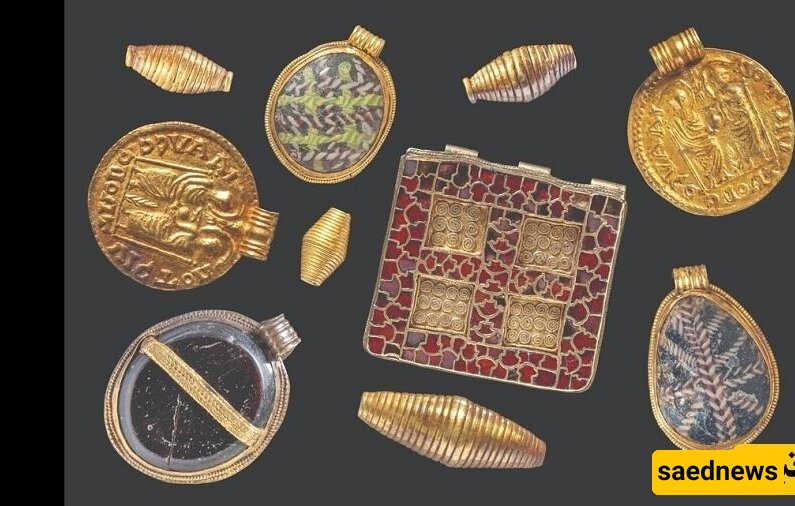
Archaeologists are also investigating whether the coins found on the necklace are genuine Roman coins or imitations.
During the initial excavation, several fragments of teeth were found, but officials say further work at the site has uncovered more bones, improving our understanding of the buried individual.
Since last year, osteologists have uncovered the upper part of a femur, part of the pelvis, several vertebrae, and parts of a hand and wrist. The reason for the good preservation of the bones is that they were covered inside a crushed copper vessel placed in the grave.
Preliminary analysis of the skeletal remains suggests the deceased was likely a young woman, but experts say further tests are needed to determine more details.
Harpole in Northamptonshire is located about 70 miles northwest of London.