SAEDNEWS: An Israeli security think tank has warned that the Mecca mutual-defense pact between Saudi Arabia, Turkey and Pakistan could gradually reduce regional reliance on the United States and create unintended strategic consequences for Israel and Washington.
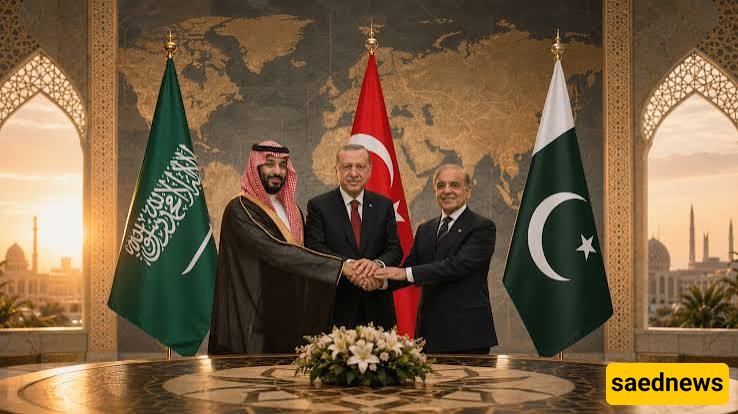
According to SaedNews: The Jerusalem Center for Foreign and Security Affairs, in a Hebrew-language study published on its website Wednesday, warned that despite the praise surrounding the Mecca agreement, its broader significance should not be overlooked. The center said the pact represents the beginning of an approach that could reduce the region’s exclusive dependence on the United States, whether intentionally or otherwise.
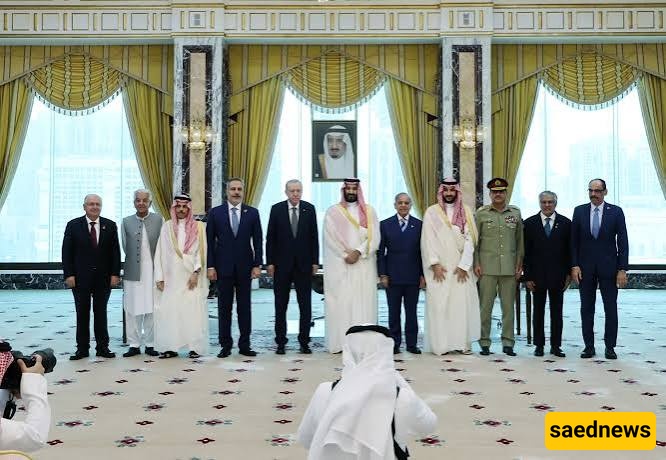
The study said the mutual-defense agreement signed in Mecca on August 7 by Saudi Arabia, Turkey and Pakistan should be regarded as a warning signal for both Washington and Israel. Under the pact, an armed attack against any one of the three countries is treated as an attack against all three. The signatories have described the agreement as entirely defensive, while Turkish and Pakistani officials have stressed that it is not directed against any particular country.
The Israeli researchers, however, argued that this explanation may not tell the whole story.
Some observers view the pact as an effort by the three countries to assume greater responsibility for their own security instead of relying exclusively on the United States, as Saudi Arabia has traditionally done. The study nevertheless suggested that such an arrangement could produce “unintended consequences.”
It argued that Washington may be overlooking a historical concern: after World War II, the United States did not want Europe and other regions to develop powerful independent military capabilities. The same issue, according to the study, could emerge with the Mecca alliance. At first glance, a Saudi-Pakistani-Turkish coalition might appear to help Washington share the regional security burden. Over time, however, the researchers warned that it could create a substantially larger security challenge.
The study explicitly expressed concern over the growing strength of the three Muslim countries. It noted that, under the Mecca pact, three major Islamic states—two of them longstanding U.S. partners and one a NATO member—are establishing a regional security framework independent of Washington.
For decades, Saudi Arabia relied on the United States as its primary security guarantor. Turkey remains a member of NATO, while Pakistan has maintained long-standing and complicated security ties with Washington. The three countries are now developing their own collective-defense mechanism.
The study said some traditional U.S. partners appear increasingly unwilling to depend on Washington for their protection. Saudi Arabia, in particular, is clearly signaling that it no longer wants to rely entirely on the United States for its security.
According to the researchers, members of the Mecca pact will not necessarily become adversaries of the United States. They could, however, take actions that conflict with U.S. and Western interests.
The study concluded that even if the Mecca pact never develops into a genuine “Islamic NATO” and remains partly symbolic, that would not make it harmless.
Its real danger, the researchers argued, lies in the strategic direction represented by the agreement: an apparent retreat or weakening of U.S. influence, a stronger Turkey, declining prospects for peace in the Middle East, and the emergence of a new regional bloc whose leading members are increasingly viewing Israel, Cyprus, Greece and the wider West not as potential partners, but as adversaries.