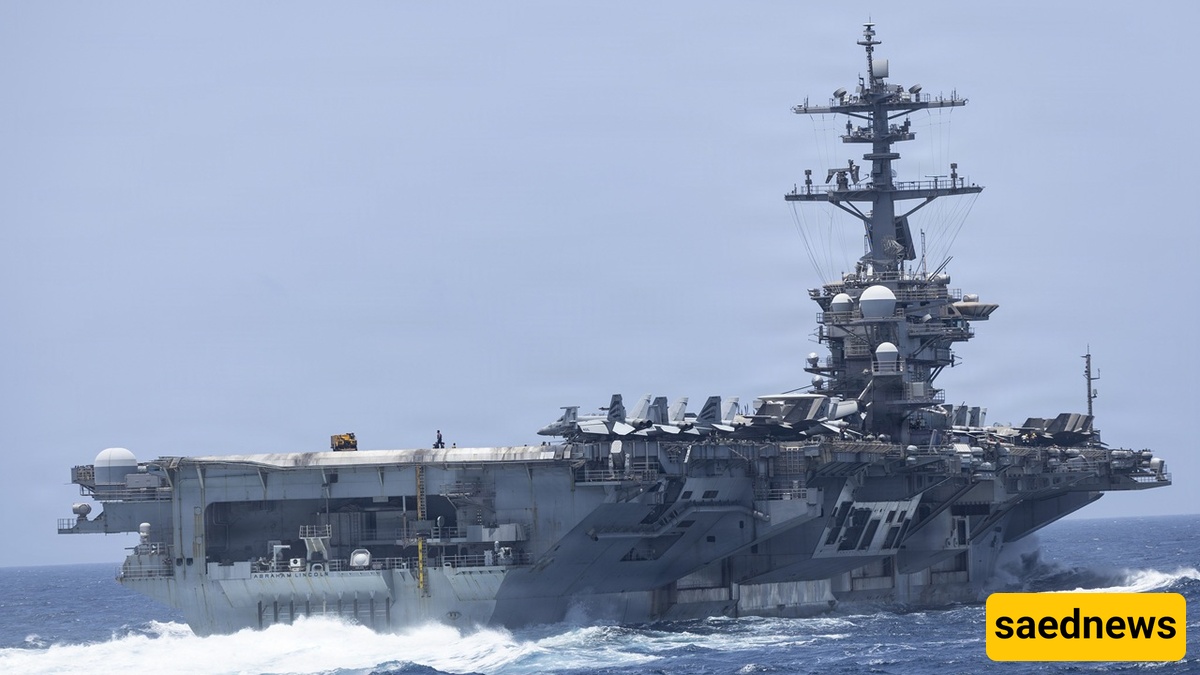
SAEDNEWS: The USS Abraham Lincoln’s extended deployment has intensified concerns over exhausted crews, aging equipment, and broader challenges facing the US Navy as aircraft carriers remain at sea longer than planned.
According to SaedNews:
The aircraft carrier USS Abraham Lincoln is continuing one of the longest deployments in US carrier history, with its extended mission placing increasing pressure on sailors, equipment, and their families. The carrier has remained at sea for more than six months without returning to port and could surpass the record for the longest US aircraft carrier deployment since the Vietnam War.
The situation reflects a wider trend in the US Navy, where carrier strike groups are increasingly staying deployed beyond the recommended seven-month period. Current and former Navy officials and experts have warned that prolonged missions could accelerate equipment wear, increase crew fatigue, and encourage some personnel to leave military service.
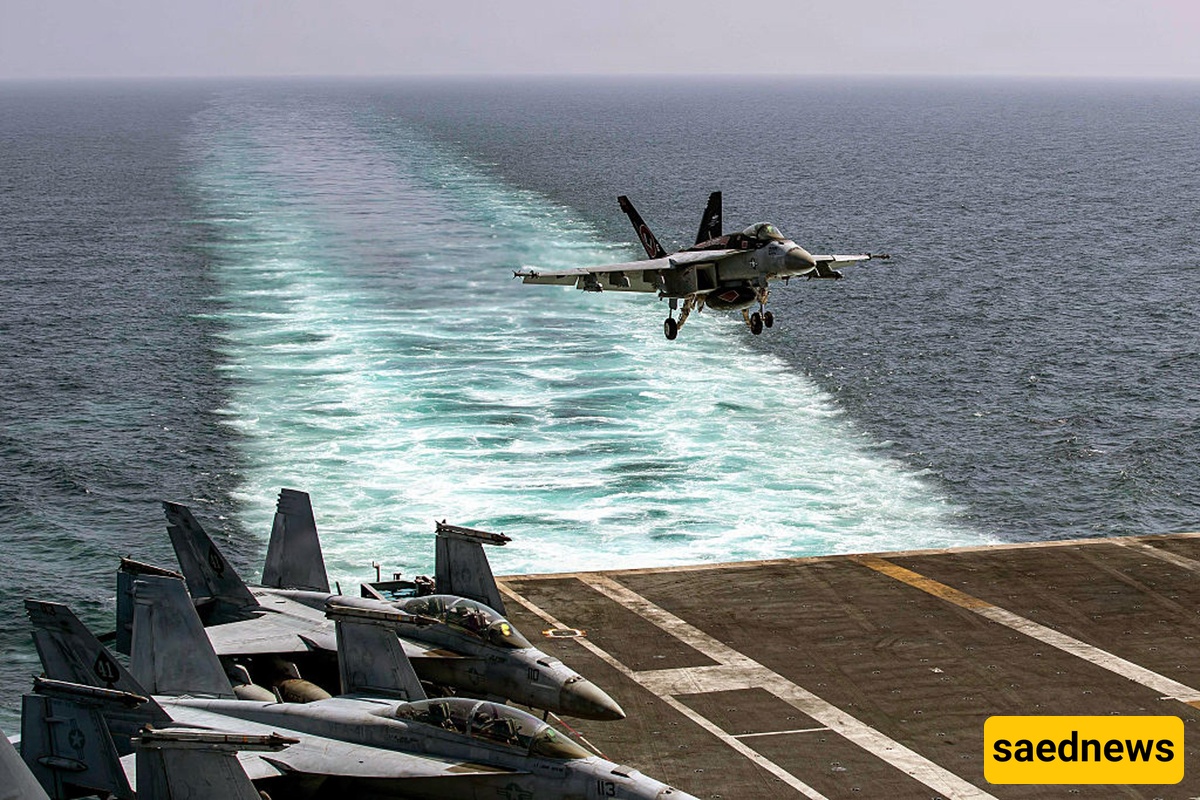
Before Abraham Lincoln’s current deployment, USS Gerald R. Ford set the record for the longest US aircraft carrier deployment since Vietnam with 326 days at sea. During that mission, the carrier also participated in operations against Iran and Venezuela.
US Navy data shows that average carrier deployment lengths have steadily increased since 2020. The Navy’s three-year force cycle is designed around a seven-month, or 210-day, deployment, but that pattern has repeatedly been exceeded since the Gaza war began in October 2023.
Following the start of the war, Gerald R. Ford and USS Dwight D. Eisenhower spent 260 and 274 days deployed respectively. In 2024, three carrier deployments exceeded 250 days, while in 2025 two deployments lasted more than 270 days, including Ford’s 326-day mission.
USS Abraham Lincoln left San Diego on November 21, 2025, and has now spent nearly nine months on deployment. Most of its crew members last went ashore on December 11 during a brief stop in Guam.
Crew members told CNN that the current mission differs significantly from previous deployments because combat operations against Iran have prevented the carrier from making stops at allied ports. Such visits usually allow ships to receive supplies, conduct repairs, and give sailors time to rest.
One crew member who spoke with CNN described the mental condition of personnel as extremely poor and said he had repeatedly heard about suicidal thoughts among some sailors. He said toilets and water fountains frequently malfunction and hot water is often unavailable.
“Every morning when we wake up and listen to the commander’s updates, we wait anxiously for news about returning home,” the crew member said.
Sailors have also reported temporary food shortages, reduced supplies of hygiene products, and problems with the ship’s water systems. One sailor said personal care items that were previously regularly available in the ship’s store have become difficult to find and are now limited.
The extended deployment has placed significant pressure on families of sailors aboard the carrier. Some relatives said packages they send sometimes arrive months late or are never delivered.
One sailor’s family member said that while they understand wartime conditions, if the carrier cannot stop at ports, the minimum expectation is that family packages should reach service members on time.
Another family member provided CNN with images showing sewage-filled bathrooms, a problem that had also been reported during Gerald R. Ford’s lengthy deployment.
The wife of one Lincoln crew member said her husband described the current mission as the worst deployment he had experienced. She said he usually did not bring work-related stress home, but had become more frustrated and hopeless during this mission.
Reports about the mental health of the crew have increased pressure on the Pentagon and Congress. Democratic Senator Richard Blumenthal of Connecticut sent a letter to the Department of Defense requesting details about the psychological condition of sailors aboard the carrier.
CNN had previously reported that two sailors connected to the Abraham Lincoln carrier strike group went overboard in recent months and were rescued alive. Reports have also emerged about efforts to prevent similar incidents involving other personnel.
However, the US Navy has not confirmed an increase in suicidal thoughts or self-harm incidents aboard the ship. The Navy said the health and safety of all service members remain a priority and that medical, religious, and mental health specialists are available to address sailors’ concerns.
A US official also said the Navy has not identified a direct connection between the length of deployments and self-harm thoughts, adding that incidents involving people falling overboard are not unique to this carrier group.
Experts warn that longer deployments affect not only sailors but also the condition of the ships themselves. During extended missions, various components experience increased wear, while repairs carried out at sea are often only temporary solutions to keep operations running.
Aircraft arresting wires, which stop aircraft during carrier landings, can become worn, while saltwater exposure can damage different ship systems. The accumulation of these problems could increase the possibility of accidents.
Retired Rear Admiral Bruce Gillingham, former Surgeon General of the Navy, said extended deployments place significant pressure on personnel. He noted that global events sometimes force the Navy to extend missions, but that does not mean there is no cost for crews and equipment.
One major reason behind the pressure on existing carriers is the limited number of aircraft carriers in the US fleet. The United States has 11 aircraft carriers, and some are aging and expected to be replaced by the newer Ford-class carriers.
At the same time, not all carriers are available simultaneously. Some are removed from operations for maintenance or nuclear reactor refueling, increasing pressure on ships that remain ready for deployment.
Personnel shortages have also become another challenge for the Navy. Retaining pilots and specialized maintenance personnel has been a major issue this year, and the Department of Defense is reviewing problems related to keeping skilled workers.
While the Navy is relying on the Ford-class carriers to address shortages in operational ships, the construction program itself has faced delays.
The USS John F. Kennedy, which has begun final sea trials, is scheduled to be delivered to the Navy in March 2027, nearly two years later than originally planned. New design changes for the Doris Miller, the fourth ship in the class, could further delay its construction.
One major concern is President Donald Trump’s recent decision to abandon the electromagnetic aircraft launch system planned for future Ford-class carriers.
Trump ordered that the Doris Miller and later ships use older steam catapult systems similar to those installed on Nimitz-class carriers instead of the newer technology.
According to Bryan Clark, a shipbuilding expert at the Hudson Institute, the decision would require redesigning the Doris Miller and could cost several billion dollars. The change could also delay the carrier’s entry into service until the end of the next decade.
Such delays could force the Navy to extend the missions of existing carriers to compensate for shortages of new ships or keep older Nimitz-class carriers in service beyond their 50-year operational lifespan.
John Perryman, the US Navy’s senior enlisted sailor, described the current deployment cycle as a highly structured “conveyor belt” created under a “peacetime mindset.” He said the Navy needs a new model for producing and preparing forces.
Despite these challenges, the Abraham Lincoln carrier strike group has carried out around 10,000 sorties in support of operations against Iran and the enforcement of a blockade.
However, maintaining this level of activity while existing carriers age, deployments become longer, and new ships face delays is increasing pressure on the US Navy.
The Abraham Lincoln situation is no longer only about one carrier or one extended mission. It reflects a broader challenge for the Navy: maintaining operational readiness without exhausting its personnel and fleet.