SAEDNEWS: A report by Al-Araby Al-Jadeed argues that direct negotiations between Lebanon and Israel have failed to produce signs of Israeli withdrawal from southern Lebanon, while accusing Israel of using talks to strengthen its position and link withdrawal to Hezbollah’s disarmament.
According to SaedNews:
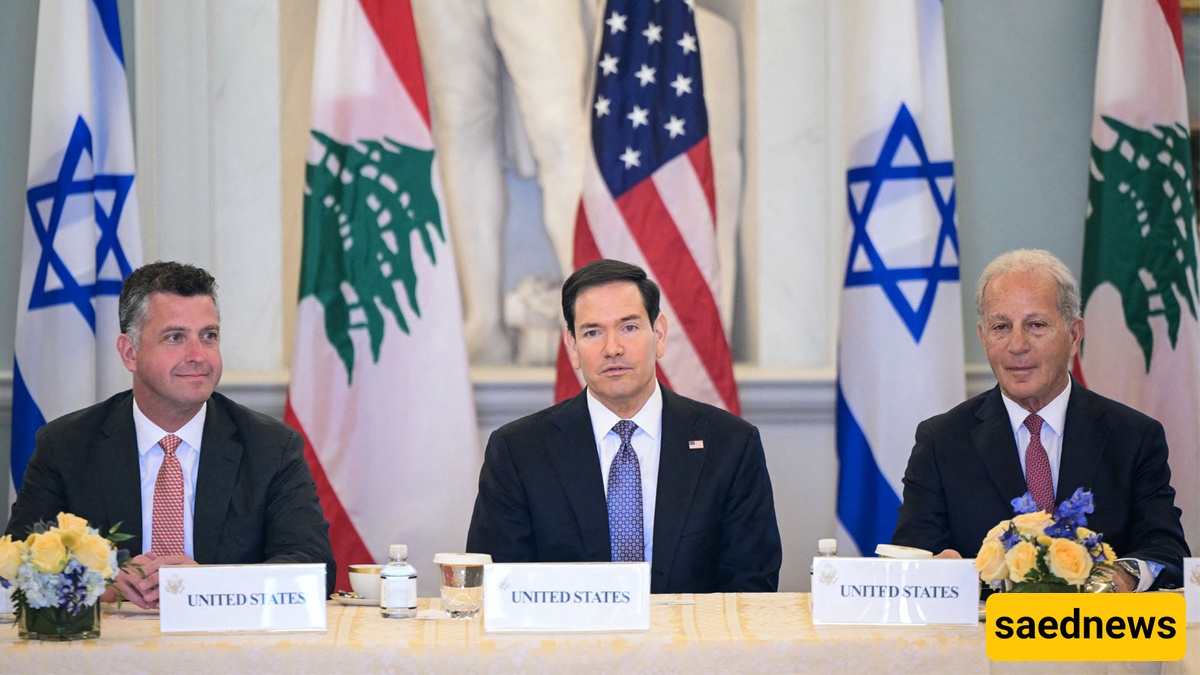
A report published by Qatar-based Al-Araby Al-Jadeed under the title “Lebanon’s Double Defeat” said that if the main objective of the direct negotiations between Lebanon and Israel, mediated by the United States for months, is to achieve Israel’s gradual withdrawal from occupied areas in southern Lebanon after the recent war, developments on the ground indicate there are no signs that Israel intends to withdraw in the foreseeable future.
The report stated that Israel is not only showing no intention of leaving, but is also seeking to solidify its presence in Lebanon and expand the areas under its control. According to the article, maintaining and widening the occupation has become a bargaining tool and a means of exerting pressure during negotiations, which appear to have reached a deadlock.
It added that Lebanon’s government has failed to use any effective pressure mechanisms, allowing Israel to establish what the report described as a dangerous negotiating equation: tying any withdrawal from Lebanon to the disarmament of Hezbollah.
The report said Hezbollah’s disarmament remains impossible for several reasons, including the Lebanese army’s lack of capacity to carry out such a process and the absence of an agreement on an international mechanism to supervise it. It also noted that Hezbollah has no intention of surrendering its weapons, while many Lebanese view the group’s arsenal as a means of defending the country against Israeli attacks.
The report further argued that Israel has imposed another condition by preventing displaced Lebanese civilians from returning to their towns and villages through shootings against returning residents and through the complete or partial destruction of buildings located within the so-called “yellow line” area in southern Lebanon.
These actions, according to the report, have provided Israel with additional leverage in negotiations with the Lebanese delegation, which has repeatedly demanded a timetable for the withdrawal of Israeli forces. Israel has responded with a condition that Lebanon cannot meet: no withdrawal from southern Lebanon in the foreseeable future without Hezbollah’s disarmament.
The report claimed that Israel’s position has also diverted attention from its activities in southern Lebanon, including the construction of fortifications and roads aimed at facilitating gradual territorial expansion beyond the “yellow line.”
It said Israel is implementing the “Generals’ Plan” in southern Lebanon under the cover of negotiations, a strategy previously applied in northern Gaza. The plan, developed by retired Israeli army generals and publicly discussed by Giora Eiland, called for the forced relocation of civilians from military operation zones in northern Gaza toward the south.
According to the report, the plan also involved restricting humanitarian aid from reaching northern Gaza, eliminating basic supplies, and depriving residents of water to pressure them to leave.
The report claimed that Israel now seeks to apply a similar approach in southern Lebanon and that current developments indicate an intention to gradually expand control north of the Litani River through military operations and territorial seizures.
It said Israel’s continued actions and the absence of even a partial withdrawal are weakening Lebanese public support for the government’s decision to pursue direct negotiations with Israel.
At the same time, the report argued that Israel is avoiding appearing responsible for blocking or undermining negotiations while continuing to carry out its objectives, making Lebanon’s government the biggest loser in the talks.
The report cited statements by Israeli Prime Minister Benjamin Netanyahu and Defense Minister Israel Katz rejecting any withdrawal “even one inch” from Lebanon, while presenting negotiations with Beirut as a political achievement that could be used to reshape Lebanon’s security situation.
It concluded that Israel’s current policies are preventing the Lebanese government from presenting itself as having succeeded in liberating southern Lebanon and returning residents through diplomacy rather than force.
According to the report, Israel’s actions have emptied Lebanon’s diplomatic efforts of their substance and turned negotiations into a cycle dominated by Israeli demands. Meanwhile, growing frustration among Lebanese citizens is reducing confidence in dialogue and increasing support for the argument that force remains the only option against Israel.
The report said the failure of direct negotiations represents both a major diplomatic defeat and a domestic setback for Lebanon’s government, as it means the continuation of an open-ended Israeli presence in southern Lebanon and strengthens Hezbollah’s argument for maintaining its weapons.