SAEDNEWS: The Jerusalem Post reports that Israeli military and security officials have been surprised by the speed at which Iran has restored parts of its missile and military-industrial capabilities after months of regional war.
According to SaedNews: The Jerusalem Post has reported that Israeli security and military officials have been surprised by the speed of Iran’s reconstruction of military capabilities following months of conflict in the region.
Citing its sources, the newspaper said the Israeli military and Mossad have encountered assessments for the second time in two years that differ from their previous expectations about Iran’s ability to restore its military capacity.

According to the report, the main source of Israel’s surprise is the rapid rebuilding of capabilities connected to ballistic missiles and other parts of Iran’s military industry. After the war, the Israeli military had expected extensive attacks on Iran’s military infrastructure and defense industries to weaken Tehran’s capabilities for years. New assessments, however, indicate that Iran has restored some of those capacities considerably faster than Israel had anticipated.
The newspaper noted that Israeli military institutions had previously been surprised by the speed of Iran’s recovery after attacks in 2024 and 2025.
In October 2024, Israel’s military said it had struck 20 sites it considered critical to Iran’s ballistic-missile production and military industries. At the time, the Israeli military claimed the strikes had delayed Iran’s missile production for a year or more.
But, according to the newspaper, it became clear at the beginning of 2025 that Iran had again accelerated its ballistic-missile production. That development led Israeli military institutions to bring forward the timing of a possible subsequent attack to June of the same year.
In June 2025, Israel struck about 100 sites linked to Iran’s missiles and military industries. The Israeli military said at the time that it had developed a formula capable of reducing Iran’s missile production for several years.
Yet Israel’s assessment was again undermined when Iran managed to restore another portion of its production capacity. The report said Iran’s missile inventory, estimated at around 1,300 in June 2025, had risen to approximately 2,500 by February 2026.
The Jerusalem Post reported that during a war in 2026 that lasted about 40 days, Israel and the United States claimed to have carried out thousands of strikes and targeted more than 2,600 sites associated with Iran’s missiles and military industries. Their stated objective was to weaken Iran’s military capabilities. Israeli and American estimates also indicated about 30,000 joint targeting operations. After the war, Israeli military officials said large sections of Iran’s military industry had been severely damaged. The report estimated the damage to Iran’s military infrastructure at about $300 billion.
Nevertheless, the newspaper said the central question now facing Israeli security institutions is how Iran has managed, despite the scale of the destruction, to produce large quantities of missiles again and restore some military capabilities so quickly.
The Jerusalem Post said Israel’s assessment has gradually shifted from the assumption that Iran would require extensive infrastructure reconstruction to restore its military strength to the view that Tehran has found concentrated and rapid methods for rebuilding its most important required capabilities, even while large parts of the country continue to face the effects of destruction.
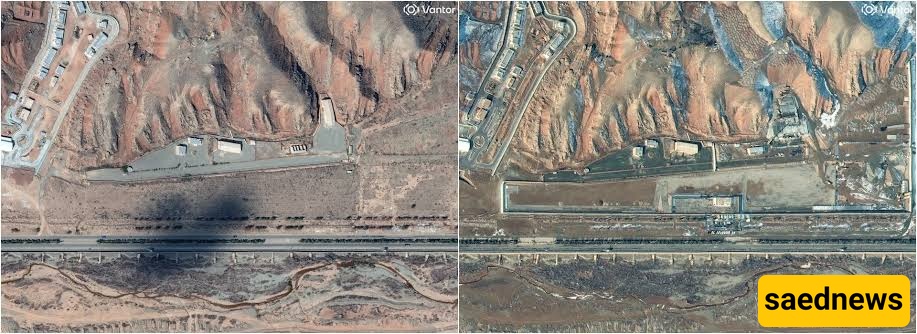
The newspaper also cited an earlier New York Times report saying Iran had used bulldozers to clear debris and reopen entrances to underground missile cities faster than Israel had expected.
But the Jerusalem Post went further, saying Israel now has indications that Iran is not merely restoring weapons that survived the attacks. Instead, it appears to have also resumed production of new weapons faster than previous Israeli estimates suggested.
According to the newspaper, after the war, Israeli officials debated whether Iran had retained about 500 long-range missiles, or possibly as many as 1,000 missiles capable of striking Israel.
The importance of that question, however, has now diminished, the Jerusalem Post wrote, as the pace of missile reproduction in Iran has become the main concern for Israel’s military institutions.
A senior Israeli military official told the newspaper in response that the army is monitoring Iran’s efforts to rebuild and restore its military capabilities “precisely and continuously,” while its assessments are being updated regularly in line with developments on the ground.
The official added that no specific estimate can be provided regarding the speed of Iran’s reconstruction because revealing such details could expose intelligence sources and operational methods.
The Jerusalem Post concluded that this represents a new challenge for Israel’s security institutions. After each round of attacks in which Israel had claimed to have weakened Iran’s military capabilities for years, Iran has managed to restore parts of its capacity faster than Israel had predicted.
The newspaper wrote that if another round of conflict emerges between the two sides, Israel will face an equation substantially different from its previous calculations—one that could make a future war far more complicated and destructive.