SAEDNEWS: An Israeli Hebrew-language outlet has sharply criticized Benjamin Netanyahu’s election tactics ahead of the Likud internal vote, questioning his promises on mandatory military service while highlighting controversial funding for Haredi institutions.
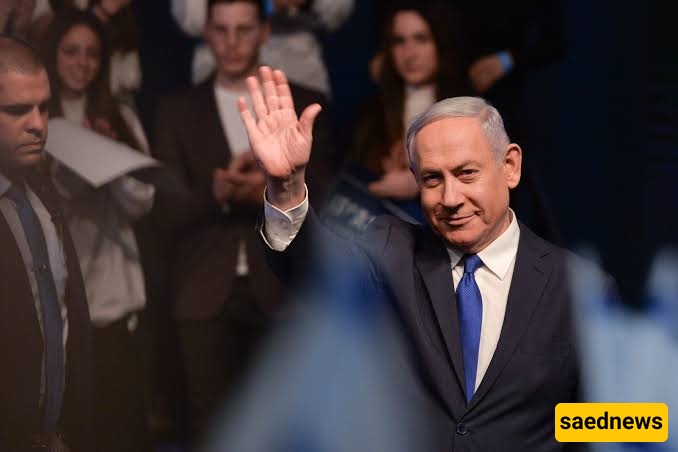
According to SaedNews: Benjamin Netanyahu is facing a strikingly blunt assessment from an Israeli Hebrew-language media outlet just days before Likud’s internal election, with the publication portraying some of the prime minister’s political moves as a form of “electoral suicide.”
The criticism, published by the Israeli news and analysis website Walla, focuses heavily on Netanyahu’s handling of mandatory military service, his relationship with Haredi political forces and the behavior of Likud ministers as the party’s internal contest approaches.
At the center of the controversy is an interview attributed to Netanyahu in which he reportedly claimed that, if he wins the election, he would create what was described as a genuine revolution in mandatory recruitment. According to the report, the proposed approach would include prison for people who do not study Torah, with the plan to be implemented through a broad nationwide structure.
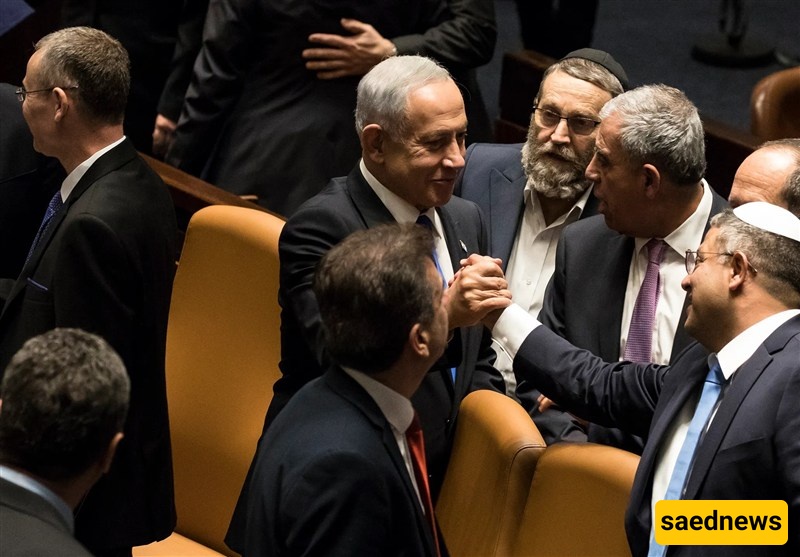
Walla’s commentary treats the claim with deep skepticism.
The outlet argues that if Netanyahu genuinely considers military recruitment an urgent issue, there would be no reason to wait for an election. It points out that the opposition could support him on the matter and says he could instead move immediately to bring the issue before the Knesset.
The criticism became sharper when Avigdor Lieberman, leader of the Yisrael Beiteinu party, challenged Netanyahu over the claim. Given the importance of mandatory military service, Lieberman called on the prime minister not to wait for the election and instead convene the Knesset to pass the legislation.
According to Walla’s account, however, Netanyahu avoided taking responsibility for the issue in much the same way the outlet says he had done during a previous Knesset vote on the matter.
The Israeli outlet then connected the conscription controversy to another development involving Haredi funding.
During the parliamentary recess, Netanyahu reportedly instructed Knesset Speaker Amir Ohana to convene a controversial meeting of the Finance Committee. The meeting concerned an additional allocation of 360 million shekels for Haredi interests, including 268 million shekels for Torah institutions and exempt organizations that, according to the report, do not teach basic subjects.
The timing has become a major part of the criticism. Walla notes that the decision came only 80 days before the election and portrays the additional allocation as a politically significant move.
The opposition challenged the process before the Supreme Court, according to the report, while the procedure continued to move forward.
For Walla, the combination of the conscription debate and the funding issue reveals what it sees as the deeper political calculation behind Netanyahu’s behavior: protecting his governing coalition.
The outlet argues that coalition preservation takes precedence over Netanyahu’s public statements about the proposed conscription legislation, including the references to prison and enforcement.
The controversy comes at a particularly sensitive moment inside Likud. The party’s internal election is scheduled for August 17, and Knesset Speaker Amir Ohana is described by the outlet as being highly motivated to maintain Netanyahu’s favor before the vote.
Walla also argues that Netanyahu understands his supporters well and has delayed the internal election as much as possible, keeping Likud ministers and lawmakers under pressure until the contest.
The report goes beyond Netanyahu himself, taking aim at the conduct of Likud ministers. It argues that ministers have become increasingly dependent on social media and have published videos supporting Netanyahu’s candidacy in the internal election.
The outlet uses exceptionally harsh language to describe this behavior, comparing it to a form of collective political self-destruction and arguing that ministers have surrendered what it describes as the last remnants of their dignity in exchange for loyalty to the prime minister.
The commentary also raises questions about the treatment of political figures who remain loyal to Netanyahu.
One of the most dramatic examples cited is Defense Minister Israel Katz’s dismissal of Central Command chief Avi Belot during a live television program broadcast nationwide. The incident is presented by Walla in the broader context of the political struggle surrounding the internal Likud contest.
The outlet ultimately leaves readers with a pointed question: what preparations will Netanyahu make, inside Israel and abroad, for Knesset members who remained loyal to what it calls the “king” rather than to Israel and were ultimately dismissed before the election?
The report is clearly framed as political commentary rather than a neutral account, and its strongest characterizations belong to the Israeli outlet itself. Still, its timing makes the criticism notable.
With the August 17 Likud internal election approaching, Netanyahu’s handling of military recruitment, Haredi funding and his relationship with Likud lawmakers has become a focal point of political debate.
The larger question raised by the report is whether Netanyahu’s political calculations are designed primarily to preserve his coalition and strengthen his position within Likud—or whether the same strategy could ultimately create deeper tensions inside his own political camp.
That question is likely to remain at the center of attention as the internal election draws closer and the competing interests within Likud become harder to conceal.