SAEDNEWS: The new defense agreement between Saudi Arabia, Turkey and Pakistan could mark another step toward a more layered Middle Eastern security system—one in which Iran’s exclusion may become more consequential than the pact itself.
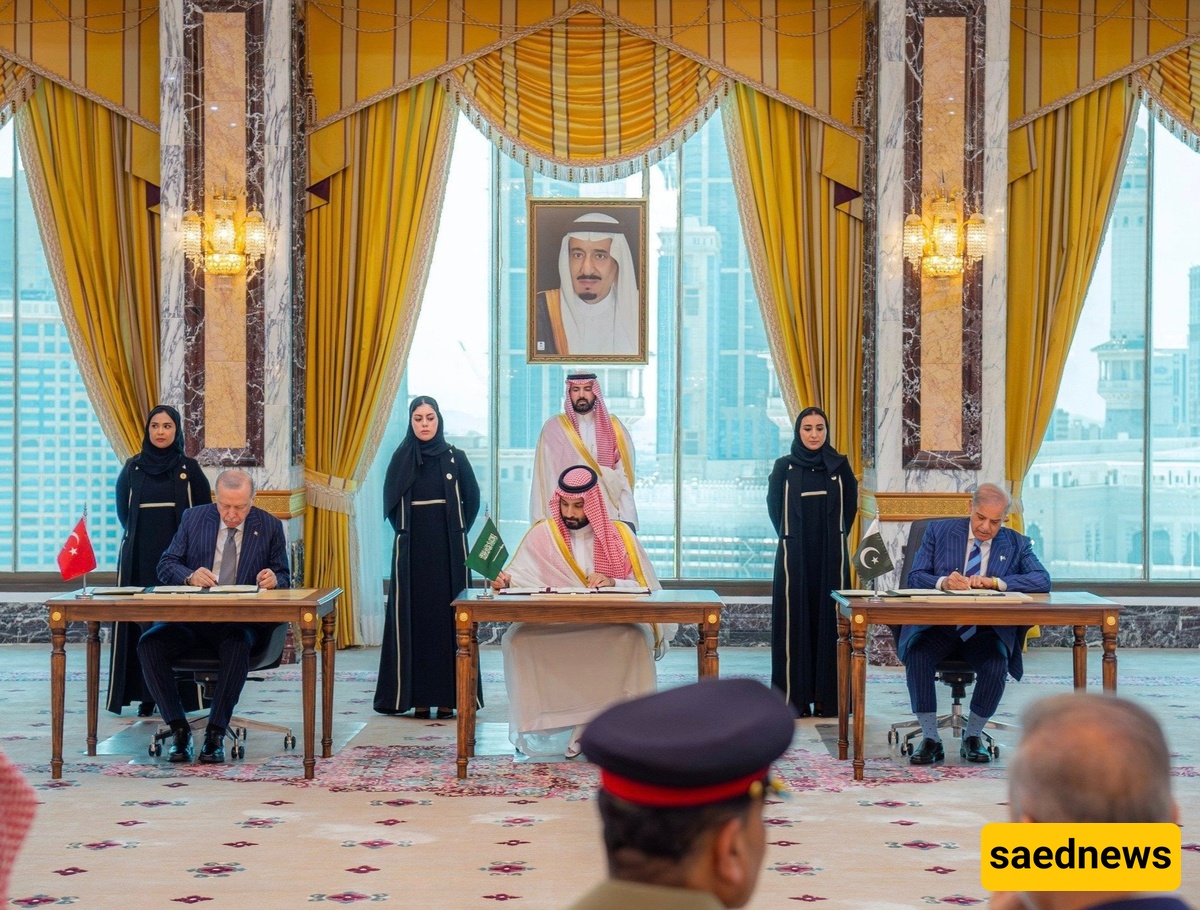
According to SaedNews: The most important question raised by the new defense agreement signed in Mecca may not be what Saudi Arabia, Turkey and Pakistan are promising each other. It may be what happens to the wider regional security system if Iran remains outside it.
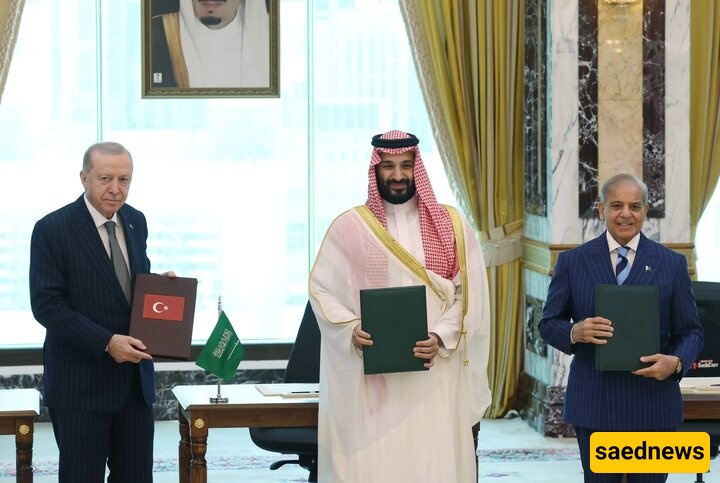
The agreement, signed by the leaders of Saudi Arabia, Turkey and Pakistan, comes at a particularly sensitive moment for the Middle East. After two direct wars involving Iran over roughly 15 months—the 12-day war of June 2025 and the broader conflict that began on February 28, 2026, with U.S. and Israeli attacks on Iran—the region is confronting a security environment very different from the one that existed before.
The Mecca agreement therefore deserves to be viewed as more than a conventional military arrangement. Its significance lies in what it could reveal about the direction of regional politics: Middle Eastern states appear increasingly interested in developing their own security capabilities and partnerships while continuing, rather than immediately abandoning, their longstanding relationships with the United States and other outside powers.
One of the agreement’s central provisions states that an armed attack against any one of the three countries will be treated as an attack against all three.
The pact also emphasizes stronger defense cooperation, collective deterrence, defense-industry collaboration and counterterrorism. It refers to the right of self-defense under Article 51 of the United Nations Charter.
Yet an important detail remains unclear: the publicly available description does not fully specify what concrete military action each country would be legally or operationally required to take if another member were attacked.
That distinction matters.
Turkish President Recep Tayyip Erdoğan said after the signing that the agreement was not directed against any particular country and that it remained open to other states seeking peace, prosperity and stability. A Turkish official likewise described it as entirely defensive and stressed that it does not cancel previous bilateral or multilateral agreements involving the three countries.
For that reason, the pact should not necessarily be interpreted as the creation of a closed military bloc. It may be better understood as an emerging network of collective deterrence that could eventually expand.
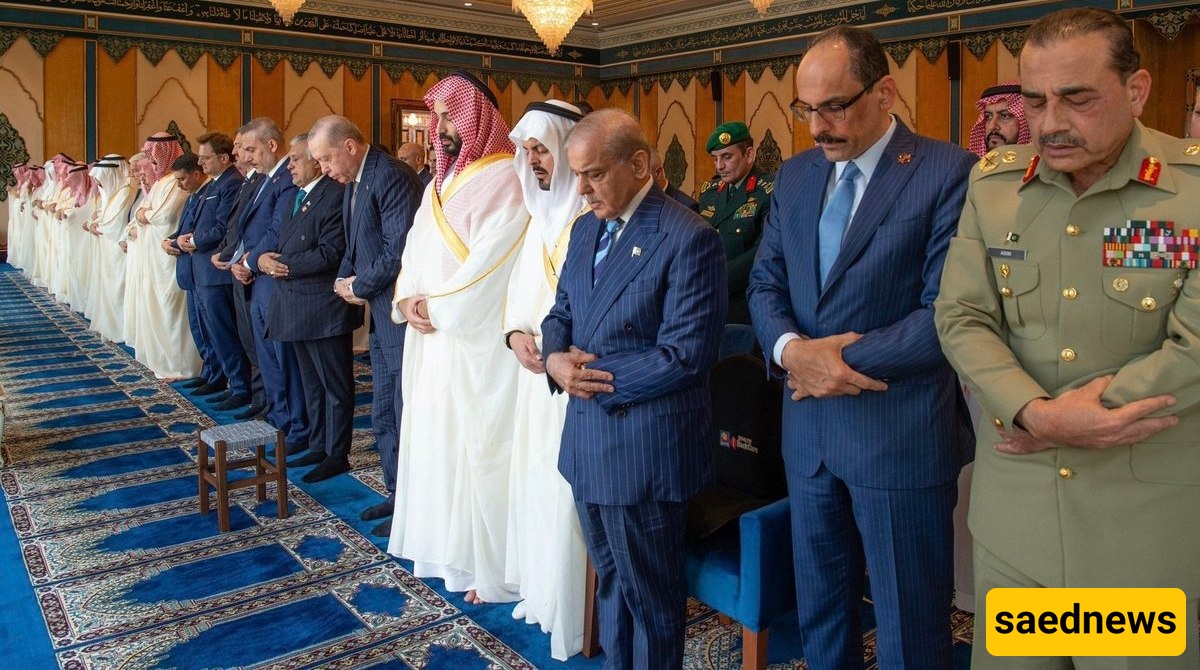
Saudi Arabia and Pakistan have maintained defense relations for decades. In 2025, the two countries also signed a strategic mutual defense agreement under which aggression against one would be considered aggression against both.
In April 2026, Saudi Arabia announced that a Pakistani military contingent, including fighter and support aircraft, had arrived at King Abdulaziz Air Base within the framework of that relationship.
Saudi-Turkish defense cooperation has also expanded. In 2023, the two countries signed an implementation plan covering defense industries, technology transfer and localization, research and development, and joint projects. Saudi Arabia has also entered agreements involving Turkish drone technology, while their joint military committee has continued to meet to advance defense cooperation.
The Mecca agreement can therefore be seen as the conversion of several existing bilateral relationships into a broader three-country framework.
The timing is impossible to separate from the wars involving Iran.
The June 2025 conflict transformed what had previously been a largely shadow confrontation between Iran, the United States and Israel into direct warfare. The conflict that began in February 2026 was broader still, with attacks extending the consequences of the confrontation beyond Iran and Israel.
U.S. military facilities in the region were exposed to the consequences of the fighting, while energy infrastructure and shipping routes in the Gulf—particularly the Strait of Hormuz—also became vulnerable to the wider escalation.
That experience forced regional governments to reconsider a longstanding assumption: that hosting U.S. military forces automatically makes their territory safer.
For decades, American bases in Bahrain, Qatar, Kuwait, Saudi Arabia, the United Arab Emirates and elsewhere have been viewed as important deterrents. Bahrain hosts the headquarters of the U.S. Fifth Fleet, while Al Udeid in Qatar serves as a major forward base for U.S. Central Command.
In peacetime, that military presence can offer protection. But during a direct U.S.-Iran confrontation, the same infrastructure can become part of the conflict’s geography.
That contradiction is especially important for wealthy Gulf states. They have spent enormous sums purchasing advanced weapons from the United States and remain dependent on the U.S. and Western countries for areas such as command, intelligence, air defense, training, maintenance and certain critical military capabilities.
The lesson emerging from recent events is not necessarily that these countries want to abandon Washington. Rather, they appear increasingly interested in having more than one security option.
This is where the Mecca agreement becomes particularly significant.
The Gulf states remain deeply connected to the U.S. and Europe in military and defense affairs. Their weapons systems, aircraft, air defenses, training, intelligence and technological capabilities still rely heavily on Western support.
So the emerging model is unlikely to be a sudden departure from the American security system.
Instead, a parallel and increasingly layered regional order may be developing alongside it.
A country can maintain security ties with Washington, strengthen defense cooperation with Pakistan, expand its defense-industrial relationship with Turkey, deepen strategic links with China and simultaneously seek political and economic mechanisms with Iran.
The objective is not necessarily to choose one major power over another. It can be to reduce excessive dependence on any single actor.
That may ultimately become one of the defining characteristics of the Middle East’s future security architecture.
For the United States, the Mecca agreement carries a clear geopolitical message: regional countries want a greater role in determining their own security arrangements.
That does not make the pact anti-American. But it does suggest that the traditional model—where outside powers play the central role in guaranteeing regional security—is no longer the only model being considered.
Israel is another important part of the equation.
Regional governments have watched the expansion of Israeli military operations beyond the occupied territories, including actions involving Lebanon, Syria, Iraq, Yemen and Iran. The recent wars involving Iran and Israel also demonstrated the potential for direct confrontation between Israel and major regional powers, with U.S. support playing a major role.
The source of concern for some regional states is therefore not limited to Israel’s current actions. It also involves questions about its longer-term ambitions in the region.
The reaction to the Mecca agreement has consequently included attention to the fact that all three signatories—Saudi Arabia, Turkey and Pakistan—are Muslim-majority countries, and some Israeli media have raised concerns about the possibility of a broader Sunni regional grouping.
For Tehran, the Mecca pact contains a particularly uncomfortable paradox.
Iran has spent decades advocating the idea that regional security should be provided by regional states rather than outside powers. Former Iranian officials have proposed various regional security initiatives, including ideas associated with Mohammad Javad Zarif and the Hormuz Peace Endeavor promoted during Hassan Rouhani’s presidency.
The emergence of a potentially expandable regional security mechanism therefore resembles, in some respects, the kind of regional architecture Iran itself has long advocated.
The problem is that Iran is not part of this particular arrangement.
Its timing also matters. With the agreement emerging after major military confrontations involving Iran, it can create perceptions that regional states are attempting to build mechanisms partly designed to protect themselves against Iranian threats.
But according to the analysis presented in the source material, Tehran’s biggest danger may not be the formation of a formal anti-Iran alliance.
The greater concern is cumulative.
A series of bilateral and multilateral agreements could gradually create interconnected economic, transportation, intelligence, political and defense networks in which Iran becomes less central to regional cooperation—even if none of the individual agreements is explicitly anti-Iranian.
The experience of the Caspian Sea illustrates how networks of agreements can become more consequential than any single document.
Iran, Russia, Azerbaijan, Kazakhstan and Turkmenistan negotiated for more than two decades before signing the 2018 Convention on the Legal Status of the Caspian Sea. While the convention established a broader legal framework, some important questions concerning seabed and subsoil delimitation remained subject to further negotiations.
The source argues that disagreements involving Iran did not prevent the other coastal states from pursuing their interests through bilateral and multilateral arrangements.
If a similar pattern develops in the Persian Gulf, Tehran could eventually face a dense network of regional arrangements in which its ability to influence economic, security, energy and transportation projects becomes more constrained.
The movement toward greater regional cooperation is not necessarily being driven only by Middle Eastern governments.
China has promoted concepts such as common, comprehensive, cooperative and sustainable security in its Middle East policy. As the region’s largest energy importer, Beijing has a strong interest in stable energy markets, secure trade routes and reduced tensions between regional powers.
European countries also have reasons to support more independent regional dialogue and security mechanisms, particularly amid the changing relationship between Europe and the United States following the Ukraine war.
Discussions in Western policy circles have increasingly included ideas for an inclusive Middle Eastern security architecture and multilateral formats such as GCC-plus mechanisms, the Red Sea Council and the Baghdad process.
The future Middle East, therefore, may not be organized around a single bloc. It could instead consist of overlapping clusters of security, economic, energy, transportation and technological relationships.
The most important conclusion for Tehran may be that regional agreements should not automatically be viewed as threats.
They can also create opportunities.
The Mecca pact, in one important sense, reinforces an idea Iran has promoted for decades: regional states are capable of taking greater responsibility for their own security.
Iran has also demonstrated the importance of its strategic geography. The Strait of Hormuz, its position along the Persian Gulf and Gulf of Oman, and its role in regional energy calculations all reinforce the argument that Iran cannot simply be removed from the region’s strategic equation.
But geography alone does not guarantee political influence.
Iran cannot define its foreign policy and national security indefinitely through the lens of war. Conflicts eventually end. Negotiations resume. Trade routes reopen. Borders become channels for people and goods again. Governments begin planning for years and decades rather than for the next military exchange.
That is precisely why the emerging regional architecture matters.
The battlefield may determine immediate balances of power, but diplomacy determines how those balances are converted into long-term political, economic and security arrangements. For Tehran, the challenge is therefore not simply to survive the current security crisis, but to ensure that when the region moves into its next phase, Iran has a meaningful place at the table.
The central question raised by the Mecca agreement is ultimately simple but consequential: Will the next Middle Eastern security architecture be built with Iran as one of its central pillars—or will Iran find itself adapting to a regional system designed without it?