SAEDNEWS: In the early hours of June 10, 2026, southern Iran witnessed escalating clashes between Iran and the United States. Following attacks on sites in Hormozgan Province, Iran launched drone and missile strikes against U.S. targets in the region. Reports indicate that the confrontation is ongoing.
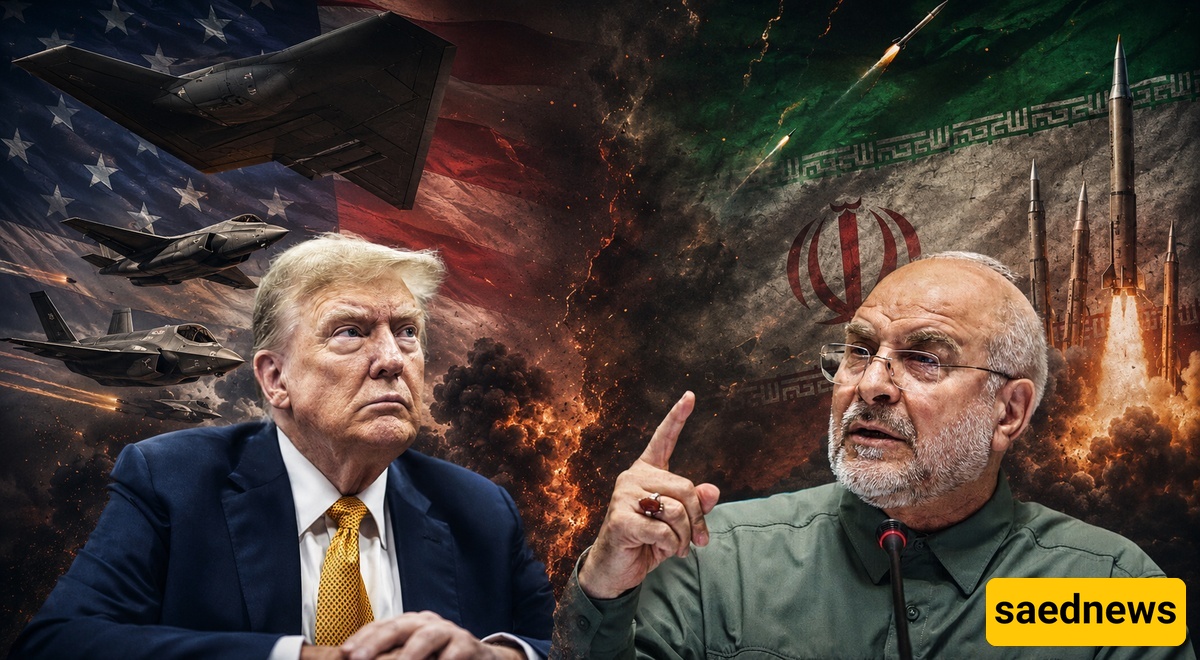
According to Saed News Political Desk, citing Fars News Agency, the early hours of Wednesday, June 10, 2026, witnessed a series of clashes, attacks, and retaliatory operations between the Islamic Republic of Iran and the United States military. The developments began with reported U.S. strikes on locations in Hormozgan Province and were followed by drone and missile responses by Iran’s armed forces against American targets in the region.
According to a statement from the Public Relations Office of the Islamic Revolutionary Guard Corps (IRGC), the United States launched attacks on several locations in Jask, Sirik, and Qeshm during the early hours of Wednesday. The attacks reportedly damaged a telecommunications tower in Sirik County and destroyed two water reservoirs in the Bamani district.
At approximately 2:30 a.m., three explosions were heard in Jask County, while air defense systems became active in parts of Bandar Abbas, Jask, and Qeshm. A few minutes later, around 3:23 a.m., several powerful explosions were reported in Bandar Abbas, although their exact locations were not immediately identified. Additional explosions were reported on Qeshm Island around 3:40 a.m.
Fars also reported that a senior U.S. official told Israel’s Channel 12 television network that “the second wave of attacks on Iran is currently underway.” Earlier, U.S. Central Command (CENTCOM) had claimed that it launched strikes in Iran in response to the downing of an Apache helicopter.
Following the attacks on infrastructure in Hormozgan Province, Abdolhamid Hamzepour, Managing Director of the Hormozgan Water and Wastewater Company, stated that U.S. missile strikes had targeted critical water distribution infrastructure in Sirik County.
According to Hamzepour, two strategic water reservoirs in the Bamani district—one with a capacity of 500 cubic meters and another with a capacity of 2,000 cubic meters—were completely destroyed. He emphasized that these facilities played a vital role in supplying drinking water to the region and that water distribution to all villages in the district had been suspended as a result. Emergency response and operational teams were reportedly deployed to restore water services through alternative measures.
In response, the IRGC announced that its naval forces launched drone attacks at approximately 2:30 a.m. against the U.S. Fifth Fleet headquarters in Bahrain and Ali Al Salem Air Base in Kuwait.
The IRGC stated that military engagements were ongoing and that its forces were continuing to respond to what it described as enemy aggression, warning that further actions would result in more severe retaliation.
Simultaneously, the Public Relations Office of the Iranian Army announced retaliatory operations against U.S. positions. It stated that a wave of drone attacks had been launched against American bases and radar systems associated with the U.S. Fifth Fleet in Bahrain.
In a separate statement, Iran’s Khatam al-Anbiya Central Headquarters announced that, in response to what it described as U.S. aggression in southern Iran under the pretext of a helicopter crash, several American military bases in the region had been targeted by coordinated operations conducted by the Iranian Army and the IRGC.
The statement warned that any future attacks against Iran would result in broader and more powerful strikes against designated targets throughout the region.
Later in the day, the IRGC announced the interception and destruction of an American MQ-9 drone.
According to the statement, during ongoing aerial engagements in the Strait of Hormuz, the drone was attempting to approach and intervene in the conflict zone from the northern Persian Gulf when it was targeted by IRGC air defense systems over Jam County in Bushehr Province and subsequently destroyed.
In subsequent developments, Iranian responses reportedly expanded to additional U.S. facilities in the region. A military source told Fars that Iran had used long-range solid-fuel Kheibar Shekan missiles to strike shelters housing U.S. F-35 fighter aircraft in Jordan.
The IRGC later announced that following successful naval operations against 21 targets at U.S. air and naval bases in the region, as well as the downing of the MQ-9 drone, its Aerospace Force had carried out additional retaliatory strikes against four significant targets using long-range solid-fuel missiles.
According to the statement, the targets included F-35 fighter shelters, a U.S. air base, and a command-and-control center in the Al Azraq region of Jordan.
The IRGC concluded by stating that Iran’s armed forces remained fully prepared to deliver a decisive response to any further aggression and that responsibility for any future escalation would rest with the United States.
Amid the escalating tensions, Iranian Foreign Minister Abbas Araghchi issued a warning to the United States, stating that despite setbacks on the battlefield, Washington had chosen to test Iran’s determination and resolve.
He stressed that Iran’s armed forces would not leave any attack or threat unanswered, declaring: “If you wish to remain safe, leave our region.”
Araghchi also referred to the history of foreign intervention in the Persian Gulf, stating that the region’s history contains many examples of the unfortunate fate of external powers that sought to intervene or act as aggressors.
The Iranian foreign minister concluded by emphasizing that any threat or hostile action against the country would be met with a firm and proportionate response.