SAEDNEWS: Hezbollah has strongly condemned the inclusion of southern Lebanon in official maps published by Israel’s Foreign Ministry, arguing that the move exposes what it describes as Israeli territorial ambitions.
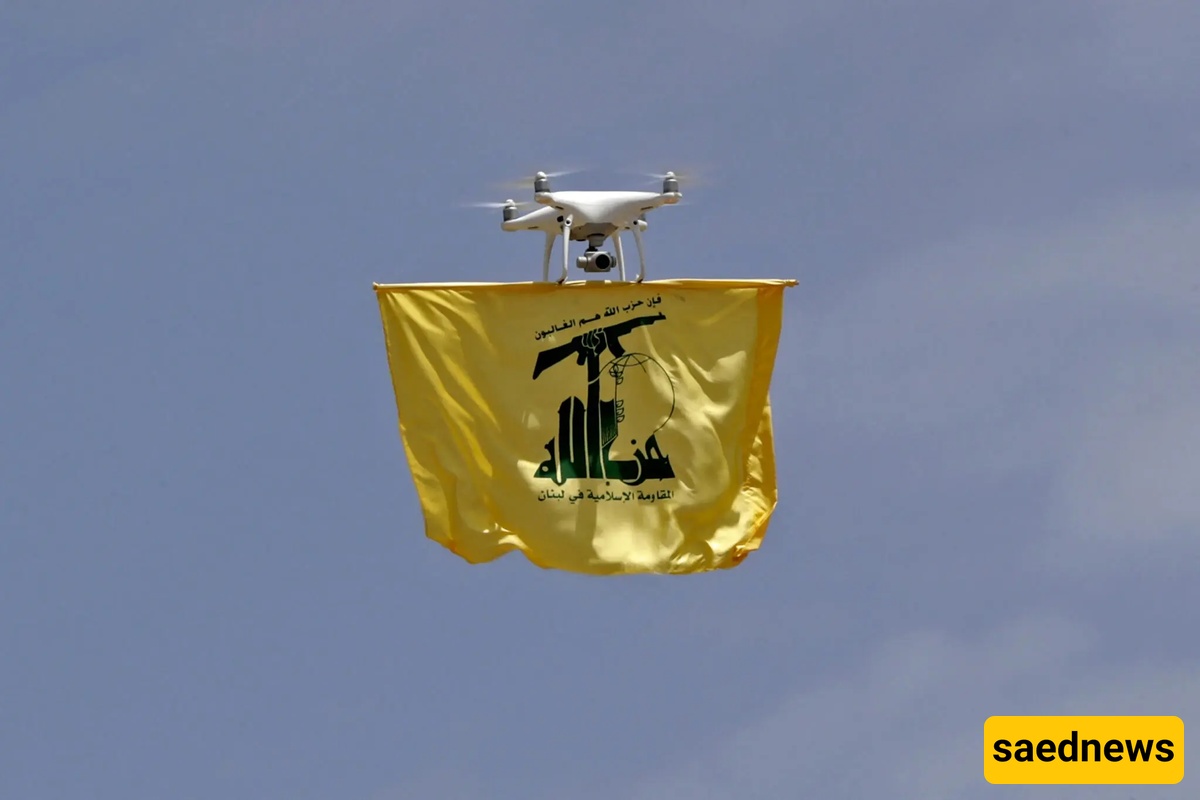
According to SaedNews: A map has become the center of a new political dispute between Lebanon and Israel after Hezbollah accused Israel of openly revealing territorial ambitions by including southern Lebanon in official maps attributed to its Foreign Ministry.
In a statement, Hezbollah condemned the move and described the appearance of southern Lebanese territory on Israeli official maps as what it considers clear evidence of Israeli ambitions toward Lebanon.
The statement gives the map significance far beyond a disputed graphic. Hezbollah argues that the document exposes what it says are Israel’s actual intentions and provides a warning about the direction of the broader political process involving Lebanon.
At the heart of Hezbollah’s criticism is the future of negotiations between Lebanon and Israel.
According to the group’s statement, direct talks with the Lebanese government are not, in its view, simply a diplomatic effort to resolve outstanding issues. Hezbollah claims that the negotiations are being used as a means of buying time while creating and imposing what it describes as new realities on the ground.
That accusation is central to the group’s reaction.
Rather than treating the Israeli maps as an isolated incident, Hezbollah has presented them as evidence supporting its broader argument about the purpose of the negotiations. The group says the maps demonstrate what it considers the “real intentions” of its Israeli adversary.
The dispute is therefore unfolding on two connected levels: the controversy surrounding the maps themselves and the much broader disagreement over the political path being pursued by the Lebanese government.
Hezbollah’s statement places significant responsibility on Beirut. The group criticized what it characterized as a policy of concessions and argued that the Lebanese government must take immediate steps in response.
Among its demands, Hezbollah called on the Lebanese government to immediately stop what it described as “humiliating negotiations.”
The group also urged the government to pursue a complaint before the United Nations Security Council and to call for an urgent meeting of Lebanon’s Defense Council.
The demands reflect the seriousness with which Hezbollah says it views the Israeli maps. For the group, the issue is not merely about how territory is depicted. It is tied directly to questions of sovereignty, negotiations and the possibility of changes being imposed on the ground.
The statement also puts pressure on the Lebanese government at a politically sensitive moment. By explicitly assigning responsibility to the government and criticizing its negotiating approach, Hezbollah has made clear that it expects Beirut to respond through diplomatic and institutional channels.
At the same time, Hezbollah’s position represents the group’s own characterization of the Israeli move and the negotiations. Its claims about Israel’s intentions and the purpose of the talks are presented in its statement and should be understood as such.
The map controversy has nevertheless given Hezbollah an opportunity to broaden its criticism. Instead of focusing solely on the cartographic representation, the group has connected the issue to a larger warning about territorial ambitions and negotiations.
That connection is what makes the statement politically significant.
If a map is viewed as an expression of policy rather than simply a graphic representation, its publication can carry consequences beyond the image itself. Hezbollah’s response reflects precisely that interpretation, arguing that the inclusion of southern Lebanon reveals a strategic intention rather than an accidental or insignificant detail.
The group’s message to the Lebanese government is equally direct: it wants the negotiating process stopped and replaced, in its view, by immediate diplomatic and national measures.
The call for the United Nations Security Council to be approached adds an international dimension to the dispute. Hezbollah is urging Lebanon to move the issue beyond bilateral negotiations and place it before an international body.
Its demand for an urgent meeting of the Defense Council similarly points toward an institutional response inside Lebanon.
For now, the controversy remains centered on Hezbollah’s condemnation of the maps and its interpretation of what they signify. The group has described them as evidence of Israeli ambitions and used the episode to renew its criticism of the Lebanese government’s negotiating approach.
The dispute also highlights how seemingly simple political symbols can become highly charged in a conflict where territory and sovereignty remain deeply contested.
A map can represent geography, but in a tense political environment it can also become a statement about claims, borders and intentions. Hezbollah’s reaction shows that it views the Israeli maps in precisely those terms.
The coming political response in Lebanon will therefore be closely watched by those following the dispute. Hezbollah has already called for an immediate halt to negotiations and for action through the Security Council and Lebanon’s Defense Council.
Whether those demands lead to any change in the government’s approach remains an open question. For Hezbollah, however, the message is unequivocal: the inclusion of southern Lebanon on Israeli maps is being treated not as a minor diplomatic controversy, but as a warning that requires an immediate political response.