SAEDNEWS: A coordinated intervention by the Asian, European and North/Central American football confederations has sharply intensified pressure on FIFA President Gianni Infantino, with the three bodies questioning transparency, decision-making and accountability at the organization.
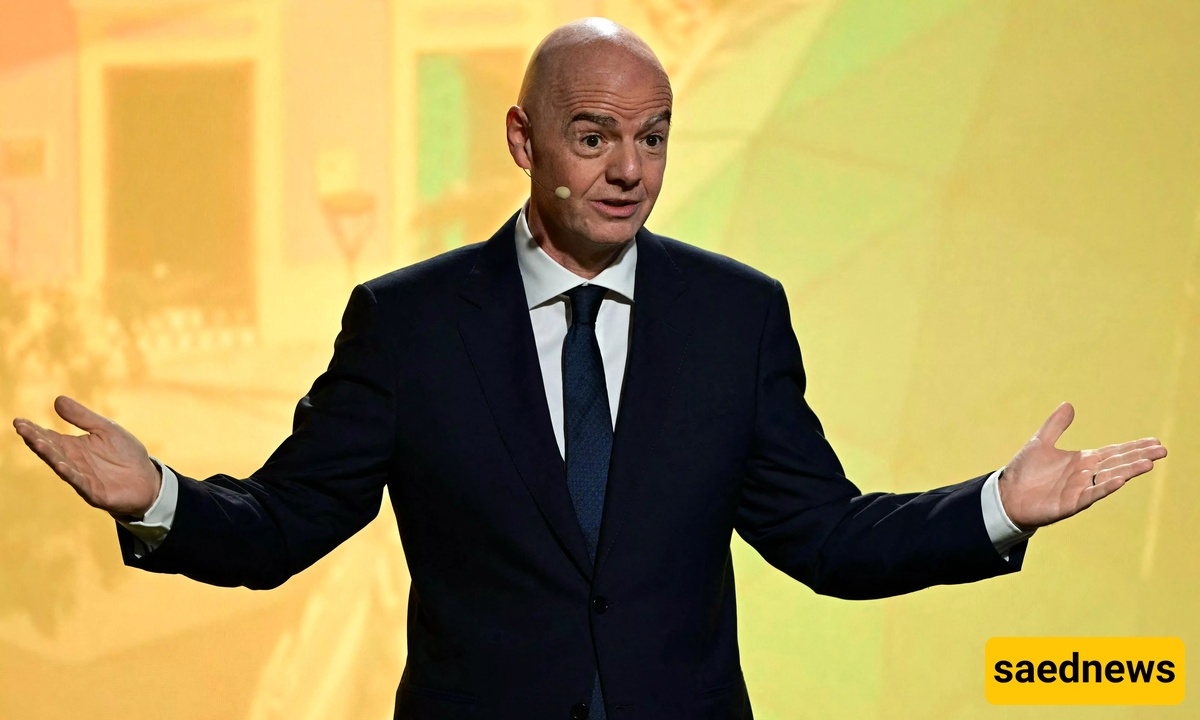
According to SaedNews: FIFA President Gianni Infantino is facing a fresh and unusually coordinated challenge after the Asian Football Confederation (AFC), UEFA and CONCACAF joined forces to publicly criticize the way the world governing body has been led.
In an open letter addressed to the wider football community, the three confederations argued that football cannot be treated as the property of any individual or institution. Their message went well beyond a disagreement over a single decision. Instead, they questioned what they described as deeper concerns surrounding FIFA’s governance, transparency and the responsibility of those entrusted with leading the sport.
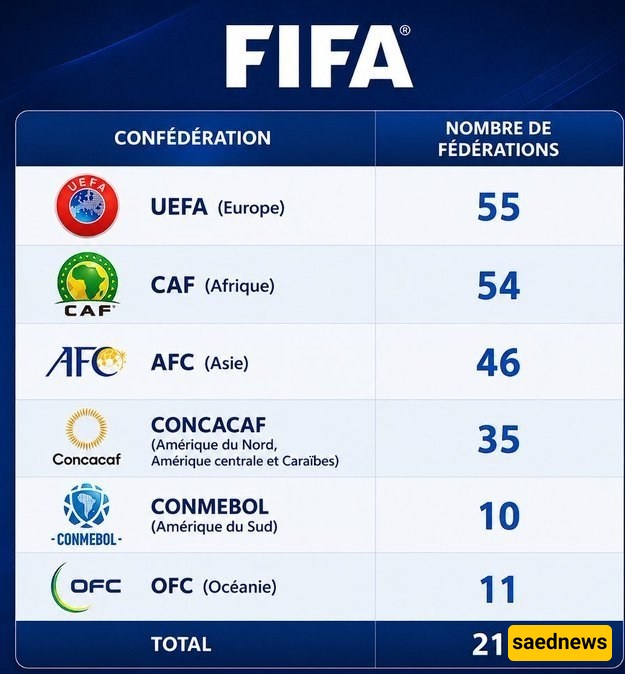
The timing of the intervention makes it particularly significant. Infantino is expected to seek another term as FIFA president in the upcoming election in March, and the joint position of three major confederations could potentially influence how their member associations approach that contest.
The letter emphasized that the progress football has made over the past decade cannot be credited to one person. According to the three confederations, developments such as the expansion of tournaments, the awarding of the 2030 and 2034 World Cups and the distribution of FIFA resources were collective achievements involving FIFA, the confederations and member associations.
But the organizations made clear that their concern is not simply about money or competition formats.
At the heart of their criticism is what they described as the “health of the game” and the ethical standards expected from its leadership. They argued that holding a leadership position in football should be viewed as a responsibility to the football community rather than personal ownership of power.
One of the sharpest elements of the letter was its criticism of FIFA’s handling of a controversial proposal involving the sale of part of the World Cup’s interests to the private sector. The confederations argued that the problem was not merely poor communication, as FIFA had characterized it, but a failure in competence and decision-making.
They questioned the process through which the proposal was presented, pointing to what they described as a compressed timetable and a lack of meaningful consultation before member associations had sufficient opportunity to properly assess its terms.
The letter also challenged FIFA’s plan to provide a report on the episode to the FIFA Council. The three confederations argued that an examination of such a serious governance issue should be conducted by a completely independent third party rather than by FIFA itself, its employees or other internal stakeholders.
That demand for an external review adds another layer to the dispute. The confederations say FIFA’s administrative structure should have no role in carrying out the review, while relevant documents and evidence should be preserved in accordance with UEFA’s previous notice on document retention.
The organizations also drew attention to a FIFA leadership meeting held in Morocco. According to the letter, only one elected official attended, while members of the FIFA Council and representatives of member associations were not invited. Instead, the meeting involved selected members of FIFA’s management committee.
The three confederations argued that the decision to bring selected management officials abroad rather than have FIFA leadership address the matter at its headquarters in Zurich only reinforced their concerns about the organization’s pattern of behavior.
Their criticism was framed in unusually broad terms. The letter argued that football should be led by people acting as custodians of the sport, not by individuals who expect the game to answer to them.
The dispute has already attracted attention beyond the three confederations themselves. French outlet Radio Monte Carlo reported that the alliance between UEFA, CONCACAF and AFC could have consequences for the distribution of votes in the upcoming FIFA presidential election.
That does not automatically determine the outcome. The key question will be whether the member associations represented by these confederations ultimately follow the positions taken by their regional governing bodies.
The joint letter therefore represents more than another public criticism of Infantino. It is a coordinated statement from three major football regions calling for greater accountability and transparency at FIFA at a politically sensitive moment.
Infantino has faced criticism over the issues raised in the dispute, while FIFA has defended its president and described the wider wave of criticism as part of an ongoing and coordinated effort to weaken the organization.
For now, the most important question is whether the unprecedentedly direct language from AFC, UEFA and CONCACAF will translate into voting pressure when FIFA members gather to decide the organization's leadership.
The answer may depend not only on what the confederations say, but on whether their member associations stand behind them. With the presidential election approaching, the balance between regional unity, national federation interests and FIFA leadership could become one of the most closely watched stories in world football.