SAEDNEWS: An ancient leather saddle discovered in the tomb of a Chinese female horse rider has astonished archaeologists, both because of its remarkable age and because of the identity of its owner.
According to a report by Saed News, citing Faradid, about 2,700 years ago, a female herder who lived in the dry regions of northwestern China was buried wearing a coat made of animal hide, wool trousers, and leather boots, along with her riding clothes and leather saddle.
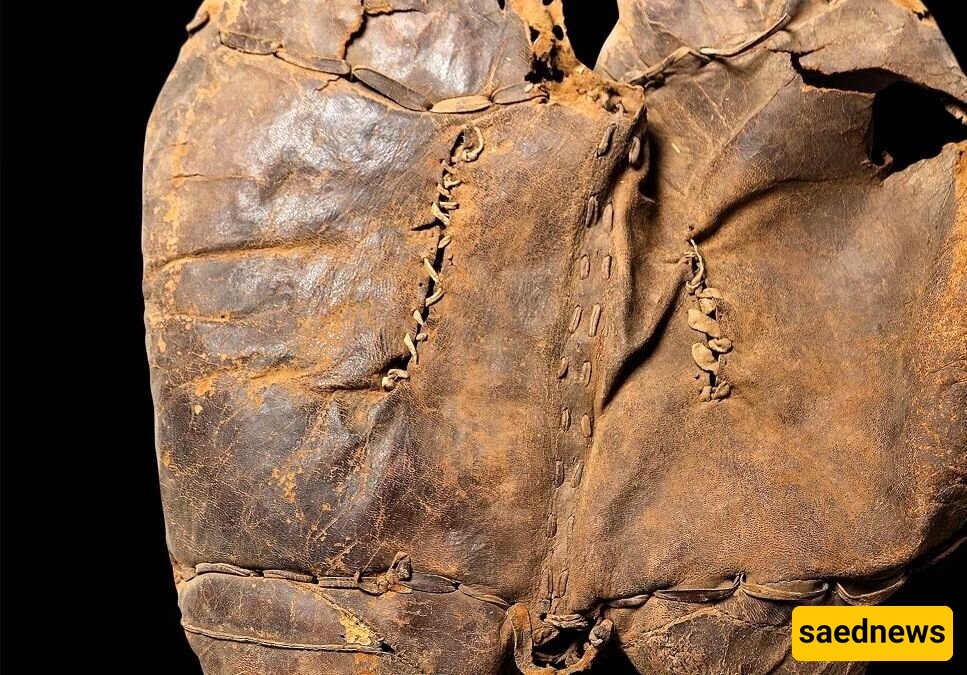
The saddle was discovered in the Yanghai cemetery near Turpan and dates back to between 700 and 400 BCE. It is currently considered the oldest saddle ever found, challenging previous assumptions about when saddles were developed and how they were used.
According to Patrick Wertmann from the University of Zurich, the lead author of the study on the saddle, the discovery was “unexpected.” Saddles are rarely preserved because their organic materials naturally decay over time. Other horse-related equipment, such as bridles and harnesses, are found more frequently, but they do not necessarily prove that a saddle was used.

A Historic Discovery: The Earliest Known Saddle
Before the Yanghai discovery, the oldest known saddles belonged to the Pazyryk culture, found in the Altai region of present-day Kazakhstan and Russia, north of Yanghai and Turpan.
Although Pazyryk saddles date back to around the 5th century BCE, Wertmann believes that the Pazyryk people may have adopted saddle technology centuries earlier.
“Horse riding likely spread from the Pazyryk region into northwestern China, and saddles may have reached China through this route,” Wertmann explained. “However, until more early examples are discovered, the Yanghai saddle remains the oldest known saddle in the world.”

A Comfortable Design for Long-Distance Riding
The Yanghai saddle was preserved because of the region’s extremely dry climate, providing valuable information about early riding technology and the society that created it.
The saddle consists of two wing-shaped leather sections filled with a mixture of straw, deer hair, and camel hair. These sections were stitched along the outer edges and separated by an unfilled central area, a design that reduced pressure on the horse’s spine.
Wertmann says that the development of such designs reflects growing attention to the comfort and safety of riders, as well as the health of horses. More comfortable saddles allowed people to travel longer distances and increased interaction between different communities.
Unlike later saddles discovered in elite Scythian burials, the early Yanghai saddle was made from relatively inexpensive materials and belonged to an ordinary woman. Nevertheless, it demonstrates the advanced craftsmanship of the people who created it.
Changing Views on the Origins of Horse Riding
When humans first began riding horses and using saddles remains a widely debated topic.
One study suggested that horseback riding originated around 3000 BCE in areas that are now Romania, Bulgaria, and Hungary. Before the invention of saddles, riders either rode directly on horseback or used simple mats and blankets for comfort.
The Yanghai saddle also challenges the idea that saddles were exclusively used by men for military purposes.
Wertmann stated: “The discovery of this saddle in a woman’s grave shows that women participated in the daily activities of mounted herding communities, including livestock management and travel.”

Ancient China’s Connection With Horses
Horses and horse riders were popular subjects in ancient Chinese art. Some of the earliest bronze horse figures from China, dating to approximately 1191–1148 BCE, show riders using simple mats instead of saddles.
The Yanghai saddle provides new evidence that early horse-riding societies developed practical technologies not only for warfare but also for everyday life, trade, migration, and pastoral activities.