SAEDNEWS: A new report alleges the Pentagon concealed the full number of U.S. casualties from last week's Iranian ballistic missile strikes on military bases in Jordan and across the region. The claims have not been independently verified.
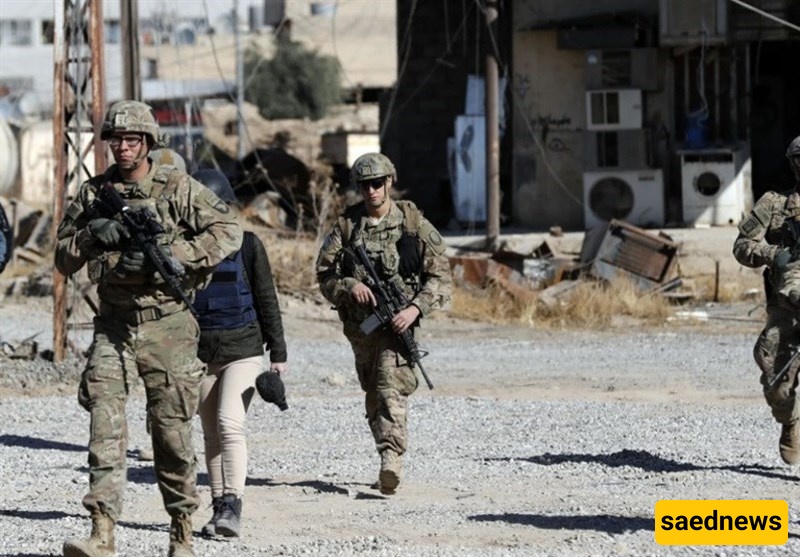
According to Saednews, A report by The New York Times, citing anonymous U.S. officials, claims that recent attacks injured dozens of American service members and damaged several military helicopters. The report also states that Iran carried out three additional strikes against U.S. forces in Jordan during the same week, incidents that were reportedly not publicly disclosed by the Pentagon.
According to U.S. military officials, the Department of Defense is not obligated to release information about every injured service member. One official argued that revealing such details could help Iran better target U.S. forces stationed across the region using ballistic missiles and drones.
The Pentagon has not conducted a major public briefing on the conflict since May, leaving limited official information about military operations and overall strategy.
CBS News reported that strikes on Muwaffaq Salti Air Base in Jordan resulted in the deaths of two U.S. troops and left another soldier missing. The fallen service members were later identified as 1st Lt. Tyler James Feehan, 25, of Hawaii, and Pvt. Isabella Gonzales, 19, of Texas. Another American soldier was also reported killed in Iraq.
Meanwhile, Iran's Islamic Revolutionary Guard Corps (IRGC) announced that it carried out a retaliatory strike targeting a U.S. special operations command center in Syria's Al-Tanf region.
Official Pentagon figures acknowledge that at least 17 U.S. service members have been killed and more than 430 injured during the conflict with Iran. However, no updated casualty figures have been released in recent weeks.
Earlier reporting by The Intercept claimed that nearly 750 U.S. service members had been killed or injured, suggesting a significantly higher number than official government figures. The report alleged that casualty information had not been fully disclosed.
Throughout the conflict, U.S. officials have repeatedly stated that operational security remains a priority over publicly sharing battlefield details, including casualty information.
Officials have also declined to comment on reports regarding missile interceptor shortages or explain how Iran continues to launch ballistic missiles despite earlier statements from President Donald Trump that Iran's missile capabilities had been destroyed.
Responding to the deaths of American troops, President Trump said they had died "in service of our country." He also stated that U.S. military operations are intended to protect America's partners in the Persian Gulf, although some reports suggest the campaign was launched following pressure from Israel.
Trump recently argued that Persian Gulf nations—including Saudi Arabia, the United Arab Emirates, Qatar, Bahrain, and Kuwait—should reimburse the United States for providing regional security.
Critics contend that the conflict has instead increased security risks for Gulf countries by placing U.S. military installations in the region at the center of potential retaliation.
Some analysts argue that the military campaign has not achieved its stated strategic objectives and has instead intensified regional instability, affected U.S. interests in West Asia, and raised concerns about America's international standing.
Recent polling cited in the report indicates that public approval of President Trump's decision to launch military action against Iran stands at -30%, reflecting significant domestic opposition.