SAEDNEWS: Hossein Shariatmadari criticized Abbas Araghchi and Mohammad Bagher Ghalibaf over remarks about a new deal with the U.S., saying reopening the Strait of Hormuz and charging fees would weaken Iran’s key leverage and harm national interests while benefiting the U.S. economically.
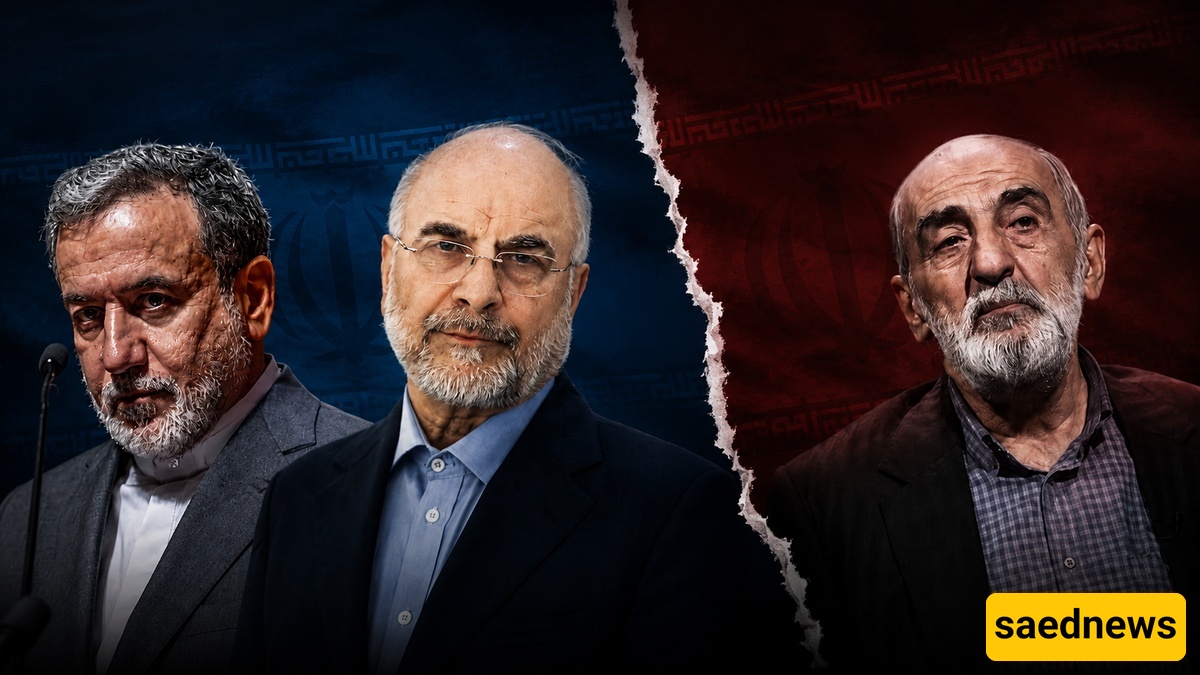
According to the political service of Saed News, the newspaper Kayhan, in a sharply worded editorial by Hossein Shariatmadari, reacted to recent statements by Abbas Araghchi on the “Special News Interview” program.
Araghchi had stated in the program that a deal with the United States was close and claimed that under this agreement, in addition to lifting the U.S. naval blockade, the Strait of Hormuz would be reopened and “service fees” would be collected from passing vessels.
However, these remarks faced strong criticism from Kayhan, which raised a series of fundamental questions addressed to the negotiating team and senior officials, scrutinizing the hidden dimensions and risks of such an agreement.
Shariatmadari first emphasizes that the Strait of Hormuz is part of Iran’s territorial waters and, according to the Geneva and Jamaica Conventions, Iran has the right to prevent the passage of ships that conflict with its national interests. Kayhan then asks a key question from Araghchi:
“Under this agreement, is the passage of ships affiliated with the United States, the Zionist regime, and their supporting countries in the ‘Ramadan War’ prohibited? There is no mention of this decisive point in your statements.”
The author, referring to the fact that closing the Strait of Hormuz was one of Iran’s main leverage tools during the “Ramadan War,” which cut off the enemy’s commercial lifeline, criticizes the approach of Mohammad Bagher Ghalibaf and Araghchi, writing:
Is it supposed that by reopening the strait and merely collecting “service fees” from ships, we are meant to overlook the blood of dozens of scientists, military commanders, and hundreds of billions of dollars in damages? Releasing the enemy’s economic choke point would only pave the way for their future crimes.
Another major criticism by Kayhan regarding the upcoming agreement is the comparison between “lifting the U.S. naval blockade” and “reopening the Strait of Hormuz.” Shariatmadari considers the naval blockade a coercive, illegal act and a clear example of “piracy.” He stresses that Iran should not exchange such an illegal U.S. action for giving up its sovereign and legal rights in the Strait of Hormuz.
Kayhan, recalling the Supreme Leader’s explicit order regarding the necessity of receiving compensation from the enemy, considers the Strait of Hormuz the best instrument for achieving this. According to this view, if the United States refuses to pay reparations, Iran has the right under international law to seize their oil and commercial shipments. However, agreeing to reopen and normalize maritime traffic would effectively strip Iran of the ability to pursue such rights and obtain compensation.
In the final section, the editorial addresses the issue of “guaranteeing the implementation of the agreement.” While the negotiating team relies on approval of the deal by the UN Security Council, Kayhan points to the bitter experience of the JCPOA: “Was Resolution 2231 not supposed to guarantee the JCPOA? The United States ignored it and withdrew, and no one reacted.”
Shariatmadari concludes by expressing trust in the negotiating team but calls on senior officials of the Supreme National Security Council, Mohammad Bagher Ghalibaf, and Abbas Araghchi to respond to these critical questions and doubts before any final text is concluded, so that national interests are not sacrificed at this historic turning point.