SAEDNEWS: Kumamoto Castle is one of Japan’s three greatest castles, renowned for its unique architecture, impressive defensive design, and rich history spanning more than four centuries. It remains one of the country's most iconic cultural landmarks and a must-visit destination for history and architecture enthusiasts.
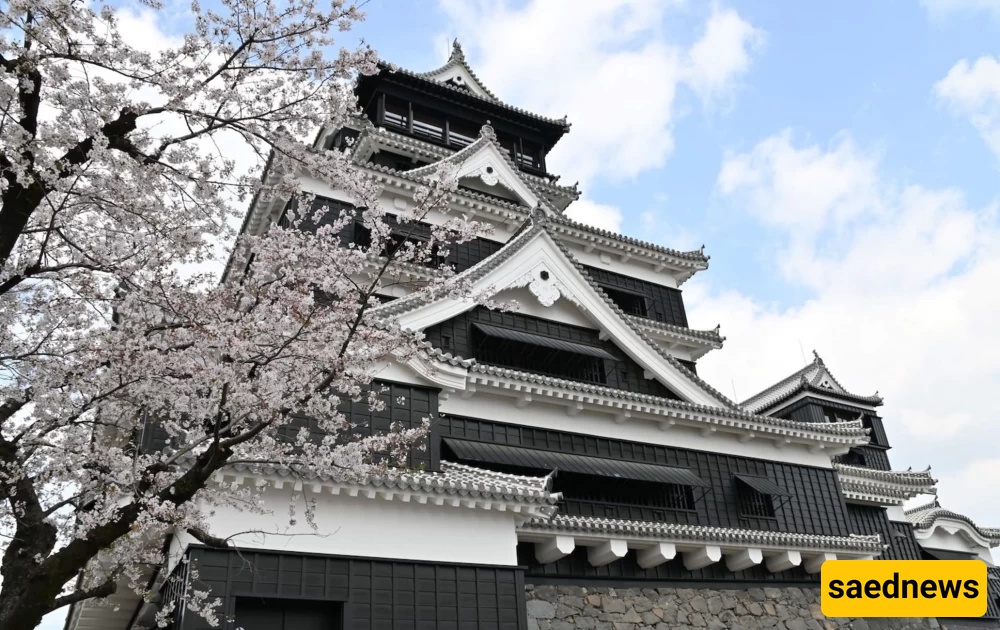
According to Saednews, Kumamoto Castle is one of Japan's most famous historic landmarks. Known for its striking black exterior, steep stone walls, and impressive defensive design, it is considered one of the country's three greatest castles, alongside Himeji Castle and Matsumoto Castle. Located in the heart of Kumamoto City on Japan's Kyushu Island, the castle attracts visitors from around the world with its rich history, remarkable architecture, and ongoing restoration efforts.
Kumamoto Castle covers an enormous area stretching approximately one mile from east to west and three-quarters of a mile from north to south. Its towering keep rises nearly 100 feet above the central grounds, making it one of Japan's largest and most strategically designed castles.
Although fortifications existed on the site as early as 1467, the castle seen today was constructed after the Battle of Sekigahara during the unification of Japan under the Tokugawa Shogunate.
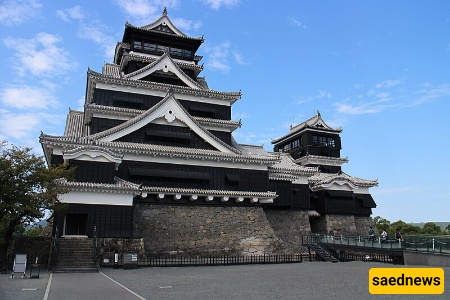
The modern castle was built by the renowned military leader Kato Kiyomasa, who was rewarded with control of present-day Kumamoto Prefecture for his loyalty and achievements in battle.
Construction began in 1601 and was completed in 1607. During this period, Kiyomasa transformed the earlier fortifications into one of Japan's strongest castles.
The completed complex featured:
At least 49 towers
18 turret gates
29 smaller gates
Around 120 wells
Extensive defensive walls and moats
The Honmaru Goten Palace, which served as the lord's residence and administrative center, was completed in 1610. The castle was designed to withstand prolonged sieges, with kitchens, wells, and living quarters located inside the main keeps.
Following Kato Kiyomasa's death in 1611, the castle passed to his son before being transferred to the Hosokawa clan in 1632.
The Hosokawa family governed Kumamoto Castle for more than 200 years, overseeing 11 generations until Japan's feudal system ended during the Meiji Restoration.
In 1877, Kumamoto Castle became the center of the Satsuma Rebellion. Government forces defending the castle successfully resisted the rebel army despite heavy attacks. Although the main tower and several historic buildings were destroyed during the conflict, the castle's massive stone walls prevented enemy forces from capturing it.
Kumamoto Castle is widely admired for its military engineering.
Its most distinctive architectural features include:
Black wooden exterior
Steep curved stone walls designed to prevent climbing
Massive defensive gates
Multiple watchtowers
Complex network of courtyards and defensive layers
These carefully planned defenses made the castle one of the most difficult fortresses in Japan to attack.
The main castle keep was faithfully reconstructed in 1960 using historical records and traditional architectural methods.
Between 1998 and 2008, an extensive restoration project revitalized much of the castle complex, including the magnificent Honmaru Goten Palace, allowing visitors to experience the elegance once enjoyed by feudal lords and their guests.
The 2016 Kumamoto earthquakes caused severe damage to the castle.
The disaster resulted in:
Damage to nearly one-third of the stone walls
Collapse of approximately 10 percent of the walls
Structural damage to several historic buildings
Thousands of displaced stones requiring careful reconstruction
Despite the destruction, Kumamoto Castle remains one of Japan's most important cultural landmarks.
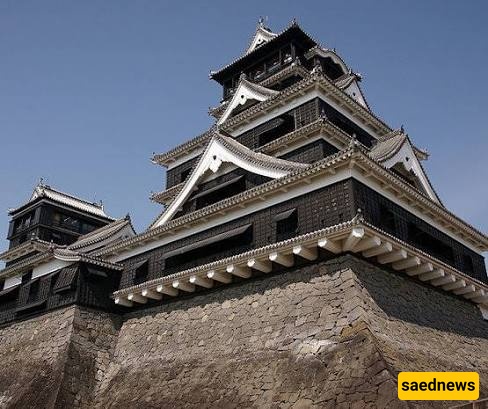
The current restoration is expected to take around 20 years.
Each original stone is carefully identified and returned to its original location using traditional Japanese construction techniques. The restoration resembles assembling a massive historical puzzle, with every stone placed according to centuries-old records.
While restoration continues, parts of the castle remain open to visitors, allowing guests to observe both the historic site and the remarkable preservation work.
Kumamoto Castle is located in central Kumamoto City, making it easy to reach on foot or by public transportation.
From JR Kumamoto Station:
Ride the city tram for approximately 17 minutes.
Get off at Kumamotojo-mae Station.
The fare is approximately 170 yen.
Walking from Kumamoto Station takes around 30 to 45 minutes and offers a pleasant route through the city.
Several factors contribute to the castle's international reputation:
One of Japan's Three Great Castles
Exceptional defensive architecture
Rich samurai history
Role in the Satsuma Rebellion
Beautiful reconstructed Honmaru Goten Palace
Continuous preservation using traditional methods
Spectacular cherry blossom viewing in spring
Spring is widely considered the best season to visit Kumamoto Castle.
During cherry blossom season, thousands of sakura trees bloom around the castle grounds, creating one of Japan's most scenic historical landscapes. Autumn is also a popular time thanks to colorful foliage and comfortable weather.
Kumamoto Castle is located in the center of Kumamoto City on Kyushu Island, Japan.
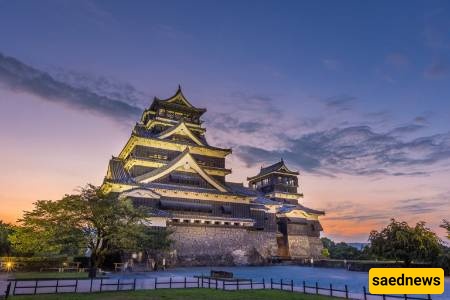
It is famous for its impressive military architecture, historical significance, and its role during the 1877 Satsuma Rebellion.
The modern castle was constructed between 1601 and 1607 by Kato Kiyomasa, although the site's earliest fortifications date back to 1467.
Yes. Several sections are open to the public, although some areas remain under restoration following the 2016 earthquakes.
The full restoration is expected to continue for approximately 20 years, with work progressing carefully using traditional building techniques.
Kumamoto Castle stands as one of Japan's greatest historical treasures. Its powerful architecture, centuries of samurai history, and meticulous restoration efforts make it an essential destination for anyone interested in Japanese culture and heritage. Even while restoration continues, the castle remains a symbol of resilience, craftsmanship, and the enduring legacy of feudal Japan.