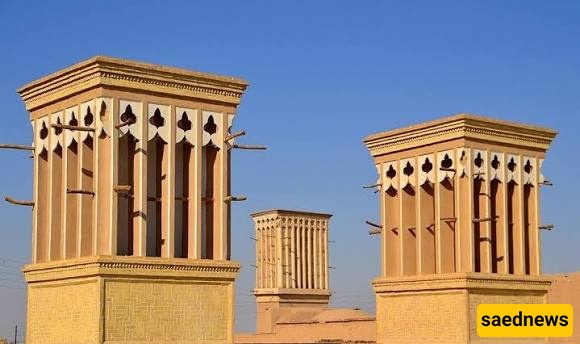
SAEDNEWS: The skyline of Yazd is punctuated by badgirs, towers built to move air through homes and public buildings. Their real importance lies not in one “magic” cooling trick but in an integrated desert design system.
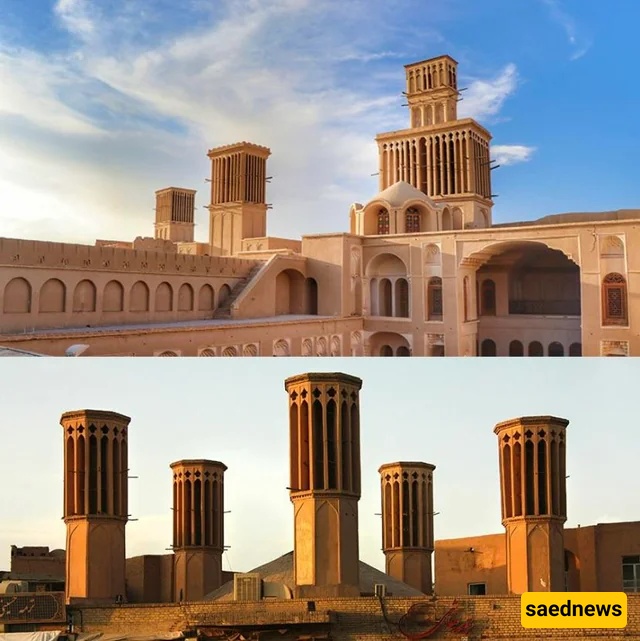
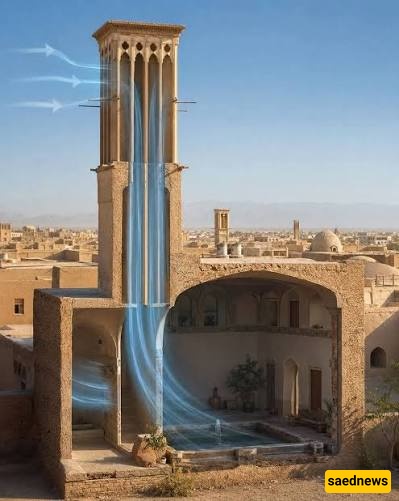
According to SAEDNEWS, Yazd’s windcatchers are instantly recognizable: tall shafts rise above earthen roofs, their openings facing one or several directions. A badgir can capture moving air and direct it downward, or help warm air escape by using pressure differences and buoyancy. Its performance depends on wind, temperature, tower form, internal partitions, and the rooms or water systems connected below.
That last point is important. Online descriptions often present windcatchers as ancient air conditioners operating in isolation. In traditional Yazd, they worked alongside thick earthen walls, shaded courtyards, vaulted roofs, compact streets, basements, qanats, and patterns of seasonal room use. The building was the cooling system.
UNESCO describes the Historic City of Yazd as a living testimony to the intelligent use of limited resources in a desert environment. Earth construction moderates temperature, while the urban fabric reduces exposure. Scientific studies of wind towers confirm that their geometry can support natural ventilation, although results vary with local conditions.
Modern architects can learn from this without copying the silhouette onto every new building. A decorative tower that ignores airflow is not climate design. The transferable principles are deeper: reduce heat gain first, use natural pressure where conditions permit, connect ventilation to the full building plan, and design for maintenance and occupant control.