SAEDNEWS: A simple cleaning routine can remove grease, dust, and everyday stains from kitchen cabinet doors while helping protect their finish.
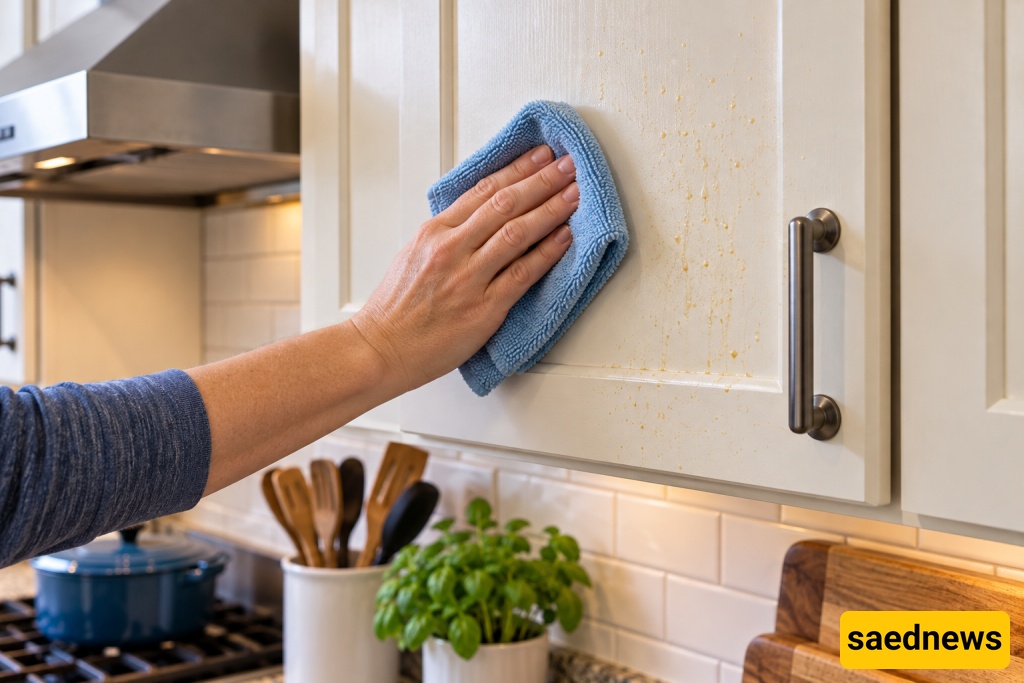
According to SAEDNEWS, kitchen cabinet doors often collect a combination of cooking grease, dust, fingerprints, and food splashes. Regular cleaning keeps them looking fresh, but the method should match the cabinet material and finish to prevent discoloration, swelling, or surface damage.
For routine cleaning, keep the process simple. You will usually need:
Warm water
A small amount of mild dish soap
A soft microfiber cloth
A clean, dry cloth
A soft toothbrush or small brush for edges and grooves
Avoid abrasive sponges, harsh scrubbing powders, and excessive amounts of water, especially on painted, laminated, veneered, or wooden surfaces.
Remove loose dust first
Wipe the doors with a dry microfiber cloth to remove dust and crumbs. This prevents loose particles from being rubbed across the surface during wet cleaning.
Prepare a mild solution
Mix warm water with a small amount of mild dish soap. The solution should be lightly soapy rather than heavily concentrated.
Wipe the cabinet doors
Dip a microfiber cloth into the solution and wring it out thoroughly. Wipe the doors gently, paying extra attention to handles and areas around them where fingerprints and grease tend to accumulate.
Clean detailed areas carefully
For grooves, corners, and decorative edges, use a soft toothbrush or small soft-bristled brush. Work gently rather than pressing hard against the finish.
Remove soap residue
Use a separate cloth lightly dampened with clean water to wipe away any remaining soap.
Dry the surface immediately
Finish with a clean, dry microfiber cloth. Do not leave moisture sitting on cabinet doors or around their edges.
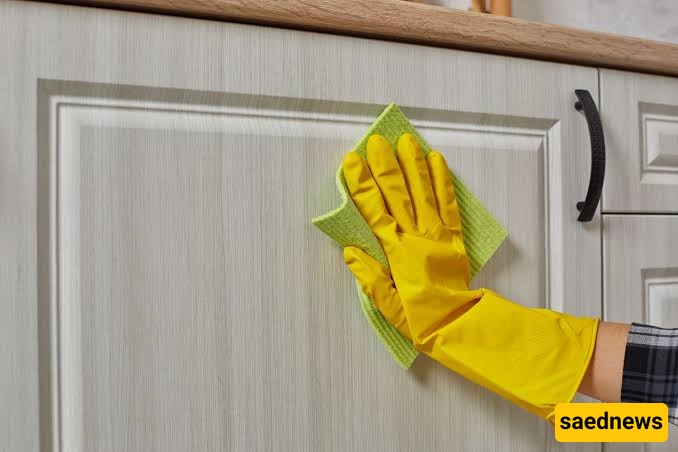
Greasy buildup may need more than a quick wipe. Apply the mild soapy solution to a cloth rather than soaking the cabinet directly. Let the damp cloth sit on the affected area briefly, then wipe gently. Repeat if necessary instead of using increasingly abrasive methods.
For wooden cabinets, painted surfaces, or cabinets with a special finish, check the manufacturer's care instructions before using any stronger cleaner. A small, hidden area can also be tested first.
Soaking cabinet doors with water
Using rough scrubbers that can scratch the finish
Applying strong cleaning products without checking the surface instructions
Leaving moisture around seams and edges
Scrubbing dried stains aggressively
Forgetting handles and the areas immediately surrounding them
A gentle cleaning routine performed regularly is generally easier on cabinet finishes than waiting until thick layers of grease and dirt have accumulated.