SAEDNEWS: Some people use various techniques or medications to manage stress, but a simple activity like coloring can also help. Coloring mandalas is one calming way to reduce stress and relax.
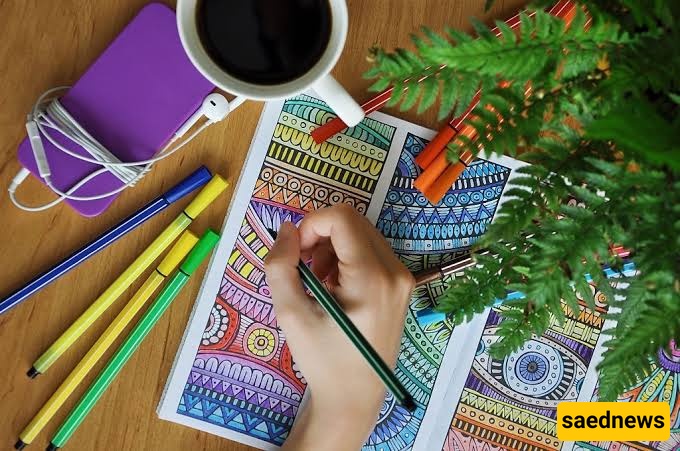
According to Saednews, a mandala—meaning “circle” in Sanskrit—is a geometric diagram used in Buddhist and Hindu traditions as a symbol of the universe. Although the concept originated in Hinduism, it later became widely used in Buddhism as well. Mandalas are symbolic circles intended to help people focus on themselves and explore their inner world. The center of a mandala is often used as a focal point during religious meditation. Its symmetrical geometric patterns naturally draw attention toward the center of the circle. However, the use of mandalas extends far beyond these religious traditions.
For example, mandala-inspired designs can also be found in Islamic architecture, including the courtyard of Fin Garden in Kashan, the courtyard design of Ali Mosque in Isfahan, and the courtyard of the Shah Nematollah Vali Shrine in Mahan. Similar designs can also be found in Christian traditions. In Persian and Arabic, the word is also used in the form “mandal” and has been associated with exorcists during rituals intended to summon spirits. Edward Browne described an example based on the account of an Iranian who had personally experienced such a ritual.
Psychologists use art therapy to help people experiencing mental health difficulties by encouraging them to engage in artistic activities. Art therapy can help improve a person's psychological and emotional state. It provides a way for people to release internal conflicts and express them in a visual and tangible form.
This question can be explained through symbolism. The circle is traditionally associated with the spirit and the human unconscious. Plato himself envisioned the soul as resembling a sphere. In contrast, the four corners or the square are associated with materiality, the body, and physical reality, referring to human consciousness.
The symmetrical geometric shapes of mandalas, in addition to their visual complexity and appeal, naturally draw a person's attention toward the center of the circle. The different lines and patterns can function as what might be called “steps of concentration,” gradually directing attention inward.
Professor Carl Jung regarded the mandala as an archetype of the self and a symbol of wholeness and order. He associated it with organizing and restoring balance to chaotic psychological states. In simple terms, mandalas can be viewed as a method for reducing tension and improving concentration.
In art therapy for people who have committed crimes, the goal may be to create an artistic product through which internal psychological processes become more concrete. This can help individuals understand the events, thoughts, and emotions that contributed to their criminal behavior.
The Irvine Cancer Center and the University of Pennsylvania Cancer Center are among institutions that have organized mandala workshops for cancer survivors.
For much the same reason that many smokers turn to knitting after quitting, mandala coloring can keep people occupied and help free the mind from anxiety. You can keep a mandala coloring book with you and, whenever you experience a strong urge to smoke, spend a few minutes coloring instead.
However, mandala coloring is not necessarily suitable for everyone. It involves repetitive hand movements and holding coloring tools for extended periods. This activity may worsen pain in people with rheumatoid arthritis or inflammation of the finger joints. It may also cause discomfort in people with carpal tunnel syndrome, tennis elbow, and other repetitive-strain conditions.
Therapeutic coloring follows a three-stage process.
In the first stage, the person colors the designs freely, without restrictions, and becomes familiar with them. This stage is a recreational and enjoyable activity that can serve as a means of self-exploration.
In the second stage, the person talks to themselves while coloring the mandala. At this point, they become more aware of the content of their inner dialogue and can develop a clearer understanding of its positive and negative aspects. By examining these thoughts critically, they can consider questions such as:
Am I really this kind of person?
Do these thoughts help me?
Can I change this inner dialogue?
In the third stage, using the awareness gained previously, the person attempts to analyze and challenge these internal messages and move toward changing negative self-talk into more positive inner dialogue.
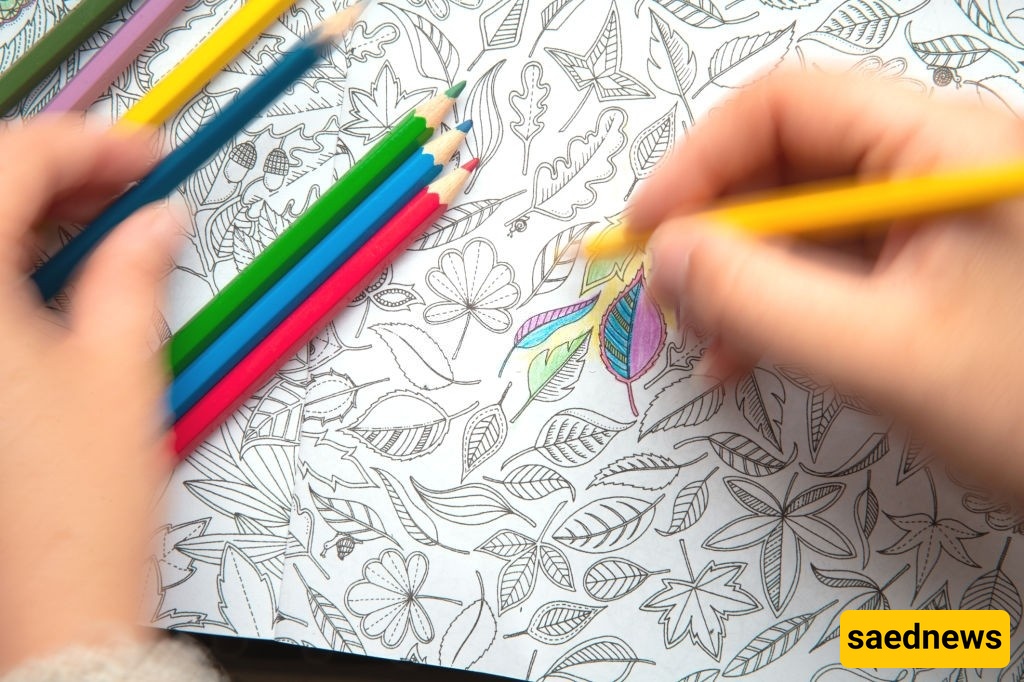
Mandalas are among the best-known and most established forms of art therapy associated with Buddhist and Hindu traditions, as well as with psychologists such as Carl Gustav Jung. The term literally means “circle” and refers to particular geometric shapes and designs that are traditionally interpreted as representing human mental and internal processes, as well as their relationship with the broader, transcendent aspects of the universe.
Using mandalas has been associated with several potential benefits, including reduced anxiety, improved concentration, and relief from symptoms of depression.
To explore the deeper levels of the psyche, all that may be needed is a piece of paper and a pen or pencil, allowing a person to encounter aspects of their unconscious mind. No particular drawing skills are required to create a mandala. Anyone, regardless of artistic ability, can draw one.
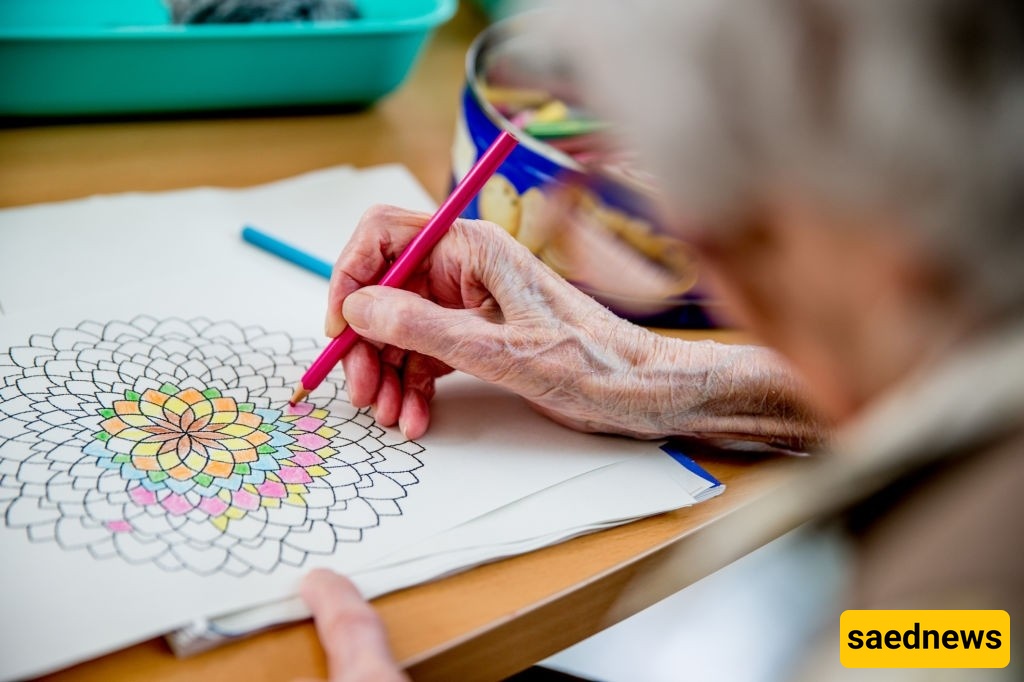
For beginners, coloring an existing mandala can be an easy way to become familiar with the practice. Mandala coloring can be suitable for people of different ages and may promote a greater sense of calm and relaxation.
Coloring books are no longer intended exclusively for children. In recent years, they have become increasingly popular among adults. Researchers and art therapists have explored their potential psychological benefits.
Coloring and art therapy are not exactly the same thing. Nevertheless, coloring may provide several psychological and mental benefits. According to Berberine, coloring has therapeutic potential for reducing anxiety, improving concentration, and strengthening attentional focus.
A major study conducted in 2005 found that participants' anxiety levels decreased significantly after coloring mandalas. Mandalas are circular designs containing various geometric patterns. However, according to the researchers, simply doodling did not produce the same effect in reducing participants' stress levels.
In addition, much like meditation, coloring can allow people to temporarily clear their minds of other thoughts, focus more closely on the present moment, and reduce anxiety.
According to Berberine, this approach may be particularly useful for people who are unfamiliar or uncomfortable with other forms of creative art. Based on her experiences, participants who tend to feel guarded or uncomfortable in their surroundings often experience greater calm and stillness while coloring an image. Through the activity, they may feel a greater sense of safety and security.