SAEDNEWS: Birds can cause significant damage to agricultural crops. Using these methods, you can protect your garden and farmland without harming them.
According to Saednews, Before taking any action to control unwanted birds, it is important to understand what attracts them. Birds usually enter gardens or farms for three main reasons:
Food sources: Ripe fruit (cherries, strawberries, grapes), grain seeds (wheat, barley, corn), insects, and worms.
Water sources: Ponds, streams, small pools, and drip-irrigation systems.
Safe places to nest and rest: Tall trees, canopies, arches, and covered areas.
Identifying the dominant bird species—such as crows, sparrows, starlings, pigeons, or parrots—can help you choose the most suitable deterrent.
These are often among the easiest and most affordable ways to protect a garden from birds.
Protective netting: One of the most effective methods for protecting fruit trees and strawberry plants. Plastic or nylon netting with small mesh openings, around 1–2 cm, can prevent birds from reaching crops. The net should be securely installed without gaps, while ensuring birds cannot become trapped in it.
Reflective tape: Shiny, metallic strips can frighten birds as they reflect sunlight and move in the wind. Hang them from branches, trellises, or around the perimeter of the garden.
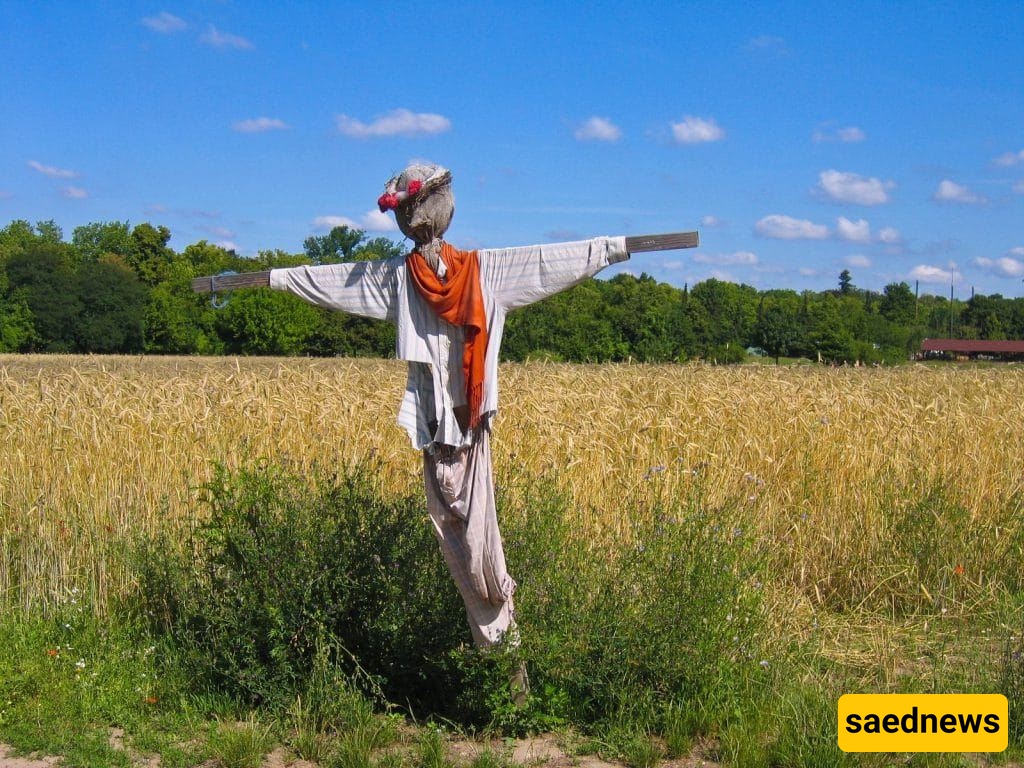
Scare devices: Traditional scarecrows and modern decoys, such as plastic owls and hawks, can discourage birds. For better results, move them every few days and choose models that move.
Sound deterrents: Recorded predator calls, such as hawks and owls, or bird distress calls can be useful, particularly on larger farms. However, they may disturb neighbors, so timer-controlled systems are preferable.
Birds are highly sensitive to unexpected visual stimuli.
Predator-eye balloons: Balloons featuring large eye patterns resemble the eyes of predators. Install them at an appropriate height where birds can easily see them.
Spinning discs: Metal or plastic objects that rotate in the wind can reflect light in different directions. They can be particularly useful for discouraging sparrows and starlings.
Bird-deterrent lasers: At night, green or red lasers can scare birds away. They are used in large open areas such as airports and golf courses, but may not be cost-effective for small gardens.
Natural repellents: Substances such as methyl anthranilate, a naturally occurring compound found in grapes, are unpleasant to birds. Water mixed with chili pepper or garlic may also provide temporary deterrence, although these treatments can be washed away by rain.
Sticky deterrent gels: These gels can be applied to branches or ledges. Birds generally avoid landing on sticky surfaces, making this approach useful for protecting fruit trees. Care should be taken to use bird-safe products that do not trap or injure wildlife.
Natural predators: Guard dogs or cats may help discourage birds. Providing nesting boxes for appropriate hawk or owl species near a farm may also help manage certain pest-bird populations where legally and ecologically appropriate.
Ultrasonic devices: These devices emit high-frequency sounds that are generally inaudible to humans but may disturb some birds. Their effectiveness in open spaces is limited, making them more suitable for enclosed areas such as warehouses and sheds.
Smart sprinkler systems: Motion sensors can detect approaching birds and activate a sudden jet of water. This humane approach can work particularly well in home gardens.
Bird-deterrent drones: Large farms and extensive orchards may use drones designed to mimic predator flight patterns and encourage birds to leave the area.
Sometimes the most effective way to protect crops is to change the conditions that attract birds.
Regular tree pruning: Removing excessively tall or dense branches can reduce suitable places for birds to perch and nest.
Remove food and water sources: Drain standing water, quickly collect fallen fruit, and avoid leaving grain or bread crumbs in the garden.
Create buffer zones: Plant a row of trees or shrubs around the edge of the farm whose fruit is more attractive to birds than the main crop. This can help draw birds away from valuable crops.
Using lethal poisons: This is inhumane, potentially illegal, and dangerous. Poison can contaminate the food chain and harm other animals and people.
Relying on a single method: Birds are intelligent and can quickly become accustomed to the same stimulus. Combining several techniques—for example, netting, reflective tape, and a moving scare device—is generally more effective.
Installing equipment incorrectly: Loose netting, reflective tape placed in shaded areas, or a stationary scarecrow can quickly become ineffective.
The best bird-control strategy is usually a combination of physical barriers, visual deterrents, environmental management, and humane behavioral deterrents, selected according to the bird species and the size of the area being protected.