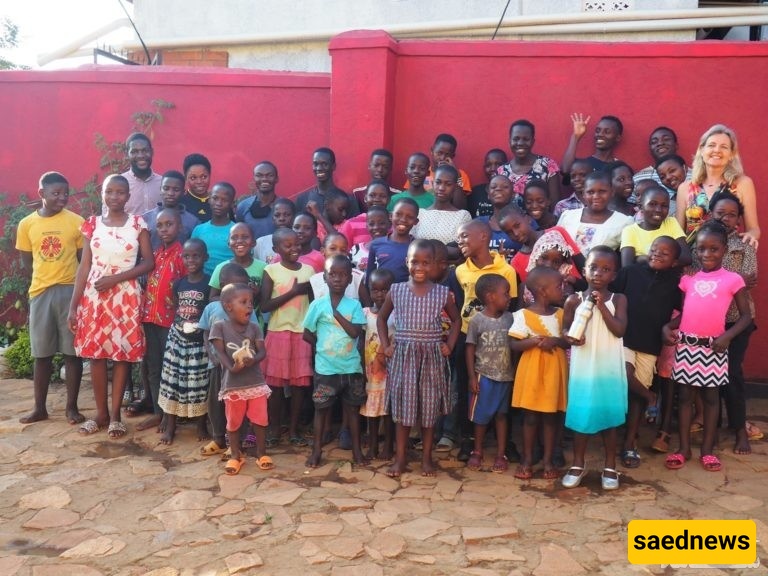
SAEDNEWS: A woman living in a village in Uganda gave birth to 44 children by the age of 40. Her children include multiple sets of twins, triplets, and quadruplets.
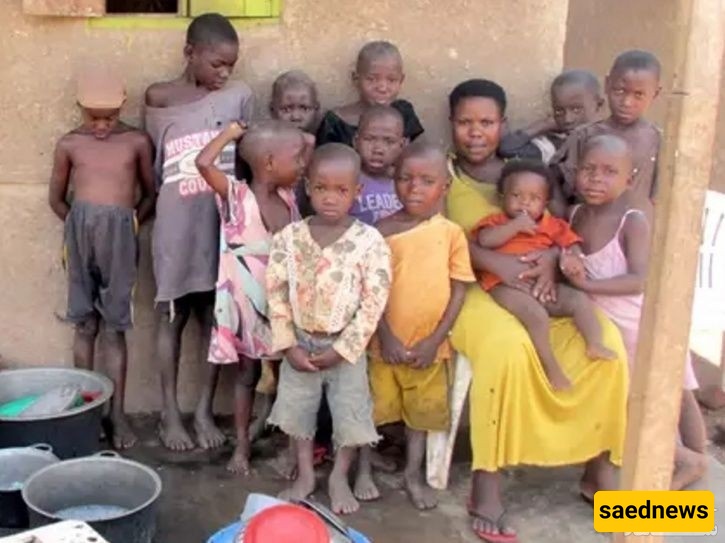
According to Saednews, A Ugandan woman who became known for giving birth to 44 children has shared the remarkable and often heartbreaking story of her life, highlighting the challenges of extreme fertility, poverty, and single parenthood.
Mariam Nabatanzi, now 43 years old, had 44 children by the age of 40. Over the years, she gave birth to four sets of twins, five sets of triplets, and five sets of quadruplets. Only one of her pregnancies resulted in a single baby.
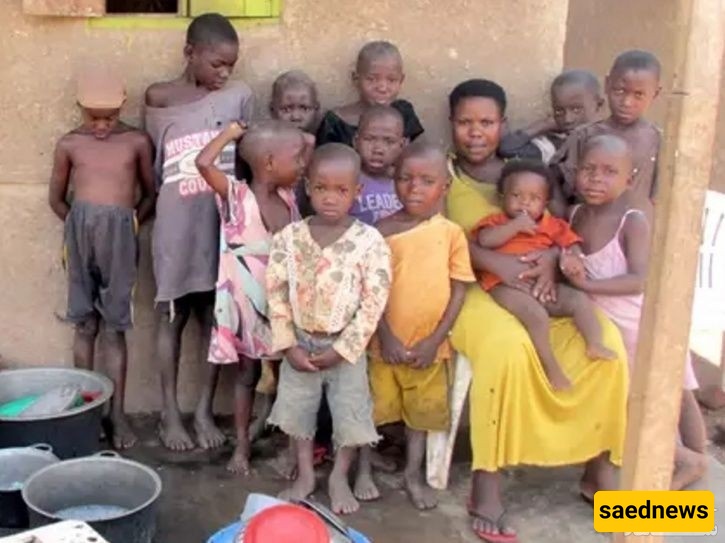
Tragically, six of her children died. Her husband eventually abandoned the family, taking their savings and leaving Mariam to raise 38 children—20 sons and 18 daughters—on her own.
Mariam's childhood was marked by hardship. At the age of 12, she was forced into marriage after being sold by her parents. She became pregnant almost immediately and gave birth to her first child at just 13 years old.
Uganda has one of the world's highest fertility rates, with women giving birth to an average of about 5.6 children, according to World Bank data. However, Mariam's case is exceptionally rare.
After repeatedly giving birth to twins, triplets, and quadruplets, she sought medical advice. Doctors diagnosed her with unusually large ovaries and a condition known as hyperovulation, in which multiple eggs are released during a single menstrual cycle. This significantly increases the likelihood of multiple births.
Doctors reportedly warned her that conventional birth control methods would not be effective and could pose serious health risks. They also explained that specialized treatment for hyperovulation was difficult to access in rural Uganda.
Gynecologist Dr. Charles Kiggundu of Mulago Hospital in Kampala said the most likely explanation for Mariam's extraordinary fertility was genetic. According to him, she has a hereditary tendency toward hyperovulation, greatly increasing the chances of multiple pregnancies.
Following her final pregnancy about three years ago, doctors told Mariam she should not have any more children. She said her doctor performed a procedure that effectively ended her ability to conceive.
Despite everything she has endured, Mariam believes her many children were part of God's plan.
Mariam says her marriage was filled with suffering. Her husband was frequently absent before leaving the family completely in 2016—the same year their youngest child was born.
One of her sons described her as his hero.
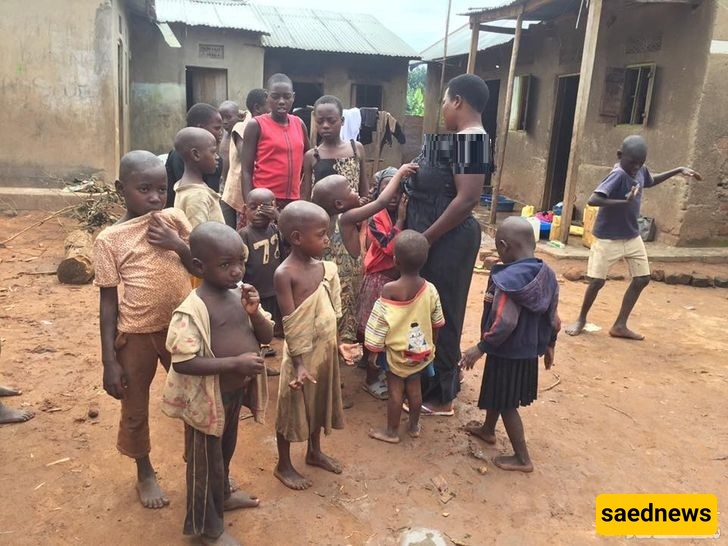
Today, Mariam and her children live in four modest cement-block houses with corrugated iron roofs in a village about 31 miles north of Kampala, surrounded by coffee farms.
To provide for her family, Mariam has worked in numerous jobs, including hairdressing, collecting and selling scrap materials, brewing homemade beverages, and selling herbal medicines. Nearly all of her earnings go toward food, clothing, medical care, and school expenses.
Although life remains difficult, portraits of several of her children who have graduated from school hang proudly on the walls of her home.
Her eldest son, Ivan Kibuka, had to leave high school because the family could not afford his education. He says the family helps with cooking, cleaning, and household chores whenever possible, but their mother still carries the greatest burden.
Mariam Nabatanzi is often described as one of the most fertile women in modern history. However, historical records frequently cite an even more extraordinary case: Valentina Vassilyeva, an 18th-century Russian peasant who is said to have given birth to 69 children between 1725 and 1765. According to historical accounts, 67 of those children survived infancy.
Those reports also claim that her husband, Feodor Vassilyev, fathered another 18 children with a second wife, bringing his total number of children to 87. However, historians continue to debate the accuracy of these records because birth registration in rural Russia during the 18th century was often incomplete and unreliable.