SAEDNEWS: Fear and anxiety about applied mathematics can sometimes cause irreversible harm in a child’s future life, but this issue can be addressed by following a few simple guidelines.

According to Saednews, Math anxiety refers to a person’s fear of numbers and their own ability to solve mathematical problems. It is a common psychological condition in which a person may suddenly feel that all mathematical thinking disappears from their mind, even when performing a simple calculation in front of others. This fear is not limited to school-age children; students and adults may also experience it. By reading this section, you will understand what math anxiety is, where it comes from, and become familiar with its symptoms.

Math anxiety is the feeling of fear and tension that many people experience when solving mathematical problems. It affects individuals of different ages around the world. Many students say they do not like mathematics, but for some, the issue goes further—doing math creates negative emotions such as fear of failure, which harms their performance and abilities.

Before trying to prevent math anxiety, it must be properly identified. Understanding its symptoms helps students address the problem.
Research shows that students with math anxiety may experience unusual nervousness, cold hands, increased heart rate, stomach discomfort, and dizziness.
When mathematics is not a student’s strength, it is easy for them to believe they are “bad at math” and always will be. Once they accept this belief, they give up and lose motivation to improve.

Math anxiety appears not only physically and cognitively but also emotionally. A student who becomes stressed, angry, or cries during math class may be experiencing math anxiety. This often comes from the mistaken belief that speed and accuracy are the only measures of mathematical ability.
You may hear students say things like:
“I hate math.”
“I can’t solve math problems.”
“I will never be good at math.”
This internal negative dialogue creates discouragement regardless of the difficulty of the subject.
Due to lack of confidence, students may fail to answer questions correctly or perform well in exams. Without practice, their performance declines further, reinforcing a weak identity in mathematics.
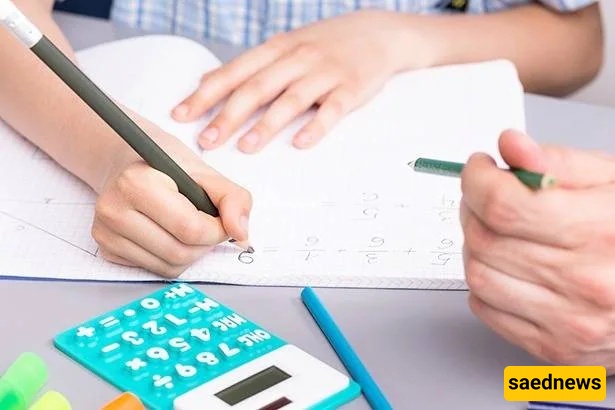
Students with math anxiety often try to avoid math classes or exams. One of the most common behaviors is skipping class or refusing to participate.
Anxiety can disrupt working memory, making it difficult to process and solve problems. When a question is read aloud, anxious students may struggle to think through numbers and steps because their mental resources are overwhelmed.
Students may feel they are the only ones unable to solve problems, even when the task is difficult for everyone.
Such students often do not expect to succeed in math and rely heavily on others to solve problems.

There is no single cause; multiple factors may contribute:
If students are laughed at or criticized for wrong answers, their anxiety may increase or be triggered.
Parents’ attitudes toward math strongly influence children. If a parent says they are “bad at math,” the child may internalize the belief that success is impossible.
Teachers greatly affect students’ attitudes. A lack of supportive teaching methods or failure to help struggling students can increase anxiety.
Teachers who prioritize memorization over understanding may unintentionally harm students’ confidence and increase anxiety.

Grouping students with different ability levels can improve learning. Stronger students help weaker ones, while weaker students benefit from peer support.
Having a supportive peer can help students catch up and stay motivated.
Using games and interactive activities can make math more engaging and reduce fear of failure.
Homework should not be optional; it is essential for mastering concepts.
Positive reinforcement from parents and teachers can significantly reduce anxiety and improve performance.
Studies show that tutoring sessions can significantly reduce math anxiety and improve skills.

Changing the perception of anxiety as “excitement” rather than fear can improve performance.
Students who understand concepts perform better than those who rely only on memorization.
Reducing time pressure helps students think more clearly and reduces stress.
Breathing exercises and mindfulness techniques can calm students and improve test performance.
Writing down thoughts and feelings before exams can help reduce anxiety and improve results.