SAEDNEWS: When using and maintaining Teflon cookware, you should follow certain guidelines to prevent damage so that you can continue using high-quality pots and pans as if they were brand new.
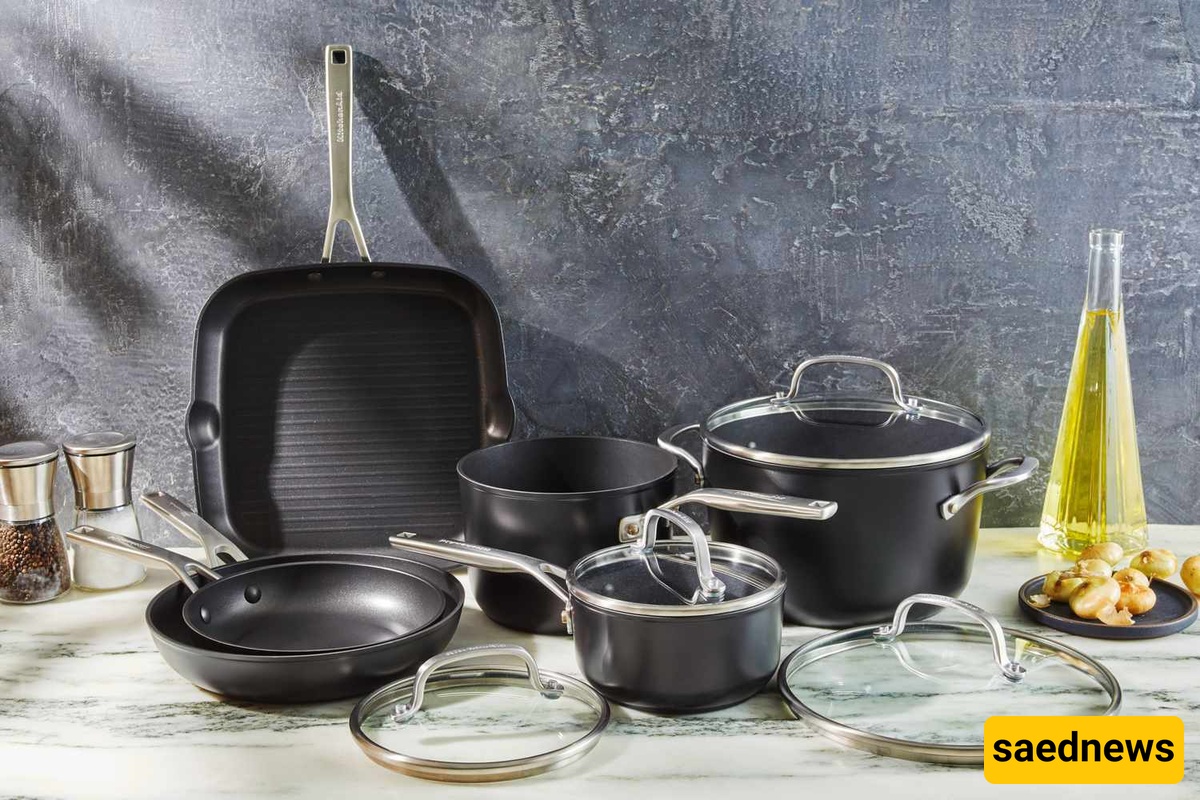
According to SAEDNEWS, In 1938, the American company DuPont introduced a polymer called polytetrafluoroethylene (PTFE) under the trade name “Teflon” to the market. This material, with its non-stick coating and electrical insulation properties, also has high thermal resistance and good chemical resistance against acids and bases.
Among all available coatings, Teflon was selected as the best option for non-stick cookware. It was also approved by the U.S. Food and Drug Administration (FDA) as a safe coating for food preparation utensils.
However, despite this, researchers have issued warnings about the use of these products. Compared to other materials, it has been accused more frequently of environmental pollution and potential carcinogenic effects, among other concerns. Interestingly, it still remains one of the most popular materials used for cooking utensils.
To maintain the original quality of Teflon and non-stick cookware, you should follow these guidelines so that you can use them safely and without concern.
1. Pay attention to the brand of cookware
When purchasing Teflon cookware, be sure to pay attention to the brand and avoid using low-cost, unbranded products just to save money. Your Teflon cookware should have a standard certification mark, and if it is produced domestically, it must also be approved by the Ministry of Health in addition to having the standard certification.
2. Using the right utensils
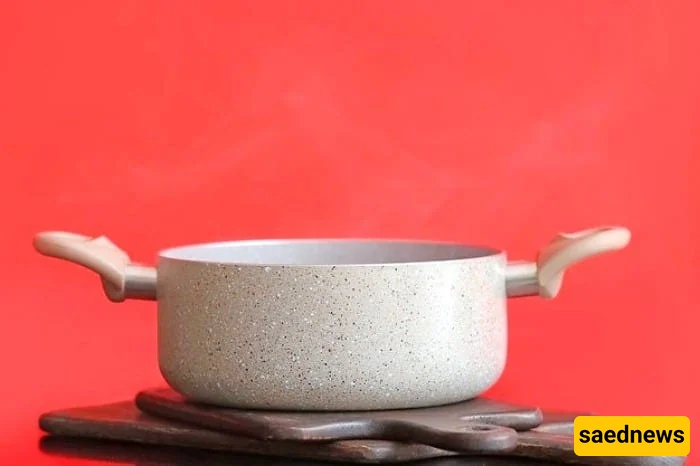
Always use special utensils for non-stick and Teflon cookware. Spoons and spatulas for Teflon pans should be made of wood or have a Teflon coating. Using stainless steel spoons or similar tools can damage the non-stick surface and cause it to wear off.
3. Using the proper flame
When cooking with any type of cookware, you should always use an appropriate flame level. High heat can damage the cookware and quickly ruin non-stick pans.
In addition, excessive heat may produce vapors from such cookware that can be harmful. Over time, the surface of all Teflon cookware may also become discolored or deformed, and they should no longer be used.
4. Adding oil before first use of non-stick cookware
Before using Teflon cookware for the first time, it is recommended to wash it with hot water and dish soap. After washing Teflon, ceramic, or granite cookware, pour a few drops of cooking oil into the pan and use a soft cloth to lightly coat the entire inner surface.
5. Adding oil before turning on the heat
At the beginning of cooking, always add oil to the Teflon pan first, and only then place it on the stove over appropriate heat. Never place an empty Teflon pan on a hot burner.
6. Never cook baby food in Teflon cookware!!!
Limit the use of Teflon cookware. Do not use these pans for liquid foods such as soups or boiling milk, where non-stick properties are not needed. For preparing baby food, it is better to use more suitable cookware.
7. Discard cookware with damaged Teflon coating
Do not reuse cookware whose Teflon coating has worn off. Non-stick cookware that has lost its coating cannot be repaired. Never attempt to restore such pans.
8. Do not repair Teflon cookware
Never try to refurbish Teflon cookware in order to save money, because the materials and methods used in unauthorized refurbishment centers are not approved by health authorities.
Laboratory studies on animals have suggested that unsafe refurbishment of cookware, and even using products made in unlicensed factories, may be associated with serious diseases such as liver, testicular, breast, and pancreatic cancer.
9. Do not store food in Teflon cookware
Never keep food stored in Teflon cookware for long periods of time.
10. Wash Teflon cookware with a soft sponge only
When washing Teflon or ceramic cookware, do not use abrasive scrubbers or steel wool. Whenever possible, use a soft sponge or a sponge specifically designed for non-stick cookware.
11. Do not cool a hot Teflon pan with cold water
Never place a hot Teflon pan under cold water. Hot cookware should be allowed to cool gradually, because sudden temperature changes can damage the non-stick coating.
12. Do not freeze Teflon cookware
Never place Teflon cookware in the freezer. In other words, avoid freezing food inside Teflon pans.
13. Do not put Teflon pans in the dishwasher
Do not use a dishwasher to clean Teflon cookware. If it is necessary, before the next use you should oil it again, leave it for about 20 minutes, wash it, and then use it again.
14. Do not clean Teflon cookware with laundry detergent powder
When washing Teflon cookware, do not use laundry detergent powder, because its particles are too abrasive and can scratch and damage the non-stick coating.